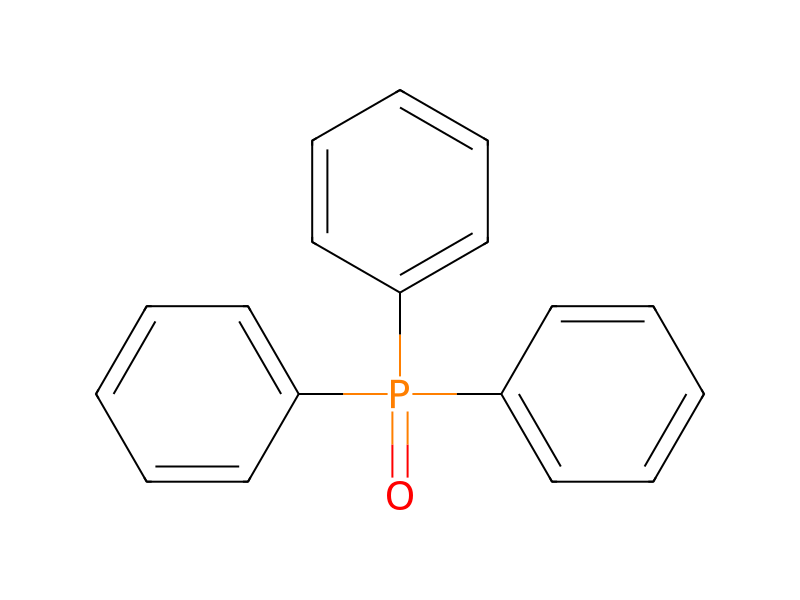
Triphenylphosphine → Triphenylphosphine Oxide
Reaction equation

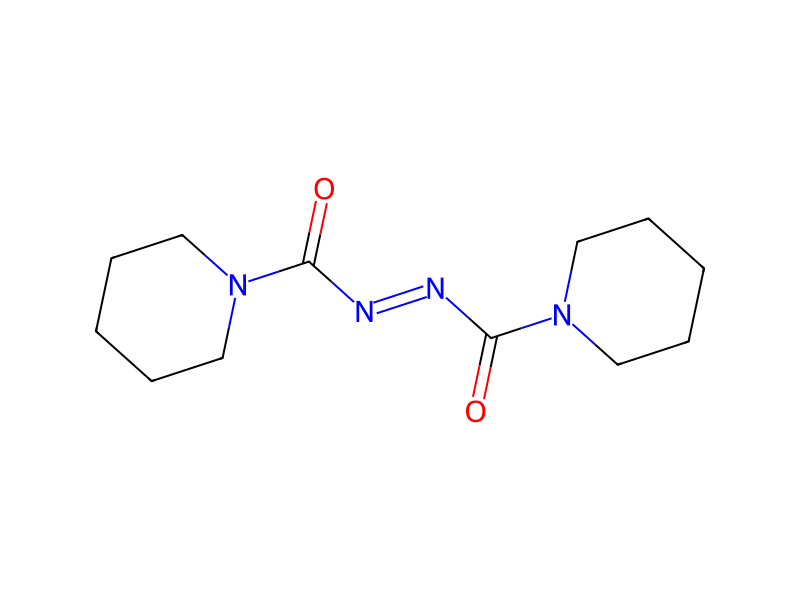
[OH:1]C1C=CC(CC(CC)C(OC)=O)=CC=1.CS(C1C=CC(CCO)=CC=1)(=O)=O.C1CCN(C(N=NC(N2CCCCC2)=O)=O)CC1.[C:47]1([P:53]([C:60]2[CH:65]=[CH:64][CH:63]=[CH:62][CH:61]=2)[C:54]2[CH:59]=[CH:58][CH:57]=[CH:56][CH:55]=2)[CH:52]=[CH:51][CH:50]=[CH:49][CH:48]=1>ClCCl>[C:60]1([P:53](=[O:1])([C:47]2[CH:48]=[CH:49][CH:50]=[CH:51][CH:52]=2)[C:54]2[CH:59]=[CH:58][CH:57]=[CH:56][CH:55]=2)[CH:61]=[CH:62][CH:63]=[CH:64][CH:65]=1Participants
6




Procedure
Methyl 2-(4-hydroxybenzyl)butanoate (0.50 g; 2.5 mmole) and 2-[4-(methylsulfonyl)phenyl]ethanol (0.52 g, 2.5 mmole) were mixed in dichloromethane (10 ml). ADDP (0.76 g, 3.0 mmole) was added followed by addition of triphenylphosphine ((0.79 g, 3.0 mmole). The reaction was interrupted after 16 hours. Triphenylphosphine oxide formed in the reaction was filtered off and the filtrate was evaporated. Chromatography of the crude material from methanol and dichloromethane, gradient eluation from 0-32% gave 0.64 g (66% yield) of the product.
Sources & evidence
- ORD record
- ord-8338b72c4c834992ae4b275bc0af7d9b
- Source dataset
- uspto-grants-2003_10
- Patent number
- US06630509B2
Reaction notes
Loading…