
uspto-grants-2010_06 · 10.6084/m9.figshare.5104873.v1 · US07732608B2
查看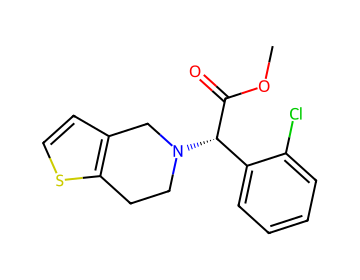
IDENTITY
COMPUTED
PROPERTIES
Colorless oil
15.1 [ug/mL] (The mean of the results at pH 7.4)
158
Mol wt 419.90. White crystals. mp 184 °C. Specific optical rotation at 20 °C for D (sodium) line = +55.10 deg (c = 1.891 in methanol). Soluble in water, methanol /Clopidogrel hydrogen sulfate/
Specific optical rotation at 25 °C for D (sodium) line = +55.10 deg (c = 1.61 in methanol)
Solid
166.53 Ų [M+H]+ [CCS Type: TW; Method: calibrated with polyalanine and drug standards]
168.65 Ų [M+H]+
GHS
H362 (100%): May cause harm to breast-fed children [Reproductive toxicity, effects on or via lactation]
P203, P260, P263, P264, P270, and P318 (click each P-code to see the statement)
The GHS information provided by 1 company from 1 notification to the ECHA C&L Inventory.
HAZARDS
The Approved Drug Products with Therapeutic Equivalence Evaluations identifies currently marketed prescription drug products, including clopidogrel bisulfate, approved on the basis of safety and effectiveness by FDA under sections 505 of the Federal Food, Drug, and Cosmetic Act. /Clopidogrel bisulfate/
Lact. (100%)
SAFETY
SRP: Expired or waste pharmaceuticals shall carefully take into consideration applicable DEA, EPA, and FDA regulations. It is not appropriate to dispose by flushing the pharmaceutical down the toilet or discarding to trash. If possible return the pharmaceutical to the manufacturer for proper disposal being careful to properly label and securely package the material. Alternatively, the waste pharmaceutical shall be labeled, securely packaged and transported by a state licensed medical waste contractor to dispose by burial in a licensed hazardous or toxic waste landfill or incinerator.
SRP: At the time of review, regulatory criteria for small quantity disposal are subject to significant revision, however, household quantities of waste pharmaceuticals may be managed as follows: Mix with wet cat litter or coffee grounds, double bag in plastic, discard in trash.
TOXICITY
Aspirin has not been found to modify the clopidogrel mediated inhibition of ADP-induced platelet aggregation, nor has it been found to increase the prolongation of bleeding time induced by clopidogrel; however, clopidogrel potentiated the effect of aspirin on collagen-induced platelet aggregation.
Coadministration of Plavix and nonsteroidal anti-inflammatory drugs (NSAIDs) increases the risk of gastrointestinal bleeding.
Potential pharmacokinetic interaction (decreased plasma concentrations of active metabolite of clopidogrel) and pharmacodynamic interaction (reduced antiplatelet effects) with certain proton-pump inhibitors. Because clopidogrel is a prodrug that is dependent on its activation to an active metabolite principally by CYP2C19, concurrent use of drugs such as omeprazole that inhibit CYP2C19 reduces plasma concentrations of the active metabolite and potentially could reduce clinical efficacy.
Although the administration of clopidogrel 75 mg per day did not modify the pharmacokinetics of S-warfarin (a CYP2C9 substrate) or INR in patients receiving long-term warfarin therapy, coadministration of Plavix with warfarin increases the risk of bleeding because of independent effects on hemostasis. However, at high concentrations in vitro, clopidogrel inhibits CYP2C9.
Concurrent use of clopidogrel and omeprazole, a potent inhibitor of CYP2C19, also has been shown to reduce the antiplatelet effects of clopidogrel. Although the clinical importance of this interaction has not been fully elucidated, some evidence suggests that concurrent use of clopidogrel and omeprazole may result in reduced efficacy of clopidogrel in preventing cardiovascular events. Concomitant use of other drugs that inhibit CYP2C19 also may decrease the response to clopidogrel.
Clopidogrel is associated with serum enzyme elevations in 1% to 3% of patients during therapy. In several large clinical trials, elevations of serum ALT were no more frequent with clopidogrel as with placebo (or in comparator arms) and no instances of clinically apparent liver injury were reported. Since marketing and release, however, there have been more than a dozen published case reports of clinically apparent liver injury attributed to clopidogrel. The onset of symptoms was within 2 to 24 weeks (averaging 6 weeks) of starting, with fatigue and jaundice. Several patients had an accompanying fever but rash and eosinophilia were not common. The usual pattern of liver enzyme elevations was hepatocellular, but cases with mixed or cholestatic enzyme elevations have also been described (Case 1). Autoantibodies were rarely present. Most cases were self-limited with recovery within 1 to 2 months, but rare cases of acute liver failure or hepatic decompensation with death or need for liver transplantation have been described.;Likelihood score: B (highly likely but rare cause of clinically apparent liver injury).
TERRESTRIAL FATE: Based on a classification scheme(1), an estimated Koc value of 9600(SRC), determined from a structure estimation method(2), indicates that clopidogrel is expected to be immobile in soil(SRC). The estimated pKa of clopidogrel is 5.3(3), indicating that this compound will exist partially in the cation form in the environment under acidic conditions and cations generally adsorb more strongly to soils containing organic carbon and clay than their neutral counterparts(4). Volatilization of clopidogrel from moist soil surfaces is not expected to be an important fate process(SRC) given an estimated Henry's Law constant of 2.2X10⁻⁹ atm-cu m/mole(SRC), using a fragment constant estimation method(5). Clopidogrel is not expected to volatilize from dry soil surfaces(SRC) based upon an estimated vapor pressure of 2.9X10⁻⁷ mm Hg at 25 °C(SRC), determined from a fragment constant method(6). Biodegradadtion data in soil were not available(SRC, 2011).
AQUATIC FATE: Based on a classification scheme(1), an estimated Koc value of 9600(SRC), determined from a structure estimation method(2), indicates that clopidogrel is expected to adsorb to suspended solids and sediment(SRC). Volatilization from water surfaces is not expected(3) based upon an estimated Henry's Law constant of 2.2X10⁻⁹ atm-cu m/mole(SRC), developed using a fragment constant estimation method(4). According to a classification scheme(5), an estimated BCF of 150(SRC), from an estimated log Kow of 3.82(6) and a regression-derived equation(7), suggests the potential for bioconcentration in aquatic organisms is high, provided the compound is not mqetabolized by the organism(SRC). Biodegradation data in water were not available(SRC, 2011).
ATMOSPHERIC FATE: According to a model of gas/particle partitioning of semivolatile organic compounds in the atmosphere(1), clopidogrel, which has an estimated vapor pressure of 2.9X10⁻⁷ mm Hg at 25 °C(SRC), determined from a fragment constant method(2), will exist in both the vapor and particulate phases in the ambient atmosphere. Vapor-phase clopidogrel is degraded in the atmosphere by reaction with photochemically-produced hydroxyl radicals(SRC); the half-life for this reaction in air is estimated to be 1 hour(SRC), calculated from its rate constant of 1.2X10⁻¹⁰ cu cm/molecule-sec at 25 °C(SRC) that was derived using a structure estimation method(3). Particulate-phase clopidogrel may be removed from the air by wet or dry deposition(SRC). Clopidogrel does not contain chromophores that absorb at wavelengths >290 nm(4), and therefore is not expected to be susceptible to direct photolysis by sunlight(SRC).
Bleeding is the most common adverse effect reported and can occur at varying degrees of severity at any site. Risk factors for bleeding include age older than 75, a recent bleeding event, low body weight, or use of medications (eg, non-steroid anti-inflammatory agents or warfarin) that can increase the risk of bleeding. If bleeding should occur, the risk-benefit ratio of continuing therapy should be determined with the primary prescriber of the clopidogrel. There is currently no reversal agent for clopidogrel therapy. Theoretically, exogenous platelet administration could restore hemostasis; however, data exploring this strategy are mixed. The use of platelets should be reserved for severe, life-threatening bleeding.;The other most common adverse effect is rash/pruritus. In mild to moderate hypersensitivity (eg, rash), the patient can undergo a steroid burst while maintaining their therapy. Other options to manage these patients or scenarios include desensitization and switching to an alternative agent with a different structure (eg, ticagrelor). One study suggests analysis highlights unexpected adverse events associated with clopidogrel, including interstitial lung disease and liver dysfunction. Further research is needed to understand these adverse events better and improve patient safety. The study suggests bleeding risk in patients undergoing elective inguinal hernia repair. Adverse drug reactions associated with clopidogrel may include bleeding risks, hematologic issues (such as thrombocytopenia), and gastrointestinal disturbances. Further clinical trials with larger sample sizes are needed to definitively assess the safety of continuing antiplatelet therapy, including clopidogrel, before elective inguinal hernia repair.;Drug-Drug Interactions;* CYP2C19 inhibitors: Clopidogrel is a thienopyridine prodrug that requires the CYP2C19 enzyme to convert it to its active metabolite to inhibit platelet aggregation. Genetic polymorphisms in CYP2C19 can impair this conversion, reducing efficacy. Because CYP2C19 depends on activating metabolism, administering proton pump inhibitors that inhibit CYP2C19 metabolism, like omeprazole or lansoprazole, should be avoided. Rabeprazole is considered probably safe as it is minimally affected by CYP2C19.;* Opioids: In the acute setting, agents that slow down gastrointestinal motility and can delay absorption (eg, opioids) should be avoided.;* NSAIDs: Concurrent use of clopidogrel and NSAIDs increases the potential risk of gastrointestinal bleeding.;* Warfarin: Clopidogrel may increase the bleeding risk when coadministered with warfarin, requiring careful monitoring.;* Antidepressants: Serotonin-norepinephrine reuptake inhibitors (SNRIs) and selective serotonin reuptake inhibitors (SSRIs) can impact platelet function, and their concomitant use with clopidogrel may increase the bleeding risk.;* Other Antiplatelet Agents: Using multiple antiplatelet agents simultaneously increases the risk of bleeding through an additive effect on platelet inhibition. This underscores the need for close and continuous monitoring for signs of hemorrhage in these cases.;* Repaglinide: Clopidogrel's acyl-β-glucuronide metabolite inhibits CYP2C8, potentially increasing systemic exposure to drugs metabolized by this enzyme, such as repaglinide. Glucose monitoring and dose adjustments are required.
Overdose following clopidogrel administration may result in bleeding complications. Based on animal studies, a single dose of 1500 to 2000 mg/kg was lethal to mice and rats, and 3000 mg/kg was lethal to baboons. A case report describes the overdose of clopidogrel.;Signs and Symptoms of Overdose;One case report details the course of a 55-year-old male who ingested 4200 mg of clopidogrel (56 tablets of 75 mg) in a suicide attempt. Upon presentation, the patient was asymptomatic, with no signs of major or life-threatening bleeding. He reported pinkish-red urine but no rectal, nasal, or gingival bleeding or hemoptysis. Physical examination revealed normal vitals and no neurological deficits. Laboratory results were unremarkable, with stable hemoglobin levels, normal renal function, and normal coagulation parameters. Hematuria was the only clinical manifestation that resolved spontaneously.;Management of Overdose;In the above scenario, given the patient’s stable condition and lack of significant symptoms, the treatment focused on supportive care. A Foley catheter was inserted, and the urinary bladder was irrigated with isotonic saline, which lightened the pinkish-red urine. No active charcoal was administered due to the delayed presentation (5 hours after ingestion) and unavailability. The patient was monitored in the emergency department for 48 hours. Hemoglobin levels remained stable, and no complications developed. He was discharged after an uneventful observation period. According to the product labeling, platelet transfusion could help restore the clotting function in an emergency. According to the literature review, platelet transfusion in patients on clopidogrel can partially restore platelet function. Still, its effectiveness is limited, especially in overcoming the irreversible inhibition of the ADP P2Y12 receptor. Clinically, the benefits must be weighed against the potential risks. However, The French Working Group on Perioperative Hemostasis recommends platelet transfusion as a therapeutic measure for reversing clopidogrel’s platelet inhibition in clinical situations necessitating hemostasis. A higher platelet transfusion dose is indicated compared to that used for aspirin reversal. Additionally, the efficacy of platelet transfusion may be diminished if the last dose of clopidogrel is administered within the preceding 6 hours.
Using a structure estimation method based on molecular connectivity indices(1), the Koc of clopidogrel can be estimated to be 9600(SRC). According to a classification scheme(2), this estimated Koc value suggests that clopidogrel is expected to be immobile in soil. The estimated pKa of clopidogrel is 5.3 (tertiary amine)(3), indicating that this compound will exist partially as a cation in the environment under acidic conditions and cations generally adsorb to soil more strongly than their neutral counterparts(4).
/SIGNS AND SYMPTOMS/ Overdose following clopidogrel administration may result in bleeding complications.
/SIGNS AND SYMPTOMS/ Thrombotic thrombocytopenic purpura (TTP), sometimes fatal, has been reported following use of Plavix, sometimes after a short exposure (<2 weeks). TTP is a serious condition that requires urgent treatment including plasmapheresis (plasma exchange). It is characterized by thrombocytopenia, microangiopathic hemolytic anemia (schistocytes (fragmented red blood cells)) seen on peripheral smear), neurological findings, renal dysfunction, and fever.
/SIGNS AND SYMPTOMS/ In patients with transient ischemic attacks (TIAs) or stroke who are at high risk for recurrent ischemic events, the combination of clopidogrel and aspirin has not been shown to be more effective than clopidogrel alone but has been associated with an increase in major bleeding.
/CASE REPORTS/ The cases of 2 patients who lost their sense of taste during clopidogrel treatment are reported. A 76-yr-old woman was taking clopidogrel 75 mg daily for 6 wk when she observed a loss of taste. Three wk after the loss of taste was observed, clopidogrel treatment was discontinued. About 3 wk later, there was full recovery of taste. A 64-yr-old man was given clopidogrel 75 mg daily for 2 months when loss of taste was observed. The clopidogrel treatment was stopped. Full recovery of the loss of taste was observed within 6 wk. Clopidogrel treatment was then resumed but with a different preparation. About 2 wk later, the patient again reported a loss of taste. Therefore, the treatment was discontinued again. Six wk later the loss of taste persisted.
For more Human Toxicity Excerpts (Complete) data for CLOPIDOGREL (8 total), please visit the HSDB record page.
Clopidogrel's production and use as an antithrombotic(1) may result in its release to the environment through various waste streams(SRC).
Drug-Induced Liver Injury Severity and Toxicity (DILIst)
clopidogrel
DILI Positive
Oral
DOI:10.1016/j.drudis.2019.09.022
An estimated BCF of 150 was calculated in fish for clopidogrel(SRC), using an estimated log Kow of 3.82(1) and a regression-derived equation(2). According to a classification scheme(3), this BCF suggests the potential for bioconcentration in aquatic organisms is high(SRC), provided the compound is not metabolized by the organism(SRC).
The Henry's Law constant for clopidogrel is estimated as 2.2X10⁻⁹ atm-cu m/mole(SRC) using a fragment constant estimation method(1). This Henry's Law constant indicates that clopidogrel is expected to be essentially nonvolatile from water and moist soil surfaces(2). Clopidogrel is not expected to volatilize from dry soil surfaces(SRC) based upon an estimated vapor pressure of 2.9X10⁻⁷ mm Hg(SRC), determined from a fragment constant method(3).
/LABORATORY ANIMALS: Acute Exposure/ A single oral dose of clopidogrel at 1500 or 2000 mg/kg was lethal to mice and to rats and at 3000 mg/kg to baboons. Symptoms of acute toxicity were vomiting, prostration, difficult breathing, and gastrointestinal hemorrhage in animals.
/LABORATORY ANIMALS: Chronic Exposure or Carcinogenicity/ There was no evidence of tumorigenicity when clopidogrel was administered for 78 weeks to mice and 104 weeks to rats at dosages up to 77 mg/kg per day, which afforded plasma exposures >25 times that in humans at the recommended daily dose of 75 mg.
/LABORATORY ANIMALS: Developmental or Reproductive Toxicity/ Reproduction studies performed in rats and rabbits at doses up to 500 and 300 mg/kg/day, respectively (65 and 78 times the recommended daily human dose, respectively, on a mg/sq m basis), revealed no evidence of impaired fertility or fetotoxicity due to clopidogrel.
/GENOTOXICITY/ Clopidogrel was not genotoxic in four in vitro tests (Ames test, DNA-repair test in rat hepatocytes, gene mutation assay in Chinese hamster fibroblasts, and metaphase chromosome analysis of human lymphocytes) and in one in vivo test (micronucleus test by oral route in mice).
REGULATORY
The Approved Drug Products with Therapeutic Equivalence Evaluations identifies currently marketed prescription drug products, including clopidogrel bisulfate, approved on the basis of safety and effectiveness by FDA under sections 505 of the Federal Food, Drug, and Cosmetic Act. /Clopidogrel bisulfate/
PHARMACOLOGY
B01AC04
B - Blood and blood forming organs;B01 - Antithrombotic agents;B01A - Antithrombotic agents;B01AC - Platelet aggregation inhibitors excl. heparin;B01AC04 - Clopidogrel
QB - Blood and blood forming organs;QB01 - Antithrombotic agents;QB01A - Antithrombotic agents;QB01AC - Platelet aggregation inhibitors, excl. heparin;QB01AC04 - Clopidogrel
B01AC04
Both the active and inactive metabolites of clopidogrel are 98% protein bound in plasma. Studies in cows show clopidogrel 71-85.5% bound to serum albumin.
Clopidogrel is a prodrug of a platelet inhibitor used to reduce the risk of myocardial infarction and stroke. It has a long duration of action as it is taken once daily and a large therapeutic window as it is given in doses of 75-300mg daily.
Clopidogrel is activated via a 2 steps reaction to an active thiol-containing metabolite. This active form is a platelet inhibitor that irreversibly binds to P2Y<sub>12</sub> ADP receptors on platelets. This binding prevents ADP binding to P2Y<sub>12</sub> receptors, activation of the glycoprotein GPIIb/IIIa complex, and platelet aggregation.
Clopidogrel must be metabolized by CYP450 enzymes to produce the active metabolite that inhibits platelet aggregation. The active metabolite of clopidogrel selectively inhibits the binding of adenosine diphosphate (ADP) to its platelet P2Y12 receptor and the subsequent ADP-mediated activation of the glycoprotein GPIIb/IIIa complex, thereby inhibiting platelet aggregation. This action is irreversible. Consequently, platelets exposed to clopidogrel's active metabolite are affected for the remainder of their lifespan (about 7 to 10 days). Platelet aggregation induced by agonists other than ADP is also inhibited by blocking the amplification of platelet activation by released ADP.
The P2Y12 receptor plays a crucial role in the regulation of platelet activation by several agonists, which is irreversibly antagonized by the active metabolite of clopidogrel, a widely used anti-thrombotic drug. In this study, we investigated whether reduction of platelet reactivity leads to reduced inflammatory responses using a rat model of erosive arthritis. We evaluated the effect of clopidogrel on inflammation in Lewis rats in a peptidoglycan polysaccharide (PG-PS)-induced arthritis model with four groups of rats: 1) untreated, 2) clopidogrel-treated, 3) PG-PS-induced, and 4) PG-PS-induced and clopidogrel-treated. There were significant differences between the PG-PS+clopidogrel group when compared to the PG-PS group including: increased joint diameter and clinical manifestations of inflammation, elevated plasma levels of pro-inflammatory cytokines (IL-1 beta, interferon (IFN) gamma, and IL-6), an elevated neutrophil blood count and an increased circulating platelet count. Plasma levels of IL-10 were significantly lower in the PG-PS+clopidogrel group compared to the PG-PS group. Plasma levels of platelet factor 4 (PF4) were elevated in both the PG-PS and the PG-PS+clopidogrel groups, however PF4 levels showed no difference upon clopidogrel treatment, suggesting that the pro- inflammatory effect of clopidogrel may be due to its action on cells other than platelets. Histology indicated an increase in leukocyte infiltration at the inflammatory area of the joint, increased pannus formation, blood vessel proliferation, subsynovial fibrosis and cartilage erosion upon treatment with clopidogrel in PG-PS-induced arthritis animals. In summary, animals treated with clopidogrel showed a pro-inflammatory effect in the PG-PS-induced arthritis animal model, which might not be mediated by platelets.
That half life of clopidogrel is approximately 6 hours following a 75mg oral dose while the half life of the active metabolite is approximately 30 minutes.
After a single, oral dose of 75 mg, clopidogrel has a half-life of approximately 6 hours. The half-life of the active metabolite is about 30 minutes.
85-90% of an oral dose undergoes first pass metabolism by carboxylesterase 1 in the liver to an inactive carboxylic acid metabolite. about 2% of clopidogrel is oxidized to 2-oxoclopidogrel. This conversion is 35.8% by CYP1A2, 19.4% by CYP2B6, and 44.9% by CYP2C19 though other studies suggest CYP3A4, CYP3A5, and CYP2C9 also contribute. 2-oxoclopidogrel is further metabolized to the active metabolite. This conversion is 32.9% by CYP2B6, 6.79% by CYP2C9, 20.6% by CYP2C19, and 39.8% by CYP3A4.
CYP2C19 is involved in the formation of both the active metabolite and the 2-oxo-clopidogrel intermediate metabolite. Clopidogrel active metabolite pharmacokinetics and antiplatelet effects, as measured by ex vivo platelet aggregation assays, differ according to CYP2C19 genotype. Genetic variants of other CYP450 enzymes may also affect the formation of clopidogrel's active metabolite.
Clopidogrel is extensively metabolized by two main metabolic pathways: one mediated by esterases and leading to hydrolysis into an inactive carboxylic acid derivative (85% of circulating metabolites) and one mediated by multiple cytochrome P450 enzymes. Cytochromes first oxidize clopidogrel to a 2-oxo-clopidogrel intermediate metabolite. Subsequent metabolism of the 2-oxo-clopidogrel intermediate metabolite results in formation of the active metabolite, a thiol derivative of clopidogrel. This metabolic pathway is mediated by CYP2C19, CYP3A, CYP2B6 and CYP1A2. The active thiol metabolite binds rapidly and irreversibly to platelet receptors, thus inhibiting platelet aggregation for the lifespan of the platelet.
A74586SNO7
CLOPIDOGREL
Physiologic Effects [PE] - Decreased Platelet Aggregation
Established Pharmacologic Class [EPC] - P2Y12 Platelet Inhibitor
Mechanisms of Action [MoA] - P2Y12 Receptor Antagonists
Mechanisms of Action [MoA] - Cytochrome P450 2C8 Inhibitors
Drugs or agents which antagonize or impair any mechanism leading to blood platelet aggregation, whether during the phases of activation and shape change or following the dense-granule release reaction and stimulation of the prostaglandin-thromboxane system.
Compounds that bind to and block the stimulation of PURINERGIC P2Y RECEPTORS. Included under this heading are antagonists for specific P2Y receptor subtypes.
A 75mg oral dose of clopidogrel is 50% absorbed from the intestine. Clopidogrel can be taken with or without food. A meal decreases the AUC of the active metabolite by 57%. The active metabolite of clopidogrel reaches a maximum concentration after 30-60 minutes. Clopidogrel reached a Cmax of 2.04±2.0ng/mL in 1.40±1.07h. The AUC for a 300mg oral dose of clopidogrel was 45.1±16.2ng\*h/mL for poor metabolizers, 65.6±19.1ng\*h/mL for intermediate metabolizers, and 104.3±57.3ng\*h/mL for extensive metabolizers. The Cmax was 31.3±13ng/mL for poor metabolizers, 43.9±14ng/mL for intermediate metabolizers, and 60.8±34.3ng/mL for extensive metabolizers.
An oral dose of radiolabelled clopidogrel is excreted 50% in the urine and 46% in the feces over 5 days. The remainder of clopidogrel is irreversibly bound to platelets for their lifetime, or approximately 8-11 days.
The apparent volume of distribution of clopidogrel is 39,240±33,520L.
The clearance of a 75mg oral dose was 18,960±15,890L/h and for a 300mg oral dose was 16,980±10,410L/h.
Protein binding: Very high, for clopidogrel and its main circulating metabolite (98% and 94%, respectively). Binding is nonsaturable in vitro up to a concentration of 100 ug/mL.
After single and repeated oral doses of 75 mg per day, clopidogrel is rapidly absorbed. Absorption is at least 50%, based on urinary excretion of clopidogrel metabolites.
Liver;Platelet
Membrane
Clopidogrel Action Pathway;Clopidogrel Metabolism Pathway
USES
MEDICATION
Use (kg) in Switzerland (2009): >1000;Use (kg; approx.) in Germany (2009): >10000;Use (kg; exact) in Germany (2009): 19801;Use (kg) in USA (2002): 28200;Consumption (g per capita) in Switzerland (2009): 0.13;Consumption (g per capita; approx.) in Germany (2009): 0.12;Consumption (g per capita; exact) in Germany (2009): 0.24;Consumption (g per capita) in the USA (2002): 0.1;Excretion rate: 0.5;Calculated removal (%): 37.8
Prepn: (unspec. stereochem.): D. Aubert et al., EP 99802; eidem, US patent 4529596 (1984, 1985 both to Sanofi). Prepn of (+)-form: A. Badorc, D. Frehel, EP 281459; eidem, US patent 4847265 (1988, 1989 both to Sanofi).
... Prepared by condensing 4,5,6,7-tetrahydrothienol[3,2-c]pyridine with racemic methyl alpha-chloro-(2-chlorophenyl)acetate in the presence of potassium carbonate and optical resolution of the product.
Oral: Tablets: 75 mg (of clopidogrel) Plavix, (Sanofi-Aventis) (also promoted by Bristol-Myers Squibb). /Clopidogrel bisulfate/
Trade names (hydrogen sulfate): Iscover (Bristol-Myers Squibb), Plavix (Sanofi, Sanofi Winthrop, Sanofi Pharma Bristol-Myers Squibb SNC).
ALIASES
REACTIONS
uspto-grants-2010_06 · 10.6084/m9.figshare.5104873.v1 · US07732608B2
查看
uspto-grants-2010_06 · 10.6084/m9.figshare.5104873.v1 · US07732608B2
查看
uspto-grants-2010_06 · 10.6084/m9.figshare.5104873.v1 · US07732608B2
查看
uspto-grants-2010_06 · 10.6084/m9.figshare.5104873.v1 · US07732608B2
查看
uspto-grants-2010_06 · 10.6084/m9.figshare.5104873.v1 · US07732608B2
查看
uspto-grants-2010_06 · 10.6084/m9.figshare.5104873.v1 · US07732608B2
查看
uspto-grants-2010_06 · 10.6084/m9.figshare.5104873.v1 · US07732608B2
查看
uspto-grants-2010_06 · 10.6084/m9.figshare.5104873.v1 · US07732608B2
查看