StartseiteMCPWorkbenchSkills
StartseiteWorkbenchBenachrichtigungenMein Bereich
llms.txt · MCP-AnleitungDatenschutz · Nutzungsbedingungen · Supportv1.8.3
  1. Startseite
  2. /Reaktion

Potassium Carbonate → HCID 178441171, Verbindung

HRID 1446738
Drucken

Reaktionsgleichung

Reaktionsgleichung von HRID 1446738
Br[C:2]1[CH:7]=[CH:6][C:5]([NH:8][C:9]([NH:11][C:12]2[NH:13][N:14]=[C:15]([C:17]([CH3:20])([CH3:19])[CH3:18])[CH:16]=2)=[O:10])=[CH:4][CH:3]=1.C1(P(C2CCCCC2)C2CCCCC2)CCCCC1.C([O-])(=O)C.[K+].B1(B2OC(C)(C)C(C)(C)O2)OC(C)(C)C(C)(C)O1.I[C:64]1[N:68]2[CH:69]=[CH:70][C:71]([C:73]3[CH:78]=[CH:77][C:76]([S:79]([CH3:82])(=[O:81])=[O:80])=[CH:75][CH:74]=3)=[CH:72][C:67]2=[N:66][CH:65]=1.C(=O)([O-])[O-].[K+].[K+]>C1C=CC(/C=C/C(/C=C/C2C=CC=CC=2)=O)=CC=1.C1C=CC(/C=C/C(/C=C/C2C=CC=CC=2)=O)=CC=1.C1C=CC(/C=C/C(/C=C/C2C=CC=CC=2)=O)=CC=1.[Pd].[Pd].O.O1CCOCC1.CCOC(C)=O.CS(C)=O>[C:17]([C:15]1[CH:16]=[C:12]([NH:11][C:9]([NH:8][C:5]2[CH:6]=[CH:7][C:2]([C:64]3[N:68]4[CH:69]=[CH:70][C:71]([C:73]5[CH:74]=[CH:75][C:76]([S:79]([CH3:82])(=[O:80])=[O:81])=[CH:77][CH:78]=5)=[CH:72][C:67]4=[N:66][CH:65]=3)=[CH:3][CH:4]=2)=[O:10])[NH:13][N:14]=1)([CH3:20])([CH3:19])[CH3:18]

KomponentenVersuchsvorschriftAufarbeitungQuellen und NachweiseNotizen zur Reaktion

Komponenten

12

Edukt 6

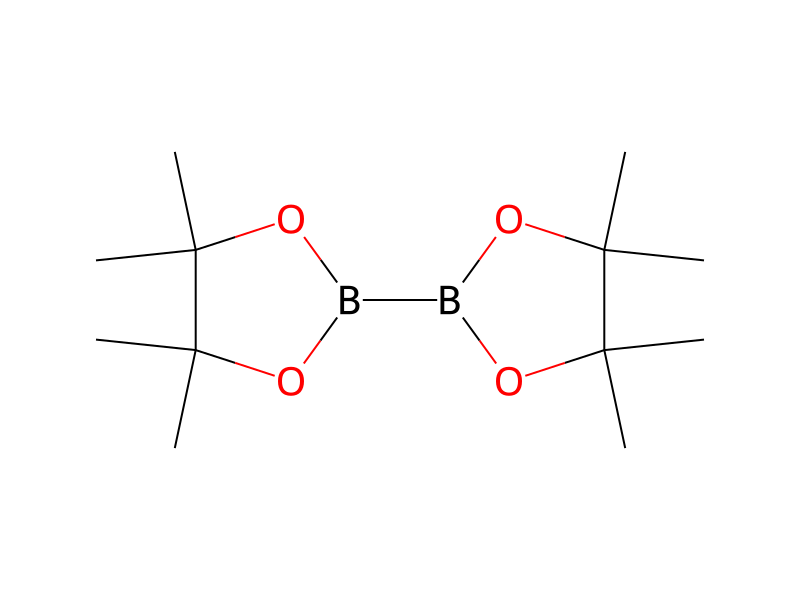
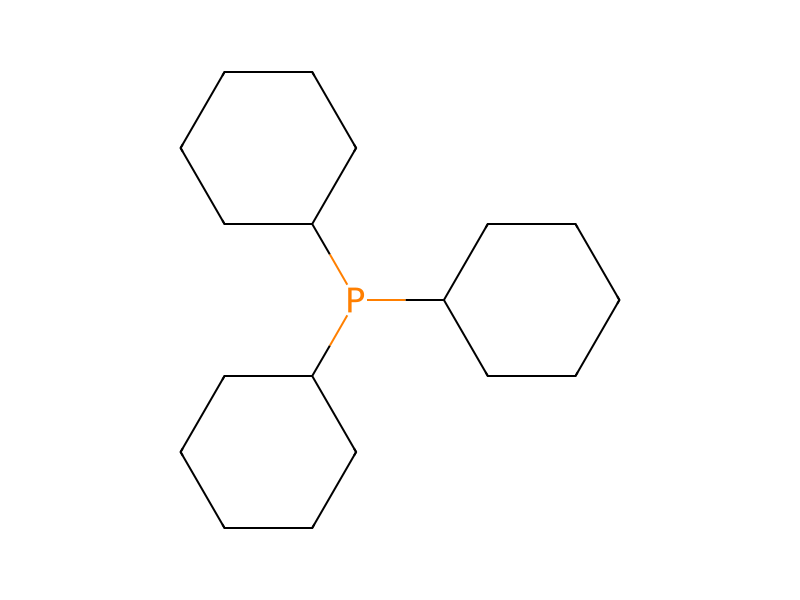
HCID 11430Potassium CarbonateHCID 75806TricyclohexylphosphineHCID 517044Potassium AcetateHCID 2733548Bis(pinacolato)diboraneHCID 685436593-Iodo-7-(4-methanesulfonyl-phenyl)-imidazo[1,2-a]pyridineHCID 178441169HCID 178441169, Verbindung

Produkt

1
HCID 178441171HCID 178441171, VerbindungAusbeute 18 %

Reagenzien, Katalysatoren, Lösungsmittel 5

HCID 9811564Bis(dibenzylideneacetone)palladiumKatalysatorHCID 679Dimethyl SulfoxideLösungsmittelHCID 962WaterLösungsmittelHCID 8857Ethyl AcetateLösungsmittelHCID 312751,4-DioxaneLösungsmittel

Versuchsvorschrift

To a round bottomed flask, add 1-(4-bromo-phenyl)-3-(5-tert-butyl-2H-pyrazol-3-yl)-urea (0.41 g, 1.2 mmol), tricyclohexylphosphine (24 mg, 0.07 equiv.), potassium acetate (0.36 g, 3 equiv.), bis(pinacolato)diboron (0.34 g, 1.1 equiv.) and DMSO (5 mL). Deoxygenate this mixture thoroughly with N2 then add tris(dibenzylideneacetone)-di-palladium (0) (33 mg, 0.03 equiv.) and heat to 100° C. overnight. Dilute the reaction with EtOAc and wash with water then saturated aqueous saturated sodium chloride. Pass the organic layer thru a Celite® plug then dry over magnesium sulfate, filter and concentrate to a residue (0.72 g). MS (ES), m/z 385.4 (M+1) is present. Add to this residue 3-iodo-7-(4-methanesulfonyl-phenyl)-imidazo[1,2-a]pyridine (0.25 g, 0.62 mmol), potassium carbonate (0.26 g, 1.86 mmol), dioxane (10 mL), and water (5 mL). Deoxygenate this mixture thoroughly with N2 then add dichloro-bis(triphenylphosphine) palladium (II) (13 mg, 0.03 equiv.) and reflux the reaction overnight under N2. Concentrate the reaction to dryness and slurry in acetone and filter to remove insolubles. Concentrate the filtrate then purify by silica column (1:1 Hex:EtOAc to 1:2 Hex:EtOAc to EtOAc to 5% MeOH:DCM) to give crude product. Triturate from DCM to give a pale yellow solid (0.059 g, 18%). MS (ES), m/z 529 (M+1).

Aufarbeitung

  1. customDeoxygenate this mixture thoroughly with N2
  2. additionDilute
  3. washwash with water
  4. dry with materialthen dry over magnesium sulfate
  5. filtrationfilter
  6. concentrationconcentrate to a residue (0.72 g)
  7. customDeoxygenate this mixture thoroughly with N2
  8. customthe reaction overnight under N2
  9. concentrationConcentrate
  10. customthe reaction to dryness and slurry in acetone
  11. filtrationfilter
  12. customto remove insolubles
  13. concentrationConcentrate the filtrate
  14. customthen purify by silica column (1:1 Hex:EtOAc to 1:2 Hex:EtOAc to EtOAc to 5% MeOH:DCM)
  15. customto give crude product
  16. customTriturate from DCM

Quellen und Nachweise

ORD-Eintrag
ord-61e643f6c6d748e18f6f2549e4345385
Quelldatensatz
uspto-grants-2010_02
DOI
10.6084/m9.figshare.5104873.v1
Patentnummer
US07666879B2

Notizen zur Reaktion

Auf dieser SeiteKomponentenVersuchsvorschriftAufarbeitungQuellen und NachweiseNotizen zur Reaktion