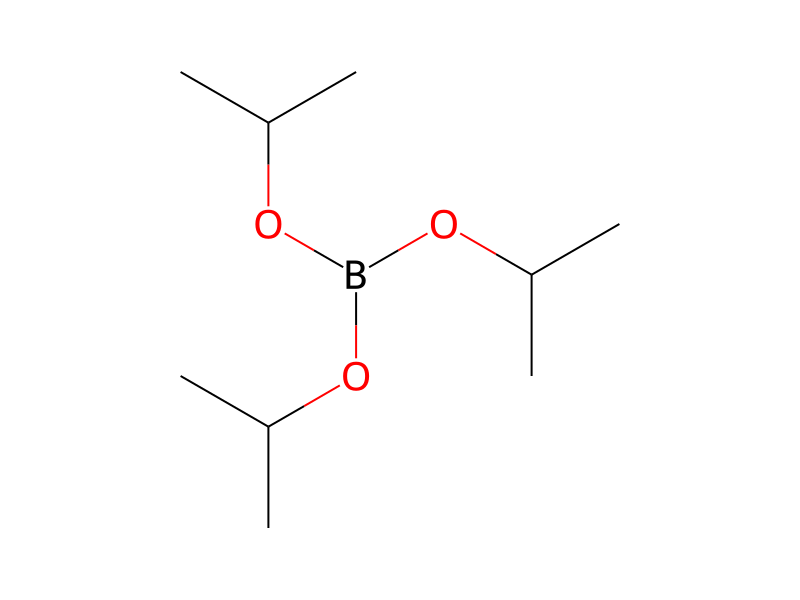
Br[C:2]1[CH:11]=[CH:10][C:9]2[C:4](=[CH:5][CH:6]=[C:7]([C:12]3[CH:17]=[CH:16][CH:15]=[CH:14][CH:13]=3)[CH:8]=2)[CH:3]=1.CCCCCC.C([Li])CCC.[B:29](OC(C)C)([O:34]C(C)C)[O:30]C(C)C>O.C1(C)C=CC=CC=1.C(OCC)C>[C:12]1([C:7]2[CH:8]=[C:9]3[C:4](=[CH:5][CH:6]=2)[CH:3]=[C:2]([B:29]([OH:34])[OH:30])[CH:11]=[CH:10]3)[CH:17]=[CH:16][CH:15]=[CH:14][CH:13]=1In an atmosphere of argon, 360 g (1.27 mol) of 2-bromo-6-phenylnaphthalene, 2 L of dehydrated diethyl ether and 2 L of dehydrated toluene were charged and cooled to −10° C. Then, 1 L (1.58 mol) of a hexane solution of 1.58M n-butyl lithium was added dropwise, and stirred at −10° C. for 5 hours. The reaction solution was cooled to −60° C., and after adding 718 g (3.81 mol) of triisopropyl borate, the mixture was stirred at room temperature for 17 hours. After adding 1 L of toluene and 1 L of water, the resulting mixture was stirred for an hour. Then, an aqueous layer was removed. An organic layer was washed with water, and dried with magnesium sulfate. The organic layer was concentrated, and heat-washed with toluene, whereby 276 g of 6-phenylnaphthalene-2-boronic acid was obtained (yield: 87%).