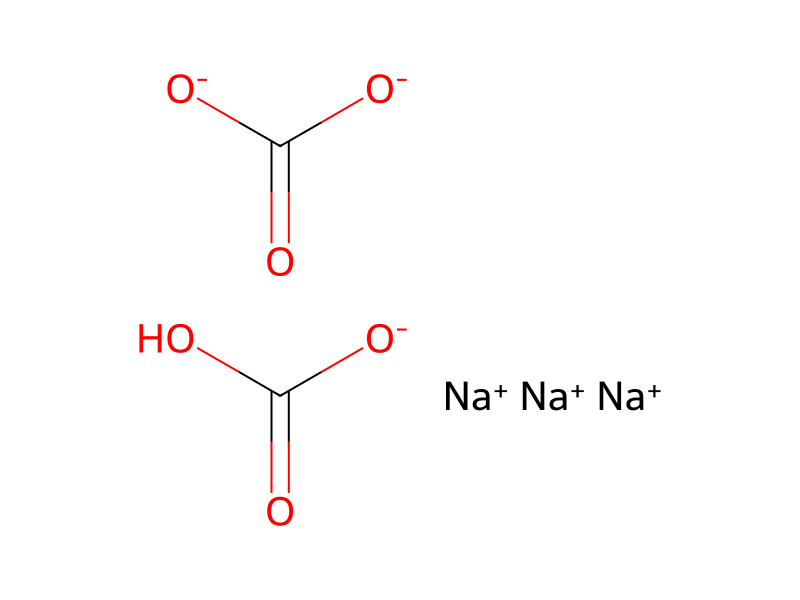
One-gram portion of barium carbonate was dissolved in 5 ml of 99% acetic acid (extra pure grade). The solution was diluted with pure water such that the total amount of the solution should be 1 L. Thus, a sample for measurement was prepared. The gluconic acid content in the sample for measurement was measured by ion chromatography (using ION CHROMATOGRAPH IC-2001, manufactured by Tosoh Corporation). Elute used on measuring was sodium carbonate-sodium hydrogen carbonate mixed solution. Sodium carbonate-sodium hydrogen carbonate mixed solution was prepared by dissolving 0.0468 g of a sodium carbonate reagent (extra pure grade) and 0.0636 g of a sodium hydrogen carbonate reagent (extra pure grade) in an appropriate amount of distilled water to prepare a solution, and then, in a graduated cylinder, distilled water was further added to the solution such that the total amount of the solution should be 1 L. Separation column was TSK gel Super IC-AP. Suppresser gel was TSK suppress IC-A. Calibration curve was made using test samples, prepared by dissolving a potassium gluconate reagent (extra pure grade) in distilled water, and then adjusted such that gluconic acid concentration should be 10 ppm, 25 ppm, or 50 ppm, respectively. Table 3 shows the results.