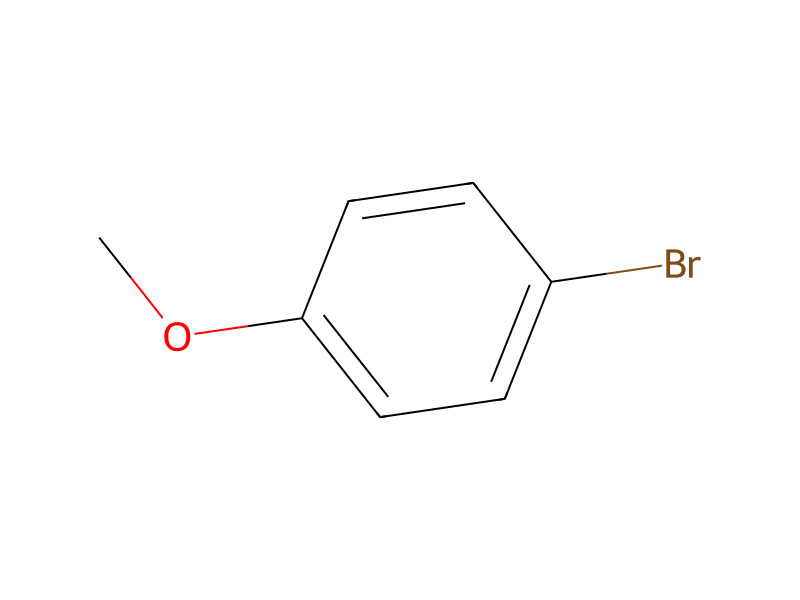
Br[C:2]1[CH:7]=[CH:6][C:5]([O:8][CH3:9])=[CH:4][CH:3]=1.C([Li])CCC.Br[C:16]1[CH:23]=[CH:22][CH:21]=[CH:20][C:17]=1[C:18]#[N:19]>O1CCCC1.CCCCCC.CCOCC.[Cl-].[Zn+2].[Cl-].[Pd].C1(P(C2C=CC=CC=2)C2C=CC=CC=2)C=CC=CC=1.C1(P(C2C=CC=CC=2)C2C=CC=CC=2)C=CC=CC=1.C1(P(C2C=CC=CC=2)C2C=CC=CC=2)C=CC=CC=1.C1(P(C2C=CC=CC=2)C2C=CC=CC=2)C=CC=CC=1>[C:18]([C:17]1[CH:20]=[CH:21][CH:22]=[CH:23][C:16]=1[C:2]1[CH:7]=[CH:6][C:5]([O:8][CH3:9])=[CH:4][CH:3]=1)#[N:19]To a solution of 4-bromoanisole (18.7 g, 0.1 mol) in anhydrous tetrahydrofuran (200 mL) at -78° C. was added a solution of n-butyl lithium (2.5M, 50 mL) in hexane. After stirring for 0.5 hours, a solution of the zinc chloride (1M, 100 mL) in ether was added. After the mixture was stirred for 1 hour at -78° C., tetrakis (triphenylphosphine) palladium (0.85 g, 0.73 mmol) and 2-bromobenzonitrile (18.2 g, 0.1 mol) were added. The reaction mixture was stirred at room temperature overnight, and then was concentrated in vacuo. The residue was partitioned between ethyl acetate (100 mL) and 1N hydrochloric acid (100 mL). The organic solution was washed with brine and dried over magnesium sulfate. Concentration in vacuo gave crude 4-(2-cyanophenyl)anisole, which was directly used for next reaction. The compound can be triturated with ether to obtain a pure solid product.
Wird geladen…