StartseiteMCPSkillsWorkbenchOpenChem
StartseiteWorkbenchBenachrichtigungenMein Bereich
llms.txt · skill.md · MCP-AnleitungDatenschutz · Nutzungsbedingungen · Supportv1.8.5
  1. Startseite
  2. /Reaktion

Acetic Acid → 1-[4-(2,5-Dihydro-1h-pyrrol-1-ylcarbonyl)benzyl]-1,3,4,5-tetrahydrobenzo[e][1,4]diazepin-2-on hydrochloride

HRID 2417492
Drucken

Reaktionsgleichung

[N+:1]([C:4]1[CH:17]=[CH:16][CH:15]=[CH:14][C:5]=1[CH2:6][NH:7][CH2:8][C:9]([O:11]CC)=O)([O-])=O.C(OC(OC(C)(C)C)=O)(OC(C)(C)C)=O.C(N(CC)CC)C.[H][H].[N:42]1([C:47]([C:49]2[CH:56]=[CH:55][C:52]([CH:53]=O)=[CH:51][CH:50]=2)=[O:48])[CH2:46][CH:45]=[CH:44][CH2:43]1.C(O)(=O)C.C(O[BH-](OC(=O)C)OC(=O)C)(=O)C.[Na+].[Cl:75]CCl>[OH-].[Na+].C(O)C.Cl.O1CCOCC1.[Pd].C(OCC)(=O)C>[ClH:75].[N:42]1([C:47]([C:49]2[CH:50]=[CH:51][C:52]([CH2:53][N:1]3[C:4]4[CH:17]=[CH:16][CH:15]=[CH:14][C:5]=4[CH2:6][NH:7][CH2:8][C:9]3=[O:11])=[CH:55][CH:56]=2)=[O:48])[CH2:43][CH:44]=[CH:45][CH2:46]1
KomponentenVersuchsvorschriftAufarbeitungQuellen und NachweiseNotizen zur Reaktion

Komponenten

15

Edukt 8

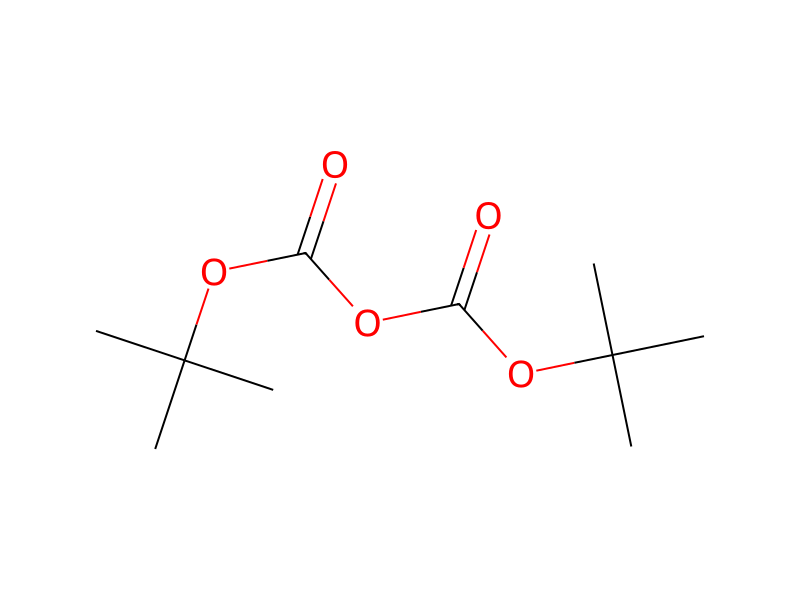
HCID 176Acetic AcidHCID 6344Dichloromethane6×HCID 8471Triethylamine2×HCID 90495Di-tert-butyl dicarbonateHCID 5049666Sodium triacetoxyborohydrideHCID 13236074Ethyl (2-nitrobenzyl)aminoacetate
HCID 22632597
4-(2,5-dihydro-1H-pyrrol-1-ylcarbonyl)benz-aldehyde
HCID 178418361HCID 178418361, Verbindung

Produkt 1

HCID 226323551-[4-(2,5-Dihydro-1h-pyrrol-1-ylcarbonyl)benzyl]-1,3,4,5-tetrahydrobenzo[e][1,4]diazepin-2-on hydrochloride

Reagenzien, Katalysatoren, Lösungsmittel 6

HCID 23938PalladiumKatalysatorHCID 313Hydrochloric AcidLösungsmittelHCID 702EthanolLösungsmittelHCID 8857Ethyl AcetateLösungsmittelHCID 14798Sodium HydroxideLösungsmittelHCID 312751,4-DioxaneLösungsmittel

Versuchsvorschrift

2.0 g (8.47 mmol) of ethyl (2-nitrobenzyl)aminoacetate was dissolved in 20 ml of dichloromethane. 2.7 g (12.6 mmol) of di-t-butyl dicarbonate and 2.4 ml (16.9 mmol) of triethylamine were added to the obtained solution, and they were stirred at room temperature overnight. After the treatment with dichloromethane as the extracting solvent by an ordinary method, 200 mg of 10% palladium/carbon was added to the obtained crude product and they were stirred in the presence of hydrogen at room temperature for 5 hours. The reaction solution was filtered through Celite. The solvent was evaporated and the obtained crude product was dissolved in 20 ml of dichloromethane. 670 mg (3.29 mmol) of 4-(2,5-dihydro-1H-pyrrol-1-ylcarbonyl)benzaldehyde and 0.29 ml (5.1 mmol) of acetic acid were added to the obtained solution, and they were stirred at room temperature for 30 minutes. 1.3 g (6.3 mmol) of sodium triacetoxyborohydride was added to the reaction mixture, and they were stirred at room temperature overnight. After the treatment with dichloromethane as the extracting solvent by an ordinary method, the obtained crude product was dissolved in a mixture of 2 ml of 1 N sodium hydroxide and 4 ml of ethanol, and the obtained solution was stirred at room temperature for 5 hours. After the treatment with ethyl acetate as the extracting solvent by an ordinary method, the obtained crude product was dissolved in 10 ml of dichloromethane. 78 mg (3.29 mmol) of 2-chloro-1,3-dimethylimidazonium chloride and 0.71 ml (5.1 mmol) of triethylamine were added to the obtained solution, and they were stirred overnight. After the treatment with dichloromethane as the extracting solvent by an ordinary method, the obtained crude product was dissolved in 5 ml of 4N solution of hydrogen chloride in dioxane, and the obtained solution was stirred at room temperature for 3 hours. The solvent was evaporated to obtain the crude title compound.


Aufarbeitung

  1. customobtained crude product and they
  2. filtrationThe reaction solution was filtered through Celite
  3. customThe solvent was evaporated
  4. customthe obtained crude product
  5. stirringwere stirred at room temperature for 30 minutes
  6. stirringwere stirred at room temperature overnight
  7. stirringthe obtained solution was stirred at room temperature for 5 hours
  8. stirringwere stirred overnight
  9. stirringthe obtained solution was stirred at room temperature for 3 hours
  10. customThe solvent was evaporated

Quellen und Nachweise

ORD-Eintrag
ord-c55f9246d6e344898ae2d33ab16a7779
Quelldatensatz
uspto-grants-2004_11
DOI
10.6084/m9.figshare.5104873.v1
Patentnummer
US06825191B2

Notizen zur Reaktion

Auf dieser SeiteKomponentenVersuchsvorschriftAufarbeitungQuellen und NachweiseNotizen zur Reaktion