1,1-Dichloroethane → Dimethyl (1,1-dichloroethyl)boronate
Reaktionsgleichung

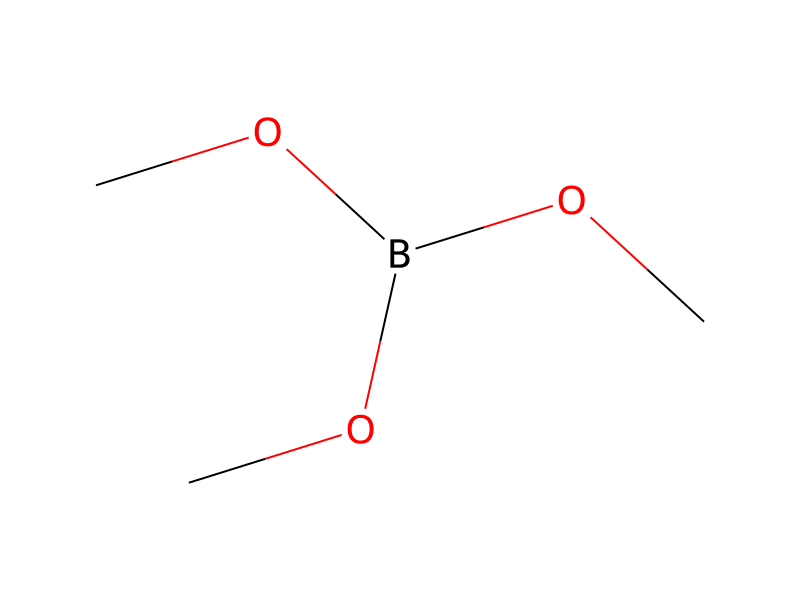
[Cl:1][CH:2]([Cl:4])[CH3:3].[B:5](OC)([O:8][CH3:9])[O:6][CH3:7].C(NC(C)C)(C)C.C([Li])CCC.ClC(B(OC(C)C)OC(C)C)Cl>C1COCC1>[Cl:1][C:2]([B:5]([O:8][CH3:9])[O:6][CH3:7])([Cl:4])[CH3:3]Komponenten
7






Reaktionsbedingungen
- Temperatur
- -78 °C
Versuchsvorschrift
A modification of the procedure of Example 1 was followed. 1,1-Dichloroethane (25 ml, 0.30 mol) was used in place of dichloromethane and trimethyl borate (30 ml, 0.265 mol) was used in place of triisopropyl borate. The quantity of diisopropylamine was 40 ml and that of butyllithium was 0.25 mol. A -78° C. cooling bath was used. The yield of (I) (R3 =R7 =R8 =methyl), bp 48° C. (40 Torr), was 27 g, 55% taking into account the 14% THF indicated by NMR analysis.
Quellen und Nachweise
- ORD-Eintrag
- ord-a5f90231c57b47dfa91ec47197b5f799
- Quelldatensatz
- uspto-grants-1987_10
- Patentnummer
- US04701545
Notizen zur Reaktion
Wird geladen…