StartseiteMCPWorkbenchSkills
StartseiteWorkbenchBenachrichtigungenMein Bereich
llms.txt · MCP-AnleitungDatenschutz · Nutzungsbedingungen · Supportv1.8.3
  1. Startseite
  2. /Reaktion

p-Toluenesulfonic acid → HCID 15586321, Verbindung

HRID 543860
Drucken

Reaktionsgleichung

Reaktionsgleichung von HRID 543860
[Cl:1][C:2]1[CH:7]=[CH:6][C:5]([C:8]2([N:15]([CH3:17])[CH3:16])[CH2:13][CH2:12][C:11](=O)[CH2:10][CH2:9]2)=[CH:4][CH:3]=1.[NH:18]1[CH2:23][CH2:22][O:21][CH2:20][CH2:19]1.C1(C)C=CC(S(O)(=O)=O)=CC=1.[BH4-].[Na+]>O.C(OCC)C.C(O)C.O1CCCC1.C1C=CC=CC=1>[Cl:1][C:2]1[CH:7]=[CH:6][C:5]([C:8]2([N:15]([CH3:17])[CH3:16])[CH2:13][CH2:12][CH:11]([N:18]3[CH2:23][CH2:22][O:21][CH2:20][CH2:19]3)[CH2:10][CH2:9]2)=[CH:4][CH:3]=1
KomponentenVersuchsvorschriftAufarbeitungQuellen und NachweiseNotizen zur Reaktion

Komponenten

10

Edukt 4

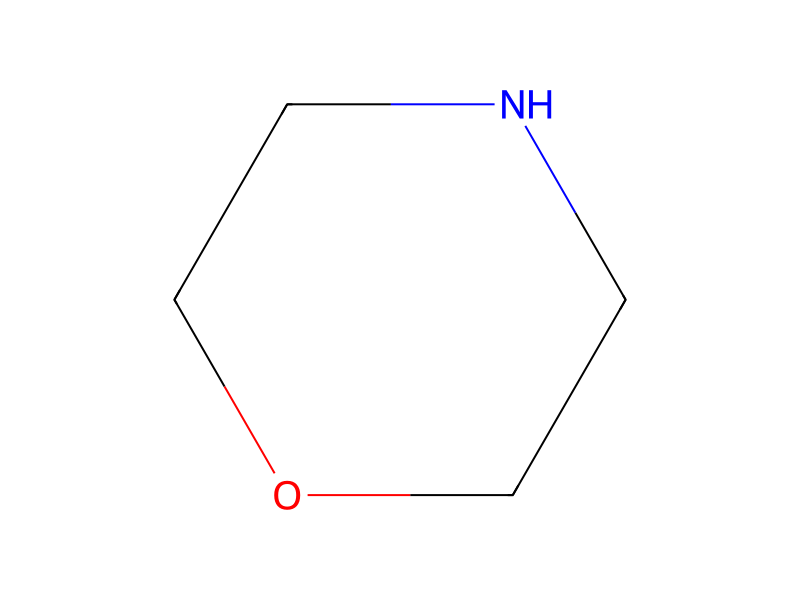
HCID 6101p-Toluenesulfonic acidHCID 8083MorpholineHCID 4311764Sodium borohydrideHCID 125956504-(4-Chlorophenyl)-4-(dimethylamino)cyclohexan-1-one

Produkt 1

HCID 15586321HCID 15586321, VerbindungAusbeute 30 %

Reagenzien, Katalysatoren, Lösungsmittel 5

HCID 241
Benzene
Lösungsmittel
HCID 702EthanolLösungsmittel2×
HCID 962WaterLösungsmittel
HCID 3283Diethyl EtherLösungsmittel
HCID 8028TetrahydrofuranLösungsmittel2×

Versuchsvorschrift

A reaction mixture consisting of 2.63 gm. (0.01 mole) 4-(p-chlorophenyl)-4-dimethylaminocyclohexanone (prepared as in Preparation I, Part i, above), 0.87 ml. morpholine, 0.05 gm. para-toluenesulfonic acid, and 40 ml. benzene is heated at the reflux temperature for seven (7) hours in a reaction vessel fitted with a Dean and Stark trap. The benzene is then removed by evaporation under reduced pressure. The residue thus obtained is dissolved in 10 ml. tetrahydrofuran, to which solution is added 0.76 gm. (0.02 mole) sodium borohydride in 35.0 ml. absolute ethanol. This reaction mixture is heated at the reflux temperature for seventeen (17) hours, after which heating the tetrahydrofuran and ethanol are removed by evaporation under pressure. The residue thus obtained is dispersed in a mixture of water and diethyl ether. After vigorous shaking and allowing the aqueous and organic phases to separate, the organic phase is recovered. It is washed first with water and then with brine. The ether is then allowed to evaporate. The residue thus obtained is transferred onto a 1 inch by 4 foot column of silica gel averaging 20 to 50 microns in size, for purposes of high pressure liquid chromatographic (HPLC) purification. The chromatogram is developed with a solvent system consisting of 5% methanol in chloroform with 1% triethylamine. The fractions of eluate containing the object compound yield a solid which is recrystallized from aqueous methanol to give 0.95 gm. (30% yield) of 1-(p-chlorophenyl)-1-dimethylamino-4-morpholinocyclohexane having a melting point at 103° to 105° C.


Aufarbeitung

  1. customfitted with a Dean and Stark trap
  2. customThe benzene is then removed by evaporation under reduced pressure
  3. customThe residue thus obtained
  4. dissolutionis dissolved in 10 ml
  5. customare removed by evaporation under pressure
  6. customThe residue thus obtained
  7. customto separate
  8. customthe organic phase is recovered
  9. washIt is washed first with water
  10. customto evaporate
  11. customThe residue thus obtained
  12. customis transferred onto a 1 inch by 4 foot column of silica gel averaging 20 to 50 microns in size, for purposes of high pressure liquid chromatographic (HPLC) purification
  13. additionThe fractions of eluate containing the object compound
  14. customyield a solid which
  15. customis recrystallized from aqueous methanol
  16. customto give 0.95 gm

Quellen und Nachweise

ORD-Eintrag
ord-5db3259c07234103a90102d3cde2e0d4
Quelldatensatz
uspto-grants-1984_05
DOI
10.6084/m9.figshare.5104873.v1
Patentnummer
US04447454

Notizen zur Reaktion

Auf dieser SeiteKomponentenVersuchsvorschriftAufarbeitungQuellen und NachweiseNotizen zur Reaktion