StartseiteMCPSkillsWorkbenchOpenChem
StartseiteWorkbenchBenachrichtigungenMein Bereich
llms.txt · skill.md · MCP-AnleitungDatenschutz · Nutzungsbedingungen · Supportv1.8.6
  1. Startseite
  2. /Reaktion

2-Aminopyridine → 6-Chloro-2-methyl-4-(pyridin-2-ylamino)pyridazin-3(2H)-one

HRID 872154
Drucken

Reaktionsgleichung

[NH2:1][C:2]1[CH:7]=[CH:6][CH:5]=[CH:4][N:3]=1.Br[C:9]1[C:10](=[O:17])[N:11]([CH3:16])[N:12]=[C:13]([Cl:15])[CH:14]=1.C(=O)([O-])[O-].[Cs+].[Cs+].O1CCOCC1>C(OCC)(=O)C.O.C1C=CC(/C=C/C(/C=C/C2C=CC=CC=2)=O)=CC=1.C1C=CC(/C=C/C(/C=C/C2C=CC=CC=2)=O)=CC=1.C1C=CC(/C=C/C(/C=C/C2C=CC=CC=2)=O)=CC=1.[Pd].[Pd].CC1(C)C2C(=C(P(C3C=CC=CC=3)C3C=CC=CC=3)C=CC=2)OC2C(P(C3C=CC=CC=3)C3C=CC=CC=3)=CC=CC1=2>[Cl:15][C:13]1[CH:14]=[C:9]([NH:1][C:2]2[CH:7]=[CH:6][CH:5]=[CH:4][N:3]=2)[C:10](=[O:17])[N:11]([CH3:16])[N:12]=1
KomponentenVersuchsvorschriftAufarbeitungQuellen und NachweiseNotizen zur Reaktion

Komponenten

9

Edukt 4

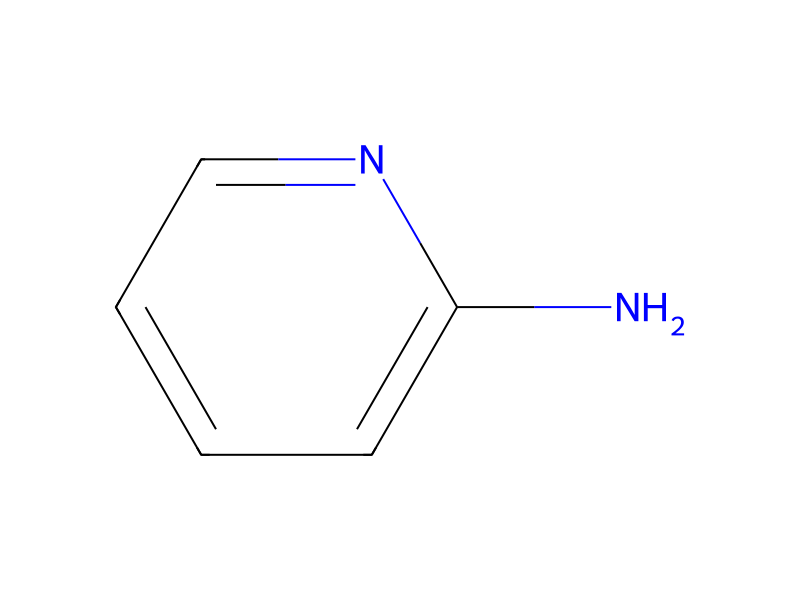
HCID 104392-AminopyridineHCID 10796Cesium carbonateHCID 312751,4-DioxaneHCID 592164744-Bromo-6-chloro-2-methyl-2,3-dihydropyridazin-3-one

Produkt 1

HCID 666099546-Chloro-2-methyl-4-(pyridin-2-ylamino)pyridazin-3(2H)-oneAusbeute 92,3 %

Reagenzien, Katalysatoren, Lösungsmittel 4

HCID 636044
1,1'-(9,9-Dimethyl-9H-xanthene-4,5-diyl)bis(1,1-diphenylphosphine)
Katalysator
HCID 9811564Bis(dibenzylideneacetone)palladiumKatalysator
HCID 962WaterLösungsmittel
HCID 8857Ethyl AcetateLösungsmittel

Versuchsvorschrift

A 250-mL three-neck round-bottomed flask equipped with a reflux condenser, magnetic stirrer and nitrogen inlet was charged with 2-aminopyridine (500 mg, 5.31 mmol), 103a (1.19 g, 5.31 mmol), cesium carbonate (5.19 g, 15.9 mmol), and 1,4-dioxane (75 mL). After bubbling nitrogen through the resulting suspension for 30 min, Xantphos (261 mg, 0.451 mmol) and tris(dibenzylideneacetone)dipalladium(0) (243 mg, 0.266 mmol) were added, and the reaction mixture was heated at reflux for 3 h. After this time, the mixture was cooled to room temperature and diluted with ethyl acetate (350 mL) and water (40 mL). The organic layer was separated, and the aqueous layer was extracted with a 20% (v/v) solution of methanol in methylene chloride (3×100 mL). The combined organic layers were dried over sodium sulfate and concentrated under reduced pressure. The residue was triturated with methanol (30 mL) to afford a 92% yield (1.16 g) of 104a as an off-white solid: mp 201-202° C.; 1H NMR (300 MHz, DMSO-d6) δ 9.64 (s, 1H), 8.38 (m, 2H), 7.75 (m, 1H), 7.54 (d, 1H, J=8.1 Hz), 7.03 (m, 1H), 3.67 (s, 3H); MS (ESI+) m/z 237.0 (M+H).

Aufarbeitung

  1. customA 250-mL three-neck round-bottomed flask equipped with a reflux condenser, magnetic stirrer and nitrogen inlet
  2. customAfter bubbling nitrogen through the resulting suspension for 30 min
  3. temperaturethe reaction mixture was heated
  4. temperatureat reflux for 3 h
  5. customThe organic layer was separated
  6. extractionthe aqueous layer was extracted with a 20% (v/v) solution of methanol in methylene chloride (3×100 mL)
  7. dry with materialThe combined organic layers were dried over sodium sulfate
  8. concentrationconcentrated under reduced pressure
  9. customThe residue was triturated with methanol (30 mL)

Quellen und Nachweise

ORD-Eintrag
ord-cb536923211c4afb8f9f98a7861eee2a
Quelldatensatz
uspto-grants-2015_03
DOI
10.6084/m9.figshare.5104873.v1
Patentnummer
US08975260B2

Notizen zur Reaktion

Auf dieser SeiteKomponentenVersuchsvorschriftAufarbeitungQuellen und NachweiseNotizen zur Reaktion