Reaction equation
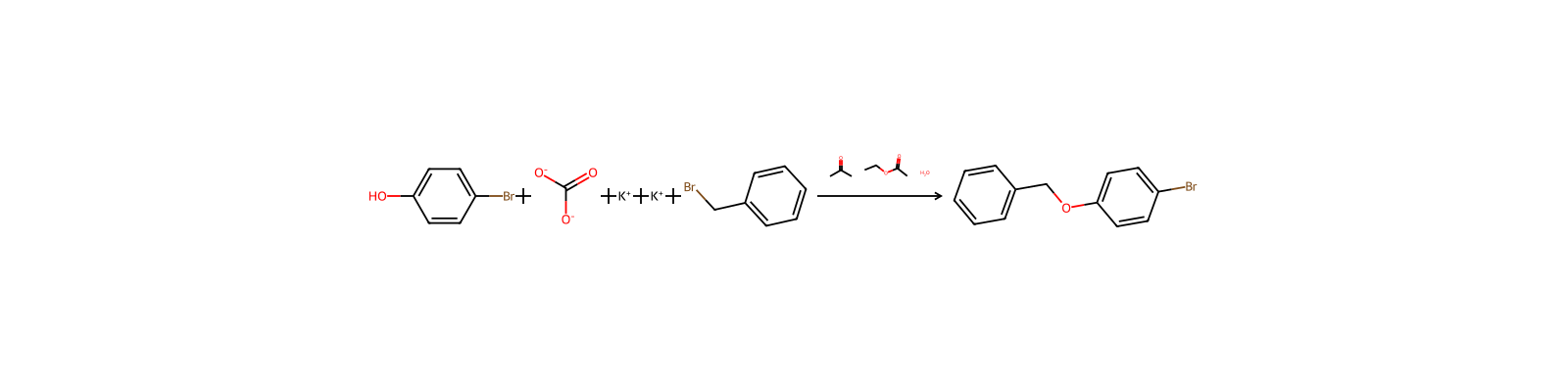
[Br:1][C:2]1[CH:7]=[CH:6][C:5]([OH:8])=[CH:4][CH:3]=1.C(=O)([O-])[O-].[K+].[K+].[CH2:15](Br)[C:16]1[CH:21]=[CH:20][CH:19]=[CH:18][CH:17]=1>CC(C)=O.C(OCC)(=O)C.O>[CH2:15]([O:8][C:5]1[CH:6]=[CH:7][C:2]([Br:1])=[CH:3][CH:4]=1)[C:16]1[CH:21]=[CH:20][CH:19]=[CH:18][CH:17]=1Participants
7
Reactant 3



Product 1
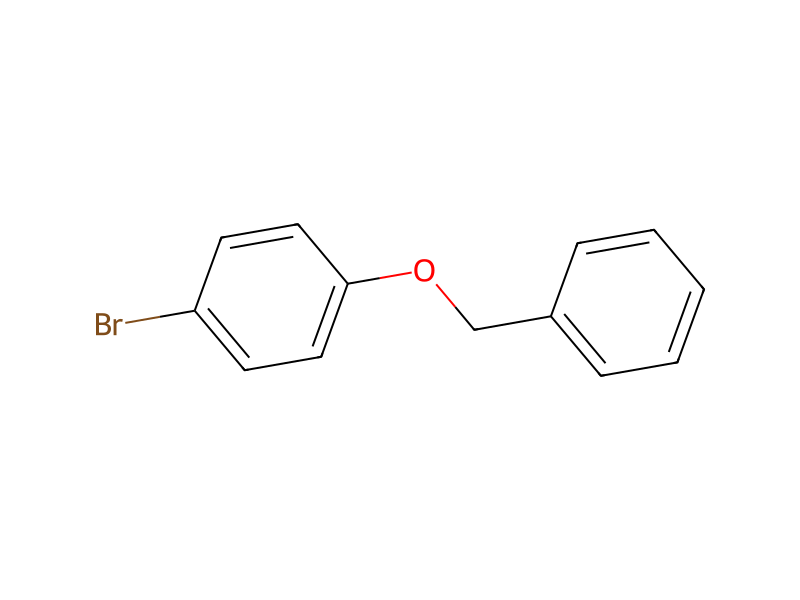
Reagents, catalysts & solvents 3



Procedure
4-Bromophenol (2 g, 0.0116 mol) in acetone (40 ml) was treated with potassium carbonate (1.91 g, 1.2 equivalents) and benzyl bromide (1.44 ml, 1.05 equivalents). The reaction was refluxed under nitrogen. After 5–6 hours of reflux, the reaction was cooled to room temperature and diluted with an equal volume of ethyl acetate. This was diluted further with water and the organic layer was separated, dried over magnesium sulfate and evaporated to dryness to afford a white fluffy powder. Yield=2.36 g (73%).
Workup
- temperatureThe reaction was refluxed under nitrogen
- temperatureAfter 5–6 hours of reflux
- customthe organic layer was separated
- dry with materialdried over magnesium sulfate
- customevaporated to dryness
- customto afford a white fluffy powder
Sources & evidence
- ORD record
- ord-9c38a67482a74a60b22a9dd04f69b8a7
- Source dataset
- uspto-grants-2006_08
- Patent number
- US07097995B2
Linked notes
Loading…