HomeMCPWorkbenchSkills
HomeWorkbenchNotificationsMe
llms.txt · MCP GuidePrivacy Policy · Terms of Service · Supportv1.8.3
  1. Home
  2. /Reaction

Salicylaldehyde oxime → 3-(4-Nitro-1H-pyrazol-1-yl)pyridine

HRID 1182779
Print

Reaction equation

HRID 1182779 reaction equation
[CH:1](=[N:9]O)[C:2]1[C:3](=[CH:5][CH:6]=CC=1)O.[N+:11]([C:14]1[CH:15]=[N:16][NH:17][CH:18]=1)([O-:13])=[O:12].C(=O)([O-])[O-].[Cs+].[Cs+].BrC1C=NC=CC=1>[Cu]=O.CN(C=O)C.C(OCC)(=O)C>[N+:11]([C:14]1[CH:15]=[N:16][N:17]([C:2]2[CH:1]=[N:9][CH:6]=[CH:5][CH:3]=2)[CH:18]=1)([O-:13])=[O:12]
ParticipantsConditionsProcedureWorkupSources & evidenceReaction notes

Participants

8

Reactant 4

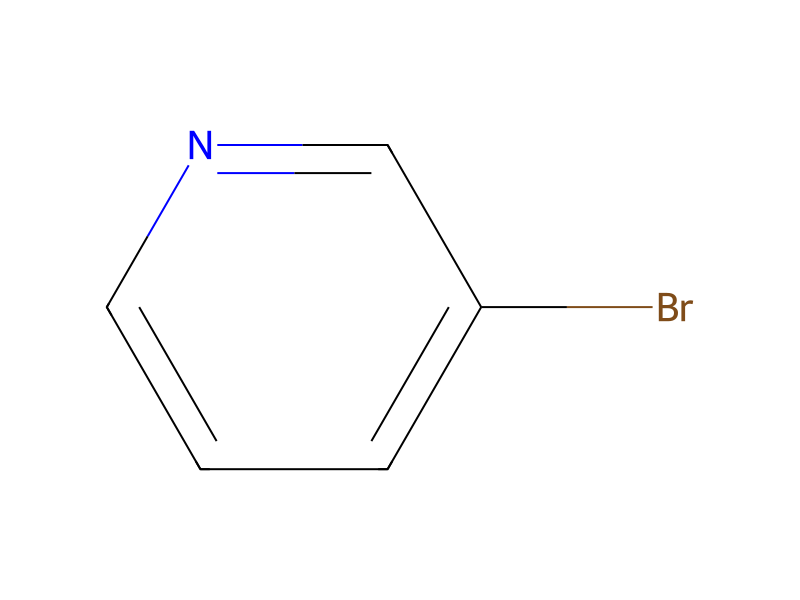
HCID 7200Salicylaldehyde oximeHCID 10796Cesium carbonateHCID 122863-BromopyridineHCID 163764-nitro-1H-pyrazole

Product 1

HCID 126612223-(4-Nitro-1H-pyrazol-1-yl)pyridine

Reagents, catalysts & solvents 3

HCID 14829Copper oxide
Catalyst
HCID 6228DimethylformamideSolvent2×
HCID 8857Ethyl AcetateSolvent

Conditions

Temperature
130 °C

Procedure

A flask which had been baked out and filled with argon was initially charged with 8.3 g (56.6 mmol) of copper oxide, 31.9 g (228 mmol) of salicylaldoxime, 200 g (1.71 mol) of 4-nitro-1H-pyrazole and 597 g (1.83 mol) of caesium carbonate. The flask was repeatedly evacuated and filled with argon. 218 g (800 mmol) of 3-bromopyridine and 1 l of DMF which had been degassed on a rotary evaporator were added. The reaction mixture was stirred at 130° C. overnight, cooled and filtered, and the DMF was removed on a rotary evaporator. The substance was dissolved in 1 l of ethyl acetate, and extracted with 2 l of H2O. The water phase was extracted twice with 500 ml of ethyl acetate. Filtration of the aqueous phase gave a green solid. 1 l of ethyl acetate and 100 ml of DMF were added thereto, and the mixture was heated to 50° C. Cooling was followed by filtration through Hyflo and washing with 500 ml of ethyl acetate. The filtrate was washed with 300 ml of water and 300 ml of saturated NaCl solution, dried over Na2SO4, filtered and concentrated. The solid was suspended in 100 ml of ethyl acetate, filtered and washed with ethyl acetate and methyl tert-butyl ether, and the beige solid (45 g) was dried on a rotary evaporator.

Workup

  1. customA flask which had been baked out
  2. additionfilled with argon
  3. customThe flask was repeatedly evacuated
  4. additionfilled with argon
  5. additionwere added
  6. temperaturecooled
  7. filtrationfiltered
  8. customthe DMF was removed on a rotary evaporator
  9. dissolutionThe substance was dissolved in 1 l of ethyl acetate
  10. extractionextracted with 2 l of H2O
  11. extractionThe water phase was extracted twice with 500 ml of ethyl acetate
  12. filtrationFiltration of the aqueous phase
  13. customgave a green solid
  14. temperaturethe mixture was heated to 50° C
  15. temperatureCooling
  16. filtrationwas followed by filtration through Hyflo
  17. washwashing with 500 ml of ethyl acetate
  18. washThe filtrate was washed with 300 ml of water and 300 ml of saturated NaCl solution
  19. dry with materialdried over Na2SO4
  20. filtrationfiltered
  21. concentrationconcentrated
  22. filtrationfiltered
  23. washwashed with ethyl acetate and methyl tert-butyl ether
  24. dry with materialthe beige solid (45 g) was dried on a rotary evaporator

Sources & evidence

ORD record
ord-54a8a1b708c44e5cbf3e9799ef430c6e
Source dataset
uspto-grants-2014_03
DOI
10.6084/m9.figshare.5104873.v1
Patent number
US08664229B2

Reaction notes

On this pageParticipantsConditionsProcedureWorkupSources & evidenceReaction notes