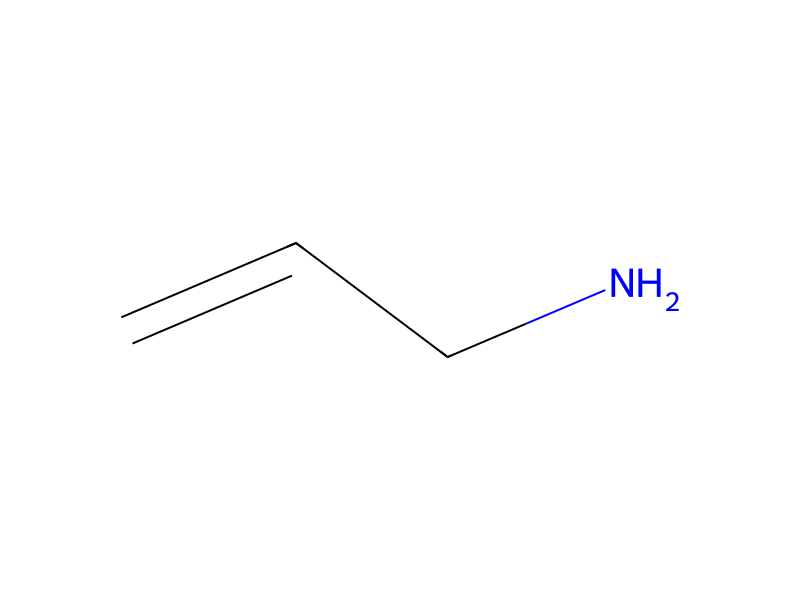
There is considerable prior art relating to the synthesis of poly(aminoalkylmethylsiloxanes). Generally, poly(aminoalkylmethylsiloxanes) have been produced by first preparing aminoalkylmethyldialkoxysilanes, followed by hydrolysis with or without an endblocking agent, such as a trimethylsilyl derivative, to form cyclic and linear poly(3-aminoalkylmethylsiloxanes). The isomeric purity of the poly(aminoalkylmethylsiloxane) fluids, prepared in the manner of the prior art, is dependent upon the isomeric purity of the aminoalkylmethyldialkoxysilane prepared in the first step of the synthesis. German Patent No. 2408480 describes the reaction of a silazane derivative from allylamine and an organohydrochlorosilane, in the presence of a proton acceptor to form an intermediate silazane which then undergoes a hydrosilylation reaction catalyzed by a platinum catalyst. Upon alcoholysis, the intermediate hydrosilylation product forms 3-aminopropylmethyldiethoxysilane in 70% overall yield. A molar excess of at least 50% of allylamine is used in this process. Identification of the beta-isomer in the product was not made. Japanese Patent No. 10017578 describes another method of synthesis by hydrosilylation of N,N-bis(trimethylsilyl)allylamine by methyldimethoxysilane. The product of that reaction is then heated with methanol to form 3-aminopropylmethyldimethoxysilane in at least 85% overall yield. The presence of the beta-isomer in the product was not made. Japanese Patent No. 11209384 describes the use of a rhodium:cyclooctadiene complex as a hydrosilylation catalyst for the addition of methyldiethoxysilane to allylamine to form 3-aminopropylmethyldiethoxysilane in 78% yield. 2-Aminopropylmethyldiethoxysilane is formed at very low levels in this process not exceeding 0.5%. U.S. Pat. No. 5,391,675 describes the formation of an aminopropylmethylsiloxy-containing polydimethylsiloxane by barium or strontium hydroxide catalyzed condensation of a silanol terminated polydimethylsiloxane with a 3-aminopropylalkoxysilane with elimination of an alcohol.