HomeMCPWorkbenchSkills
HomeWorkbenchNotificationsMe
llms.txt · MCP GuidePrivacy Policy · Terms of Service · Supportv1.8.1
  1. Home
  2. /Reaction

Hexanal → 3-Decyn-5-ol

HRID 1283518
Print

Reaction equation

HRID 1283518 reaction equation
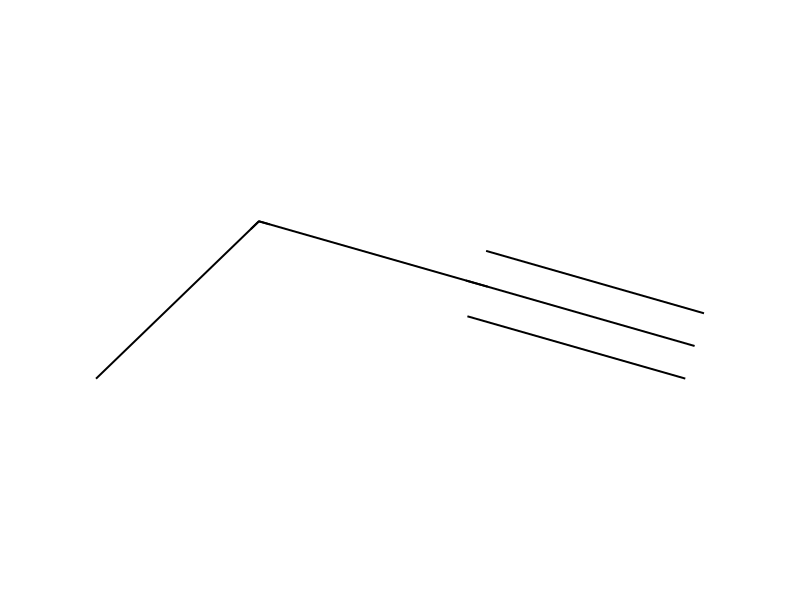
[CH2:1]=[C:2]=[CH:3][CH3:4].C=CC=C.C#CCC.CC#CC.[CH:17](=[O:23])[CH2:18][CH2:19][CH2:20][CH2:21][CH3:22]>O1CCCC1>[CH3:1][CH2:2][C:3]#[C:4][CH:17]([OH:23])[CH2:18][CH2:19][CH2:20][CH2:21][CH3:22]
ParticipantsProcedureWorkupSources & evidenceReaction notes

Participants

7

Reactant 5

HCID 6184HexanalHCID 78451,3-ButadieneHCID 78461-ButyneHCID 10419DimethylacetyleneHCID 115351,2-Butadiene

Product 1

HCID 215184413-Decyn-5-ol

Reagents, catalysts & solvents 1

HCID 8028
Tetrahydrofuran
Solvent

Procedure

Following the procedure of Example 1, but with a pressure equalizing dropping funnel in place of the gas addition tube, 5.2 g. of lithium metal powder and 125 ml. of tetrahydrofuran are added to the flask. 65 g. of ammonia gas is condensed into the slurry with stirring forming a liquid-copper-gold colored lithium ammonia adduct. 190 g. of a mixture containing about 18% 1,2-butadiene, 21% 1,3-butadiene, 4% 1-butyne, 3.3% 2-butyne and about 25% isomeric butenes dissolved in 800 ml. tetrahydrofuran was added over a 70 minute period with stirring while maintaining the temperature at about 50°C. to 60°C. The mixture was refluxed to drive off excess gases and cooled. An aliquot of the product was reacted with 1-hexanal producing 3-decyn-5-ol which by gas chromotograph analysis, establishes a yield of butynyllithium in excess of 90%, based on lithium.

Workup

  1. dissolutiondissolved in 800 ml
  2. temperaturewhile maintaining the temperature at about 50°C. to 60°C
  3. temperatureThe mixture was refluxed
  4. temperaturecooled

Sources & evidence

ORD record
ord-a28dd0458317429e893d593529ac2648
Source dataset
uspto-grants-1976_08
DOI
10.6084/m9.figshare.5104873.v1
Patent number
US03975453

Reaction notes

On this pageParticipantsProcedureWorkupSources & evidenceReaction notes