Reaction equation

[C:1]([O:5][C:6](=[O:12])[C@H:7]([CH:9]([CH3:11])[CH3:10])[NH2:8])([CH3:4])([CH3:3])[CH3:2].Cl.[N:14]1[CH:19]=[CH:18][CH:17]=[C:16]([CH2:20][C:21](O)=[O:22])[CH:15]=1.C(OP(C#N)(=O)OCC)C>CN(C=O)C.C(Cl)Cl.C(N(CC)CC)C>[C:1]([O:5][C:6](=[O:12])[C@H:7]([CH:9]([CH3:10])[CH3:11])[NH:8][C:21](=[O:22])[CH2:20][C:16]1[CH:15]=[N:14][CH:19]=[CH:18][CH:17]=1)([CH3:4])([CH3:3])[CH3:2]Participants
8
Reactant 4


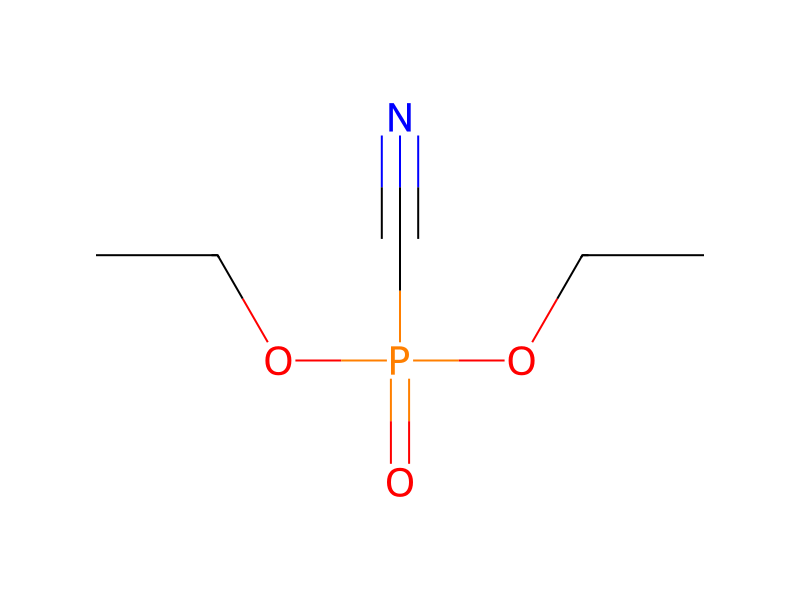

Product 1

Reagents, catalysts & solvents 3



Procedure
4.2 ml of triethylamine are added dropwise at 0° to a solution of 3.36 g (16 mmol) of (L)-valine-tert-butyl ester.HCl, 2 g (14.5 mmol) of 3-pyridylacetic acid and 2.17 ml (14.3 mmol) of cyanophosphonic acid diethyl ester in 20 ml of DMF. The reaction mixture is stirred for 48 h at RT, and then diluted with methylene chloride and washed with 10% citric acid as well as saturated sodium hydrogen carbonate solution. The organic phase is filtered through cotton wadding and, after removal of the solvent by evaporation, yields N-(3-pyridylacetyl)-(L)-valine-tert-butyl ester, which is directly further used in a).
Workup
- washwashed with 10% citric acid as well as saturated sodium hydrogen carbonate solution
- filtrationThe organic phase is filtered through cotton wadding
- customafter removal of the solvent
- customby evaporation
Sources & evidence
- ORD record
- ord-84fe4bba081d417da4fd906a950e4952
- Source dataset
- uspto-grants-1998_05
- Patent number
- US05753652
Linked notes
Loading…