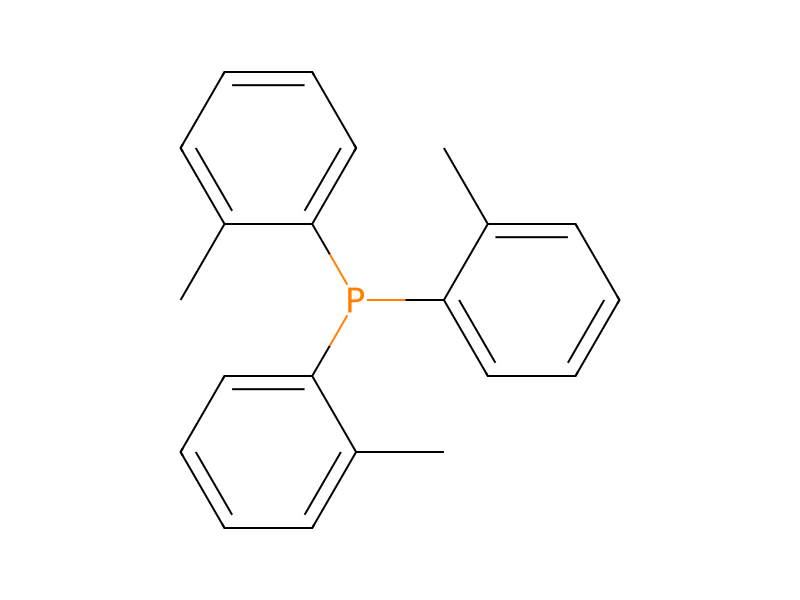
O[C:2]1[CH:11]=[CH:10][C:5]([C:6]([O:8][CH3:9])=[O:7])=[CH:4][C:3]=1I.CN(C=[O:17])C.[Cl:18][C:19]1[CH:24]=[C:23]([Cl:25])[CH:22]=[CH:21][C:20]=1B(O)O>C([O-])(=O)C.[Pd+2].C([O-])(=O)C.C1(C)C=CC=CC=1P(C1C=CC=CC=1C)C1C=CC=CC=1C.C(N(CC)CC)C>[Cl:18][C:19]1[CH:24]=[C:23]([Cl:25])[CH:22]=[CH:21][C:20]=1[C:4]1[C:5]([C:6]([O:8][CH3:9])=[O:7])=[CH:10][CH:11]=[CH:2][C:3]=1[OH:17]5.6 g of methyl 4-hydroxy-3-iodobenzoate are introduced under argon into 50 ml of anhydrous DMF and then 4.2 g of 2,4-dichlorophenylboronic acid and 5.54 ml of triethylamine and then 240 mg of tri-orthotolylphosphine are added and the mixture is left under argon for 1 hour. 180 mg of palladium acetate are added and then the mixture is heated at 100° C. for 4 hours. 2 g of 2,4-dichlorophenylboronic acid, 5.54 ml of triethylamine, 120 mg of tri-orthotolylphoshine and 180 mg of palladium acetate are added and then the mixture is heated at 100° C. for 8 hours. It is concentrated under vacuum and the residue is taken up in AcOEt and then washed with 10% NH4OH solution. Extraction is carried out with AcOEt and the extract is washed with water and then with saturated NaCl solution. The residue is dried and then chromatographed on silica, eluting with a cyclohexane/AcOEt mixture (82/18; v/v), to give 3.4 g of the expected compound.