HomeMCPWorkbenchSkills
HomeWorkbenchNotificationsMe
llms.txt · MCP GuidePrivacy Policy · Terms of Service · Supportv1.8.3
  1. Home
  2. /Reaction

Isopropanol → Diethylamine

HRID 1400073
Print

Reaction equation

HRID 1400073 reaction equation
[NH2:1][CH:2]1[CH2:9][C:8]2([C:10]([N:12]3[C@H:17]4[CH2:18][CH2:19][C@H:13]3[CH2:14][N:15]([C:20]3[CH:25]=[C:24]([C:26]([F:29])([F:28])[F:27])[CH:23]=[CH:22][N:21]=3)[CH2:16]4)=[O:11])[CH:4]([CH2:5][CH2:6][CH2:7]2)[CH2:3]1.C(N(CCCC)CCCC)CCC.C(O)(C)C.C(O[BH-](OC(=O)C)OC(=O)C)(=O)C.[Na+].[CH3:61][O:62][C@H:63]1[C:68](=O)[CH2:67][CH2:66][O:65][CH2:64]1>C(OC(C)C)(=O)C.ClCCl>[CH2:10]([NH:12][CH2:13][CH3:14])[CH3:8].[CH3:61][O:62][C@@H:63]1[CH2:64][O:65][CH2:66][CH2:67][C@@H:68]1[NH:1][C@H:2]1[CH2:9][C@@:8]2([C:10]([N:12]3[C@H:13]4[CH2:19][CH2:18][C@@H:17]3[CH2:16][N:15]([C:20]3[CH:25]=[C:24]([C:26]([F:29])([F:28])[F:27])[CH:23]=[CH:22][N:21]=3)[CH2:14]4)=[O:11])[C@H:4]([CH2:5][CH2:6][CH2:7]2)[CH2:3]1
ParticipantsProcedureWorkupSources & evidenceReaction notes

Participants

9

Reactant 5

HCID 3776IsopropanolHCID 7622TributylamineHCID 5049666Sodium triacetoxyborohydrideHCID 11320949(R)-3-methoxydihydro-2H-pyran-4(3H)-oneHCID 89823484(2-aminooctahydropentalen-3a-yl)((1S,5S)-3-(4-(trifluoromethyl)pyridin-2-yl)-3,8-diazabicyclo[3.2.1]octan-8-yl)methanone

Product 2

HCID 8021
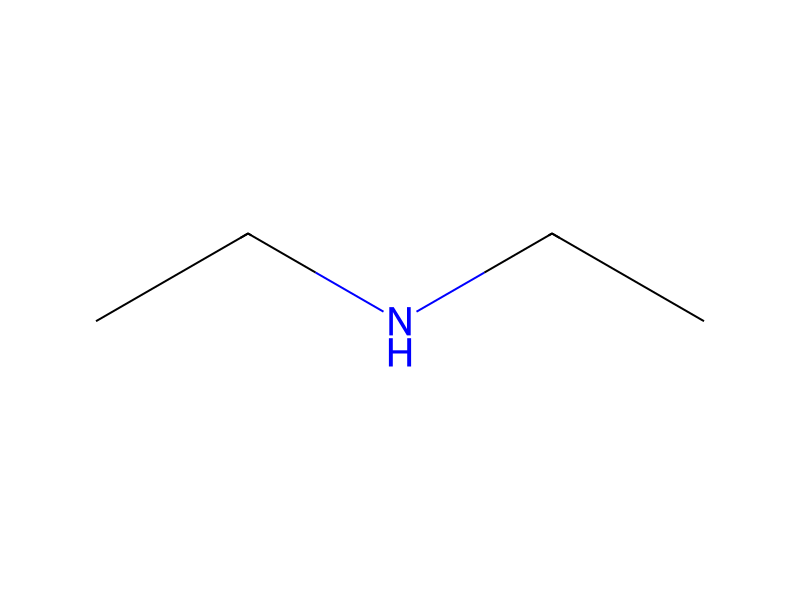
Diethylamine
Yield 0.1%
HCID 898234821,5-anhydro-2,3-dideoxy-4-O-methyl-3-{[(2R,3aR,6aR)-3a-({(1R,5S)-3-[4-(trifluoromethyl)pyridin-2-yl]-3,8-diazabicyclo[3.2.1]oct-8-yl}carbonyl)octahydropentalen-2-yl]amino}-D-erythro-pentitol

Reagents, catalysts & solvents 2

HCID 6344DichloromethaneSolventHCID 7915Isopropyl AcetateSolvent

Procedure

A solution of Example 8C (50 mg, 0.12 mmol) in isopropyl acetate (5 mL) was cooled with an ice bath. Tributyl amine (11 mg, 0.06 mmol) followed by addition of isopropyl alcohol (16.8 mg, 0.28 mmol) was added to the solution. Sodium triacetoxyborohydride (59 mg, 0.28 mmol) was added at 5° C. After stirring for 1 hour, a solution of Example 1I (23.4 mg, 0.18 mmol) in dichloromethane was added to the reaction mixture. Then the mixture was stirred at room temperature overnight. The reaction mixture was quenched with saturated sodium bicarbonate and extracted with ethyl acetate. The combined organic fractions were washed with brine, dried in vacuo and concentrated to provide a diastereomeric mixture. The diastereomeric mixture was separated by chiral SFC (Column: AD 250 mm*30 mm, 5 μm; Mobile phase:A, supercritical CO2; B, isopropyl alcohol with 0.1% diethylamine, A:B=80:20 with a flow rate of 70 mL/min) to afford the title compound (peak 1, retention time: 7.11 minutes) and Example 41 (peak 2, retention time: 7.94 minutes); MS (ESI) m/z 523 (M+H)+.

Workup

  1. additionwas added to the solution
  2. stirringThen the mixture was stirred at room temperature overnight
  3. customThe reaction mixture was quenched with saturated sodium bicarbonate
  4. extractionextracted with ethyl acetate
  5. washThe combined organic fractions were washed with brine
  6. customdried in vacuo
  7. concentrationconcentrated
  8. customto provide a diastereomeric mixture
  9. customThe diastereomeric mixture was separated by chiral SFC (Column

Sources & evidence

ORD record
ord-f7a5b7c362c64e8d8421b0abe47224ae
Source dataset
uspto-grants-2014_12
DOI
10.6084/m9.figshare.5104873.v1
Patent number
US08906911B2

Reaction notes

On this pageParticipantsProcedureWorkupSources & evidenceReaction notes