HomeMCPWorkbenchSkills
HomeWorkbenchNotificationsMe
llms.txt · MCP GuidePrivacy Policy · Terms of Service · Supportv1.8.0
  1. Home
  2. /Reaction

Diisopropylethylamine → (5R)-3-(2-chloropyrimidin-5-yl)-5-ethyl-5-methyl-imidazolidine-2,4-dione

HRID 1484642
Notes
Print preview

Reaction equation

HRID 1484642 reaction equation
ClC(Cl)(O[C:5](=[O:11])OC(Cl)(Cl)Cl)Cl.[Cl:13][C:14]1[N:19]=[CH:18][C:17]([NH2:20])=[CH:16][N:15]=1.CCN(C(C)C)C(C)C.Cl.[NH2:31][C@:32]([CH3:39])([CH2:37][CH3:38])[C:33](OC)=[O:34]>C(OCC)(=O)C.CN(C1C=CN=CC=1)C.C(OCC)(=O)C.ClCCl>[Cl:13][C:14]1[N:19]=[CH:18][C:17]([N:20]2[C:33](=[O:34])[C@:32]([CH2:37][CH3:38])([CH3:39])[NH:31][C:5]2=[O:11])=[CH:16][N:15]=1
ParticipantsConditionsProcedureWorkupSources & evidenceReaction notes

Participants

8

Reactant 4

HCID 81531DiisopropylethylamineHCID 94429TriphosgeneHCID 122159932-Chloropyrimidin-5-amineHCID 13018906(R)-2-Amino-2-methyl-butyric acid methyl ester hydrochloride

Product 1

HCID 86698451(5R)-3-(2-chloropyrimidin-5-yl)-5-ethyl-5-methyl-imidazolidine-2,4-dione

Reagents, catalysts & solvents 3

HCID 14284
4-(Dimethylamino)pyridine
Catalyst
HCID 8857Ethyl AcetateSolvent3×
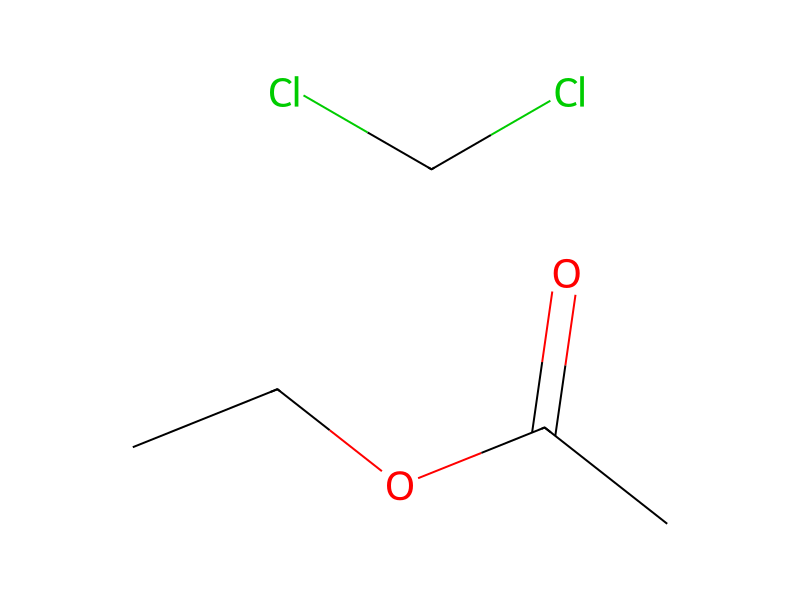
HCID 21226138Dichloromethane ethylacetateSolvent

Conditions

Temperature
0 °C

Procedure

To a solution of triphosgene (1.38 g, 4.65 mmol) in Ethyl acetate (20 ml) at 0° C. a solution of 2-chloro-5-aminopyrimidine (1 g, 7.75 mmol)/DIPEA (8 ml, 4.65 mmol) in ethyl acetate (40 ml) was slowly added (20 minutes) and the reaction mixture was stirred for 15 minutes at the same temperature. Maintaining the reaction mixture at 0° C., vacuum was applied (10 minutes) for removing the excess of phosgene. A solution of DMAP (0.945 g, 7.75 mmol) in ethyl acetate/dichloromethane 1:1 (8 ml) was added and the reaction mixture was stirred for 5 minutes at the same temperature. A solution of methyl (R)-2-amino-2-methyl-butyrate hydrochloride (2.59 g, 15.5 mmol) in ethyl acetate (30 ml) was slowly added (15 minutes) at 0° C. and the reaction mixture was stirred for 30 minutes at the same temperature. The reaction was quenched with aqueous buffer (pH3) while the pH was allowed to reach ˜5-6 and two phases were separated. The organic layer was washed with aqueous buffer (pH3) (2×20 ml) and then brine (20 ml), dried (Na2SO4), filtered and evaporated affording the urea intermediate as orange foam.


Workup

  1. custom(10 minutes)
  2. customfor removing the excess of phosgene
  3. stirringthe reaction mixture was stirred for 5 minutes at the same temperature
  4. stirringthe reaction mixture was stirred for 30 minutes at the same temperature
  5. customThe reaction was quenched with aqueous buffer (pH3) while the pH
  6. customwere separated
  7. washThe organic layer was washed with aqueous buffer (pH3) (2×20 ml)
  8. dry with materialbrine (20 ml), dried (Na2SO4)
  9. filtrationfiltered
  10. customevaporated

Sources & evidence

ORD record
ord-5cd331f07fd34c478285e40fb86fb921
Source dataset
uspto-grants-2016_08
DOI
10.6084/m9.figshare.5104873.v1
Patent number
US09422272B2

Reaction notes

Loading…

On this pageParticipantsConditionsProcedureWorkupSources & evidenceReaction notes