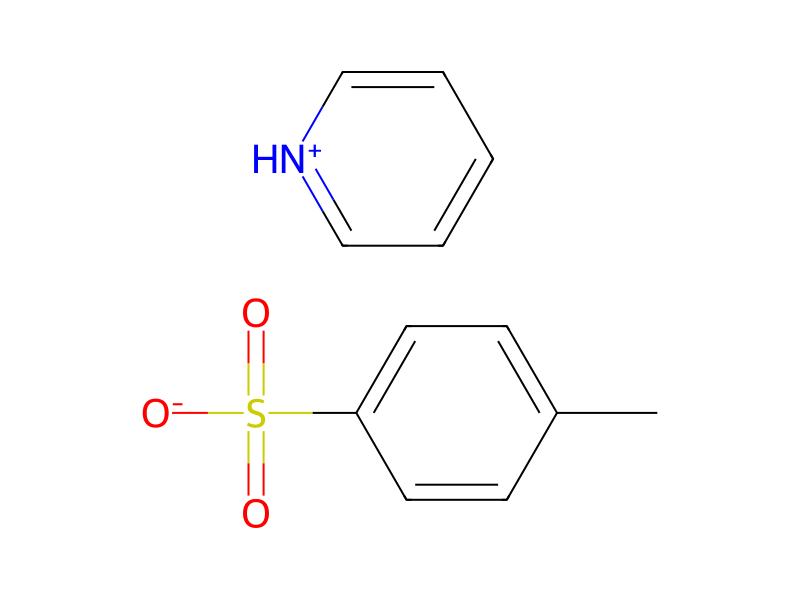
[Br:1][C:2]1[CH:10]=[C:6]([C:7]([OH:9])=[O:8])[C:5]([NH2:11])=[C:4]([OH:12])[CH:3]=1.[C:13](Cl)(=O)[CH3:14].C(N(CC)CC)C.C1(C)C=CC(S([O-])(=O)=O)=CC=1.[NH+]1C=CC=CC=1>C1(C)C(C)=CC=CC=1.C(OCC)(=O)C>[Br:1][C:2]1[CH:3]=[C:4]2[O:12][C:13]([CH3:14])=[N:11][C:5]2=[C:6]([C:7]([OH:9])=[O:8])[CH:10]=1To a solution of 5-bromo-3-hydroxyanthranilic acid (prepared as described in Eur. J. Med. Chem., 1999, 34, 729) (400 mg) in xylene (30 mL), were added acetyl chloride (135 μL), triethylamine (265 μL) and pyridinium p-toluenesulfonate (130 mg), and the mixture was heated at reflux for 8 hours. The reaction mixture was cooled to room temperature, diluted with ethyl acetate, washed sequentially with water and brine, and dried over anhydrous magnesium sulfate, and the solvent was removed under reduced pressure. The residue was purified on silica gel column chromatography to obtain the titled compound (471 mg).