HomeMCPWorkbenchSkills
HomeWorkbenchNotificationsMe
llms.txt · MCP GuidePrivacy Policy · Terms of Service · Supportv1.8.3
  1. Home
  2. /Reaction

Dichloromethane → 5-(4-Hydroxybenzyl)-3-trityloxazolidine-2,4-dione

HRID 1595480
Print

Reaction equation

HRID 1595480 reaction equation
[C:1]1([C:7](Cl)([C:14]2[CH:19]=[CH:18][CH:17]=[CH:16][CH:15]=2)[C:8]2[CH:13]=[CH:12][CH:11]=[CH:10][CH:9]=2)[CH:6]=[CH:5][CH:4]=[CH:3][CH:2]=1.[OH:21][C:22]1[CH:27]=[CH:26][C:25]([CH2:28][CH:29]2[O:33][C:32](=[O:34])[NH:31][C:30]2=[O:35])=[CH:24][CH:23]=1.ClCCl>O.C(OCC)(=O)C.C(N(CC)CC)C.CN(C)C=O>[C:1]1([C:7]([C:14]2[CH:19]=[CH:18][CH:17]=[CH:16][CH:15]=2)([C:8]2[CH:13]=[CH:12][CH:11]=[CH:10][CH:9]=2)[N:31]2[C:30](=[O:35])[CH:29]([CH2:28][C:25]3[CH:26]=[CH:27][C:22]([OH:21])=[CH:23][CH:24]=3)[O:33][C:32]2=[O:34])[CH:6]=[CH:5][CH:4]=[CH:3][CH:2]=1
ParticipantsProcedureWorkupSources & evidenceReaction notes

Participants

8

Reactant 3

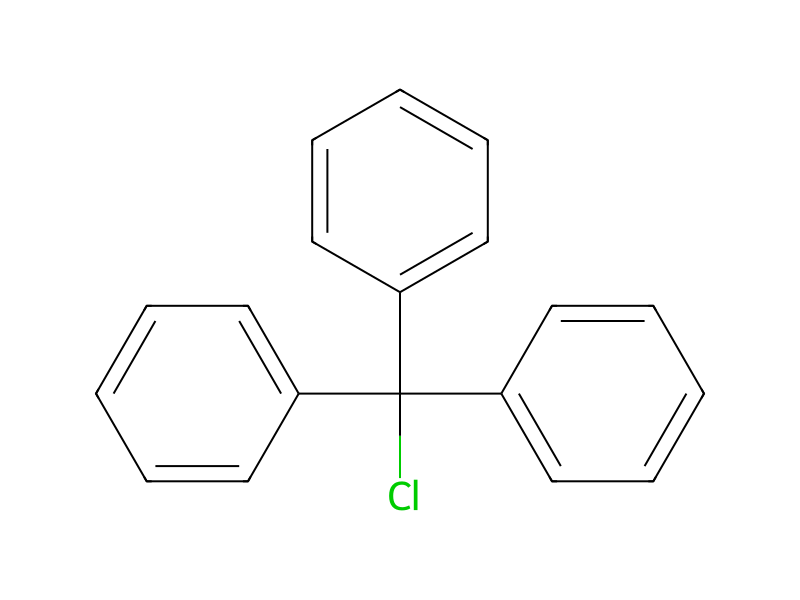
HCID 6344DichloromethaneHCID 6456Trityl chlorideHCID 103529685-([4-Hydroxyphenyl]methyl)oxazolidine-2,4-dione

Product 1

HCID 149136625-(4-Hydroxybenzyl)-3-trityloxazolidine-2,4-dioneYield 60.3%

Reagents, catalysts & solvents 4

HCID 962WaterSolvent
HCID 6228
Dimethylformamide
Solvent
HCID 8471TriethylamineSolvent2×
HCID 8857Ethyl AcetateSolvent

Procedure

0.33 g (1.18 mmole) triphenylmethyl chloride was added to a solution of 0.245 g (1.18 mmole) 5-([4-hydroxyphenyl]methyl)oxazolidine-2,4-dione, 0.165 ml (1.18 mmole) triethylamine, 5 ml dichloromethane and 5 ml dimethylformamide on an icebath. The temperature of the reaction mixture was allowed to reach room temperature. After 1.5 hours 0.05 ml more triethylamine was added. After 2 hours ethyl acetate and water were added and the phases were seperated. The organic phase was dried (sodium sulfate), the solvent was evaporated and the crude product was purified by chromatography on silica gel using heptane:ethyl acetate (3:2) as eluent to give 0.32 g (yield 60%) 3-triphenylmethyl-5-([4-hydroxyphenyl]methyl)oxazolidine-2,4-dione.

Workup

  1. customto reach room temperature
  2. customthe phases were seperated
  3. dry with materialThe organic phase was dried (sodium sulfate)
  4. customthe solvent was evaporated
  5. customthe crude product was purified by chromatography on silica gel

Sources & evidence

ORD record
ord-2e8117331b8542f9ad8c12deb457a29f
Source dataset
uspto-grants-2001_09
DOI
10.6084/m9.figshare.5104873.v1
Patent number
US06288096B1

Reaction notes

On this pageParticipantsProcedureWorkupSources & evidenceReaction notes