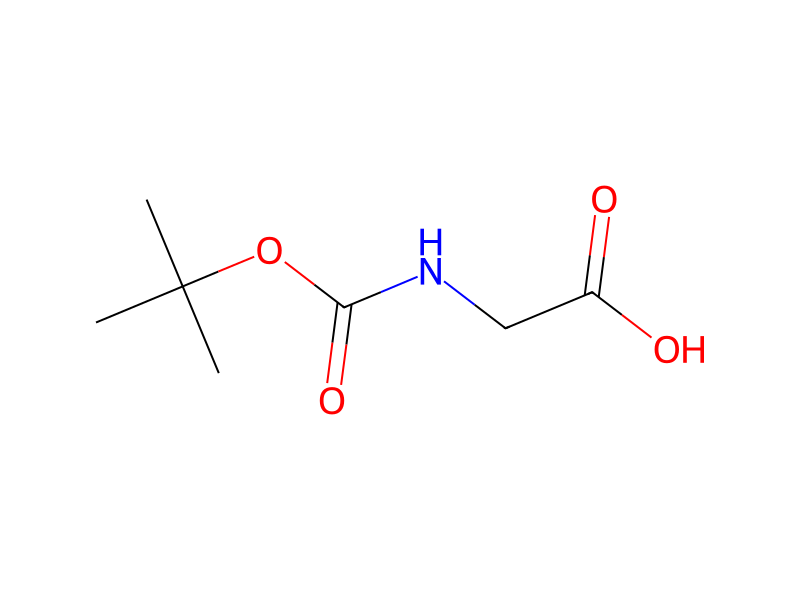
Cl.CN(C)CCCN=C=NCC.O[N:14]1[C:18]2[CH:19]=[CH:20][CH:21]=[CH:22][C:17]=2N=N1.C(N(CC)CC)C.[C:30]([O:34][C:35]([NH:37][CH2:38][C:39](O)=[O:40])=[O:36])([CH3:33])([CH3:32])[CH3:31]>ClCCl.C(OCC)(=O)C>[C:18]1([NH:14][C:39]([CH2:38][NH:37][C:35](=[O:36])[O:34][C:30]([CH3:32])([CH3:31])[CH3:33])=[O:40])[CH:17]=[CH:22][CH:21]=[CH:20][CH:19]=11.27 g (1.19 mmol) of 1-(3-dimethylaminopropyl)-3-ethylcarbodiimide hydrochloride, 681 mg (5.04 mmol) of 1-hydroxybenzotriazole and 0.95 ml (6.82 mmol) of triethylamine were added to 1.15 g (6.56 mmol) of t-butoxycarbonylglycine in 20 ml of dichloromethane under cooling in an ice bath, and they were stirred at room temperature overnight. Ethyl acetate was added to the reaction mixture, and the product was washed with 0.1 N hydrochloric acid and then with a saturated aqueous sodium hydrogencarbonate solution. The organic layer was dried over anhydrous sodium sulfate and then concentrated under reduced pressure to obtain the title compound.
Loading…