HomeMCPSkillsWorkbenchOpenChem
HomeWorkbenchNotificationsMe
llms.txt · skill.md · MCP GuidePrivacy Policy · Terms of Service · Supportv1.8.6
  1. Home
  2. /Reaction

Nitrogen → 1-(4-chlorophenyl)-2-(2,4-dichlorophenyl)-4,5-dihydro-1H-imidazole-4-carbonitrile

HRID 1727383
Print

Reaction equation

[Cl:1][C:2]1[CH:7]=[CH:6][C:5]([NH:8][C:9]([C:11]2[CH:16]=[CH:15][C:14]([Cl:17])=[CH:13][C:12]=2[Cl:18])=[NH:10])=[CH:4][CH:3]=1.Cl[C:20](=[CH2:23])[C:21]#[N:22].C(N(CC)C(C)C)(C)C.N#N>O1CCCC1>[Cl:1][C:2]1[CH:3]=[CH:4][C:5]([N:8]2[CH2:23][CH:20]([C:21]#[N:22])[N:10]=[C:9]2[C:11]2[CH:16]=[CH:15][C:14]([Cl:17])=[CH:13][C:12]=2[Cl:18])=[CH:6][CH:7]=1
ParticipantsProcedureWorkupSources & evidenceReaction notes

Participants

6

Reactant 4

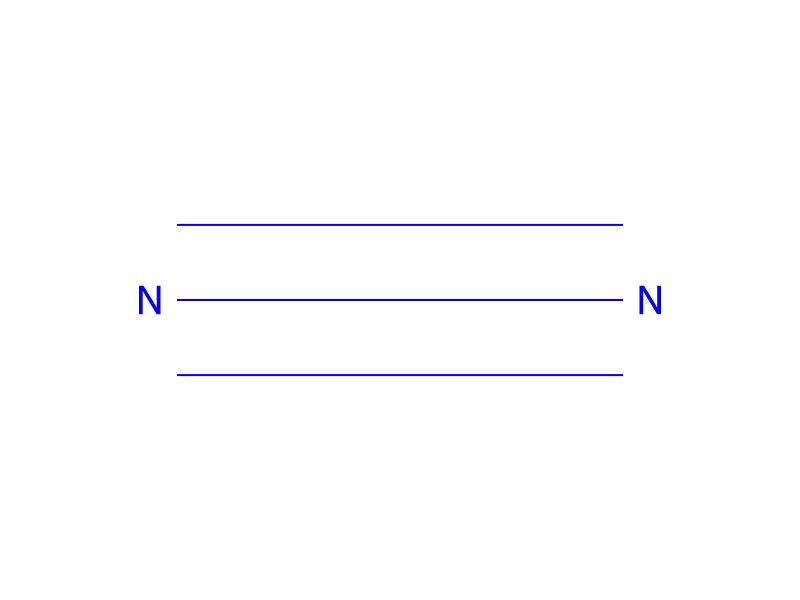
HCID 947NitrogenHCID 701982-ChloroacrylonitrileHCID 81531DiisopropylethylamineHCID 178512018HCID 178512018, compound

Product 1

HCID 210821251-(4-chlorophenyl)-2-(2,4-dichlorophenyl)-4,5-dihydro-1H-imidazole-4-carbonitrileYield 97.1%

Reagents, catalysts & solvents 1

HCID 8028
Tetrahydrofuran
Solvent

Procedure

Part A: A magnetically stirred mixture of N-(4-chlorophenyl)-2,4-dichlorobenzenecarboxamidine (10.0 gram, 0.033 mol), 2-chloroacrylonitrile (5.7 gram, 0.065 mol) and N,N-diisopropylethylamine (DIPEA) (12.5 ml, 0.069 mol) in tetrahydrofuran (150 ml) is heated at reflux temperature for 40 hours (N2 atmosphere). After cooling to room temperature the mixture is concentrated in vacuo. The residue is dissolved in a mixture of dichloromethane and water (200 ml/200 ml). The dichloromethane layer is collected, dried over MgSO4, filtered and concentrated in vacuo. The residue is recrystallised from ethanol/water to give 1-(4-chlorophenyl)-2-(2,4-dichlorophenyl)-4,5-dihydro-1H-imidazole-4-carbonitrile (11.23 gram, 97% yield). 1H-NMR (400 MHz, CDCl3): δ 4.28 (dd, J=10 and 8 Hz, 1H), 4.36 (t, J=10 Hz, 1H), 5.07 (dd, J=10 and 8 Hz, 1 H), 6.68 (br d, J=8 Hz, 2H), 7.16 (br d, J=8 Hz, 2H), 7.32-7.36 (m, 2H), 7.45 (d, J=8 Hz, 1H).

Workup

  1. temperatureis heated
  2. concentrationis concentrated in vacuo
  3. dissolutionThe residue is dissolved in a mixture of dichloromethane and water (200 ml/200 ml)
  4. customThe dichloromethane layer is collected
  5. dry with materialdried over MgSO4
  6. filtrationfiltered
  7. concentrationconcentrated in vacuo
  8. customThe residue is recrystallised from ethanol/water

Sources & evidence

ORD record
ord-5eee73d37620441aa53e5513f4d4ca8e
Source dataset
uspto-grants-2009_02
DOI
10.6084/m9.figshare.5104873.v1
Patent number
US07495108B2

Reaction notes

On this pageParticipantsProcedureWorkupSources & evidenceReaction notes