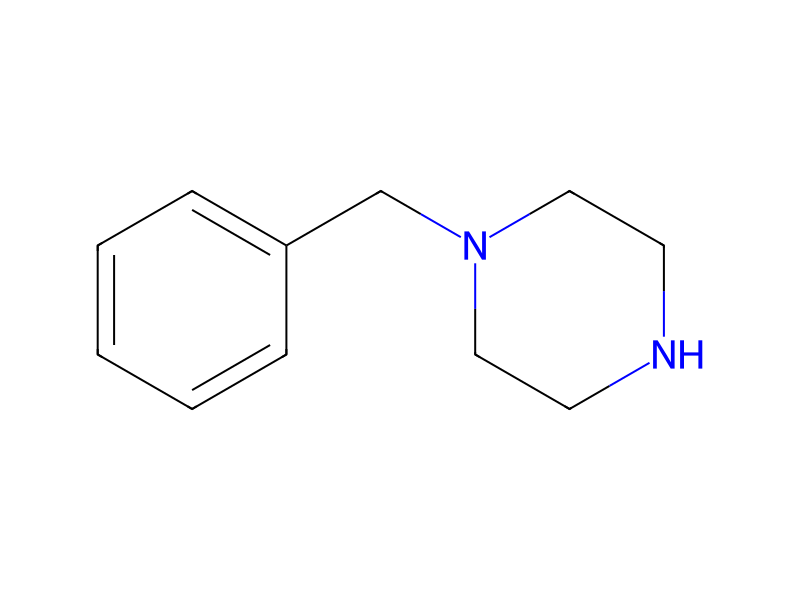
[CH3:1][O:2][C:3]1[CH:4]=[C:5]([CH2:9][C:10]([OH:12])=O)[CH:6]=[CH:7][CH:8]=1.C(Cl)(=O)C(Cl)=O.[CH2:19]([N:26]1[CH2:31][CH2:30][NH:29][CH2:28][CH2:27]1)[C:20]1[CH:25]=[CH:24][CH:23]=[CH:22][CH:21]=1.C(=O)(O)[O-].[Na+]>C(Cl)Cl.C(N(CC)CC)C.CN(C=O)C>[CH3:1][O:2][C:3]1[CH:4]=[C:5]([CH2:9][C:10]([N:29]2[CH2:30][CH2:31][N:26]([CH2:19][C:20]3[CH:21]=[CH:22][CH:23]=[CH:24][CH:25]=3)[CH2:27][CH2:28]2)=[O:12])[CH:6]=[CH:7][CH:8]=13-Methoxyphenylacetic acid (100 g, 600 mmole) was dissolved in methylene chloride (600 mL) and treated with oxalyl chloride (60 mL) and DMF (1 mL) at room temperature. The mixture was stirred for four hours until gas evolution ceased. The solvent was evaporated and the residue dried under vacuum to remove excess oxalyl chloride. The oil obtained was dissolved in methylene chloride (400 mL). Half of this solution (200 mL, approx. 300 mmole) was cooled in ice and treated with a solution of 1-benzylpiperazine (60 mL, 350 mmole) and triethylamine (30 mL) in methylene chloride (100 mL) dropwise. The mixture was stirred at room temperature for 16 hours. Sodium bicarbonate solution was added and the mixture stirred for 15 minutes. The layers were separated. The organic phase was washed with water, brine, dried over K2CO3 and evaporated to an oil. Wt. 90 g. A small portion was characterized as the hydrochloride, m.p. 229°-231° C.