HomeMCPWorkbenchSkills
HomeWorkbenchNotificationsMe
llms.txt · MCP GuidePrivacy Policy · Terms of Service · Supportv1.8.0
  1. Home
  2. /Reaction

Hydrochloric Acid → (4S)-1-[(2S,3S)-3-(N,N-Dibenzylamino)-2-hydroxy-4-phenylbutyryl]-4-chloro-N-t-butyl-L-prolinamide

HRID 1780289
Notes
Print preview

Reaction equation

HRID 1780289 reaction equation
C(OC([N:8]([C:17]([CH3:20])([CH3:19])[CH3:18])[C:9](=[O:16])[C@@H:10]1[CH2:14][C@H:13]([Cl:15])[CH2:12][NH:11]1)=O)(C)(C)C.Cl.[CH2:22]([N:29]([C@@H:37]([CH2:43][C:44]1[CH:49]=[CH:48][CH:47]=[CH:46][CH:45]=1)[C@H:38]([OH:42])[C:39](O)=[O:40])[CH2:30][C:31]1[CH:36]=[CH:35][CH:34]=[CH:33][CH:32]=1)[C:23]1[CH:28]=[CH:27][CH:26]=[CH:25][CH:24]=1.P(C#N)(OCC)(OCC)=O>O1CCOCC1.CN(C)C=O.C(N(CC)CC)C>[CH2:22]([N:29]([C@@H:37]([CH2:43][C:44]1[CH:45]=[CH:46][CH:47]=[CH:48][CH:49]=1)[C@H:38]([OH:42])[C:39]([N:11]1[CH2:12][C@@H:13]([Cl:15])[CH2:14][C@H:10]1[C:9]([NH:8][C:17]([CH3:18])([CH3:19])[CH3:20])=[O:16])=[O:40])[CH2:30][C:31]1[CH:36]=[CH:35][CH:34]=[CH:33][CH:32]=1)[C:23]1[CH:24]=[CH:25][CH:26]=[CH:27][CH:28]=1
ParticipantsProcedureWorkupSources & evidenceReaction notes

Participants

8

Reactant 4

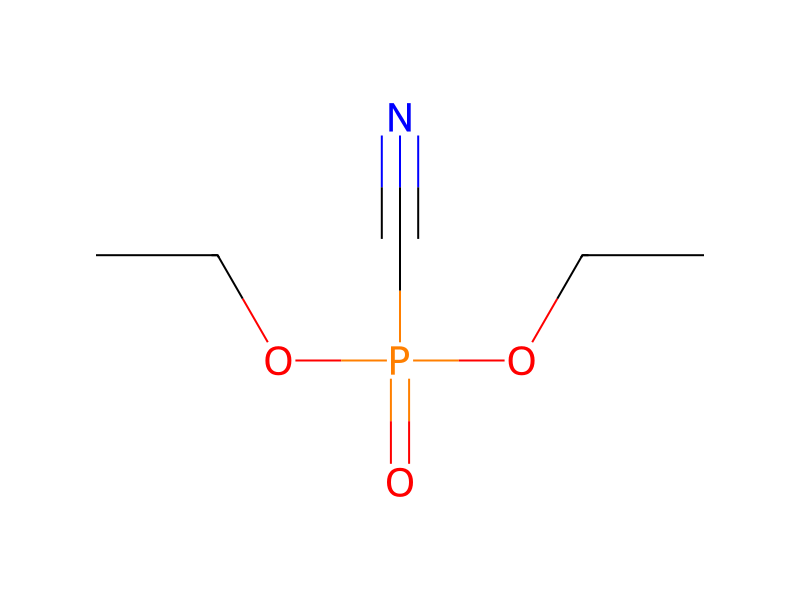
HCID 313Hydrochloric AcidHCID 76257Diethyl cyanophosphonateHCID 9885958(2S,3S)-3-(N,N-dibenzylamino)-2-hydroxy-4-phenylbutyric acidHCID 67722592(4S)-N-t-butoxycarbonyl-4-chloro-N-t-butyl-L-prolinamide

Product 1

HCID 70049826(4S)-1-[(2S,3S)-3-(N,N-Dibenzylamino)-2-hydroxy-4-phenylbutyryl]-4-chloro-N-t-butyl-L-prolinamide
Yield 88.9%

Reagents, catalysts & solvents 3

HCID 8471TriethylamineCatalystHCID 6228DimethylformamideSolventHCID 312751,4-DioxaneSolvent

Procedure

12.2 g (0.04 mol) of (4S)-N-t-butoxycarbonyl-4-chloro-N-t-butyl-L-prolinamide were treated with 50 ml of a 4N solution of hydrogen chloride in dioxane, in order to remove the t-butoxycarbonyl group. The product thus obtained and 15.0 g (0.04 mol) of (2S,3S)-3-(N,N-dibenzylamino)-2-hydroxy-4-phenylbutyric acid were dissolved in 50 ml of dimethylformamide, and the solution was cooled with ice. 8.48 ml (52.0 mmol) of diethyl cyanophosphate, and then 11.2 ml (0.08 mmol) of triethylamine, were then added dropwise to the resulting mixture, which was then stirred for 1 day. At the end of this time, the reaction mixture was concentrated by evaporation under reduced pressure, and the concentrate was diluted with ethyl acetate. The diluted solution was washed with a 5% w/v aqueous solution of citric acid and with a 5% w/v aqueous solution of sodium hydrogencarbonate, in that order, after which it was dried over anhydrous sodium sulfate. The solvent was then removed by distillation under reduced pressure, and the resulting residue was purified by column chromatography, using a 1:1 by volume mixture of ethyl acetate and hexane as the eluent, to give 20.0 g of the title compound as a colorless powder, melting at 64°-67° C.

Workup

  1. customto remove the t-butoxycarbonyl group
  2. customThe product thus obtained
  3. temperaturethe solution was cooled with ice
  4. concentrationAt the end of this time, the reaction mixture was concentrated by evaporation under reduced pressure
  5. additionthe concentrate was diluted with ethyl acetate
  6. washThe diluted solution was washed with a 5% w/v aqueous solution of citric acid and with a 5% w/v aqueous solution of sodium hydrogencarbonate, in that order
  7. dry with materialafter which it was dried over anhydrous sodium sulfate
  8. customThe solvent was then removed by distillation under reduced pressure
  9. customthe resulting residue was purified by column chromatography
  10. additionby volume mixture of ethyl acetate and hexane as the eluent

Sources & evidence

ORD record
ord-75722d74621943a493c13e8214d95db2
Source dataset
uspto-grants-1997_05
DOI
10.6084/m9.figshare.5104873.v1
Patent number
US05629406

Reaction notes

Loading…

On this pageParticipantsProcedureWorkupSources & evidenceReaction notes