HomeMCPWorkbenchSkills
HomeWorkbenchNotificationsMe
llms.txt · MCP GuidePrivacy Policy · Terms of Service · Supportv1.8.0
  1. Home
  2. /Reaction

1H-1,2,4-Triazole → (2S,3S)-2-(2,4-difluorophenyl)-1-(1H-1,2,4-triazol-1-yl)butane-2,3-diol

HRID 1816528
Notes
Print preview

Reaction equation

HRID 1816528 reaction equation
[I-].C[S+](C)(C)=O.[H-].[Na+].[H][H].[F:11][C:12]1[CH:17]=[C:16]([F:18])[CH:15]=[CH:14][C:13]=1[C:19](=[O:23])[C@@H:20]([OH:22])[CH3:21].[NH:24]1[CH:28]=[N:27][CH:26]=[N:25]1.[C:29](=O)([O-])[O-].[K+].[K+]>CS(C)=O.O1CCCC1.O>[F:11][C:12]1[CH:17]=[C:16]([F:18])[CH:15]=[CH:14][C:13]=1[C@@:19]([OH:23])([C@@H:20]([OH:22])[CH3:21])[CH2:29][N:24]1[CH:28]=[N:27][CH:26]=[N:25]1
ParticipantsConditionsProcedureWorkupSources & evidenceReaction notes

Participants

10

Reactant 6

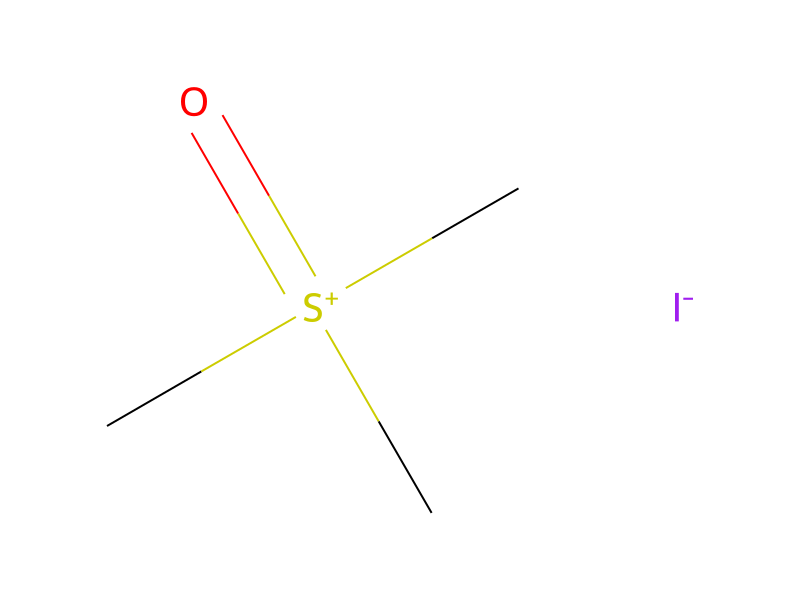
HCID 92571H-1,2,4-TriazoleHCID 11430Potassium CarbonateHCID 24758Sodium hydrideHCID 74498Sulfoxonium, trimethyl-, iodide (1:1)HCID 10986991(2S)-2',4'-difluoro-2-hydroxypropiophenoneHCID 178418361HCID 178418361, compound

Product 1

HCID 11054699
(2S,3S)-2-(2,4-difluorophenyl)-1-(1H-1,2,4-triazol-1-yl)butane-2,3-diol
Yield 48.5%

Reagents, catalysts & solvents 3

HCID 679Dimethyl SulfoxideSolvent2×HCID 962WaterSolventHCID 8028TetrahydrofuranSolvent

Conditions

Temperature
2.5 °C

Procedure

Trimethyloxosulfonium iodide (17.7 g, 80.6 mmol) was dissolved in a mixed solvent of dimethyl sulfoxide (80 ml) and tetrahydrofuran (30 ml) and the mixture was cooled to 0-5° C. Sodium hydride (60% dispersion in oil, 2.47 g, 61.9 mmol) was added by small portions at 0-5° C. After generation of hydrogen stopped, the mixture was aged for 1.5 hr, and a solution (20 ml) of (2S)-2′,4′-difluoro-2-hydroxypropiophenone (10.0 g, 53.8 mmol) in dimethyl sulfoxide was added dropwise at −5 to 5° C. over 3.5 hr. After confirmation of the completion of the reaction by HPLC analysis, 1,2,4-triazole (12.8 g, 185.7 mmol) and potassium carbonate (14.8 g, 107.6 mmol) were added and the mixture was heated at an internal temperature of 90-93° C. for 2 hr. After confirmation of the completion of the addition reaction by HPLC analysis, water (200 ml) was flown in and the mixture was extracted 3 times with ethyl acetate (100 ml). The layers extracted with ethyl acetate were mixed, washed twice with water (100 ml) and dried over anhydrous magnesium sulfate. After filtration, the filtrate (ethyl acetate solution) was concentrated. The obtained oil (13.5 g) was washed successively with a mixed solvent of ethyl acetate (10 ml) and n-heptane (30 ml) and then with a mixed solvent of ethyl acetate (5 ml) and n-heptane (10 ml), after which dispersion crystallized from methyl tert-butyl ether (20 ml). Filtration and drying gave the title compound as white crystals (2.25 g). The filtrate was concentrated, and the obtained concentrate (8.03 g) was subjected to HPLC quantitative determination analysis. As a result, 4.76 g of the title compound was contained. The total yield was 48.5%. The HPLC analysis conditions were the same as in Example 1 (retention time: 7.5 min).

Workup

  1. additionwere added
  2. temperaturethe mixture was heated at an internal temperature of 90-93° C. for 2 hr
  3. extractionwas extracted 3 times with ethyl acetate (100 ml)
  4. extractionThe layers extracted with ethyl acetate
  5. additionwere mixed
  6. washwashed twice with water (100 ml)
  7. dry with materialdried over anhydrous magnesium sulfate
  8. filtrationAfter filtration
  9. concentrationthe filtrate (ethyl acetate solution) was concentrated
  10. washThe obtained oil (13.5 g) was washed successively with a mixed solvent of ethyl acetate (10 ml) and n-heptane (30 ml)
  11. customwith a mixed solvent of ethyl acetate (5 ml) and n-heptane (10 ml), after which dispersion crystallized from methyl tert-butyl ether (20 ml)
  12. filtrationFiltration
  13. customdrying

Sources & evidence

ORD record
ord-23f6f2f87fa34bdc838ce7bdf8153d54
Source dataset
uspto-grants-2005_04
DOI
10.6084/m9.figshare.5104873.v1
Patent number
US06884892B2

Reaction notes

Loading…

On this pageParticipantsConditionsProcedureWorkupSources & evidenceReaction notes