HomeMCPWorkbenchSkills
HomeWorkbenchNotificationsMe
llms.txt · MCP GuidePrivacy Policy · Terms of Service · Supportv1.8.3
  1. Home
  2. /Reaction

Sodium Hydroxide → HCID 42610195, compound

HRID 1877290
Print

Reaction equation

HRID 1877290 reaction equation
[CH:1]1([CH:7]([NH:20][C:21]2[CH:22]=[CH:23][C:24]([C:27](O)=[O:28])=[N:25][CH:26]=2)[C:8]2[CH:12]=[C:11]([C:13]3[CH:18]=[CH:17][CH:16]=[CH:15][CH:14]=3)[S:10][C:9]=2[CH3:19])[CH2:6][CH2:5][CH2:4][CH2:3][CH2:2]1.[CH3:30][NH:31][CH2:32][CH2:33][C:34]([O:36]CC)=[O:35].O.ON1C2C=CC=CC=2N=N1.Cl.C(N=C=NCCCN(C)C)C.[Cl-].[NH4+].[OH-].[Na+]>C(O)C.O1CCCC1.CN(C)C=O.C(N(CC)CC)C>[CH:1]1([CH:7]([NH:20][C:21]2[CH:22]=[CH:23][C:24]([C:27]([N:31]([CH3:30])[CH2:32][CH2:33][C:34]([OH:36])=[O:35])=[O:28])=[N:25][CH:26]=2)[C:8]2[CH:12]=[C:11]([C:13]3[CH:18]=[CH:17][CH:16]=[CH:15][CH:14]=3)[S:10][C:9]=2[CH3:19])[CH2:6][CH2:5][CH2:4][CH2:3][CH2:2]1
ParticipantsProcedureWorkupSources & evidenceReaction notes

Participants

11

Reactant 6

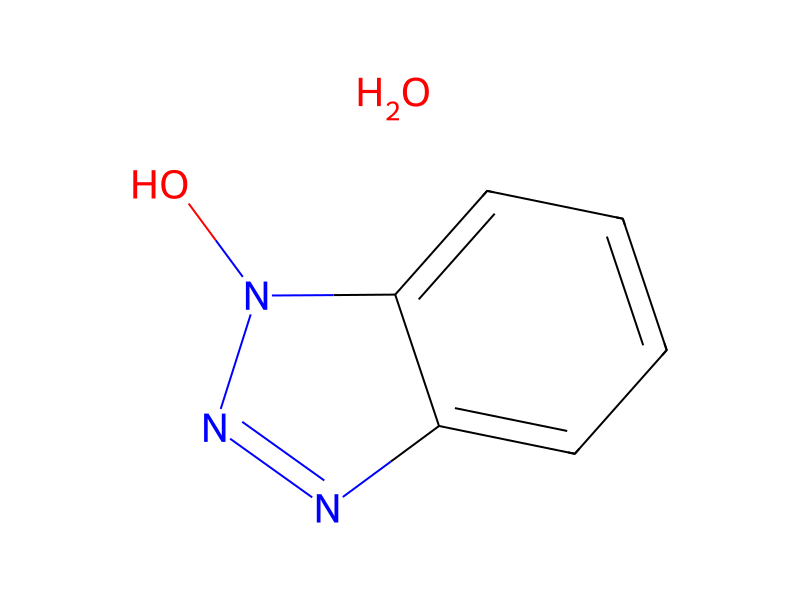
HCID 14798Sodium HydroxideHCID 25517Ammonium ChlorideHCID 541480Ethyl 3-(methylamino)propanoateHCID 27239391,3-Propanediamine, N'-(ethylcarbonimidoyl)-N,N-dimethyl-, monohydrochlorideHCID 27960291-Hydroxybenzotriazole hydrateHCID 685134235-{[Cyclohexyl(2-methyl-5-phenylthiophen-3-yl)methyl]amino}pyridine-2-carboxylic acid


Product 1

HCID 42610195HCID 42610195, compoundYield 57%

Reagents, catalysts & solvents 4

HCID 702EthanolSolventHCID 6228DimethylformamideSolventHCID 8028TetrahydrofuranSolventHCID 8471TriethylamineSolvent

Procedure

To a mixture of 5-{[cyclohexyl(2-methyl-5-phenylthiophen-3-yl)methyl]amino}pyridine-2-carboxylic acid (300 mg) synthesized in Example 310 (1), ethyl 3-(methylamino)propanoate (146 mg), 1-hydroxybenzotriazole monohydrate (170 mg), triethylamine (308 μL) and N,N-dimethylformamide (10 mL) was added 1-ethyl-3-(3-dimethylaminopropyl)carbodiimide hydrochloride (213 mg), and the mixture was stirred at room temperature overnight. Saturated aqueous ammonium chloride solution was added to quench the reaction, and the mixture was extracted with ethyl acetate. The extract was washed with saturated aqueous sodium hydrogen carbonate solution and saturated brine, dried over magnesium sulfate, and concentrated under reduced pressure. The residue was purified by silica gel chromatography (30-50% ethyl acetate/hexane) to give a colorless oil. To a mixture of the obtained oil, tetrahydrofuran (5 mL) and ethanol (5 mL) was added 1N aqueous sodium hydroxide solution (2.00 mL), and the mixture was stirred at room temperature for 2 hr. The reaction mixture was concentrated under reduced pressure. The residue was dissolved in water (10 mL), and 1N hydrochloric acid (2.00 mL) was added at 0° C. The resulting precipitate was collected by filtration to give the title compound (205 mg, 57%) as a white solid.

Workup

  1. customto quench
  2. customthe reaction
  3. extractionthe mixture was extracted with ethyl acetate
  4. washThe extract was washed with saturated aqueous sodium hydrogen carbonate solution and saturated brine
  5. dry with materialdried over magnesium sulfate
  6. concentrationconcentrated under reduced pressure
  7. customThe residue was purified by silica gel chromatography (30-50% ethyl acetate/hexane)
  8. customto give a colorless oil
  9. stirringthe mixture was stirred at room temperature for 2 hr
  10. concentrationThe reaction mixture was concentrated under reduced pressure
  11. dissolutionThe residue was dissolved in water (10 mL)
  12. addition1N hydrochloric acid (2.00 mL) was added at 0° C
  13. filtrationThe resulting precipitate was collected by filtration

Sources & evidence

ORD record
ord-57ac5b3175474b79a7a4665ee7b0bd13
Source dataset
uspto-grants-2012_11
DOI
10.6084/m9.figshare.5104873.v1
Patent number
US08309580B2

Reaction notes

On this pageParticipantsProcedureWorkupSources & evidenceReaction notes