Reaction equation

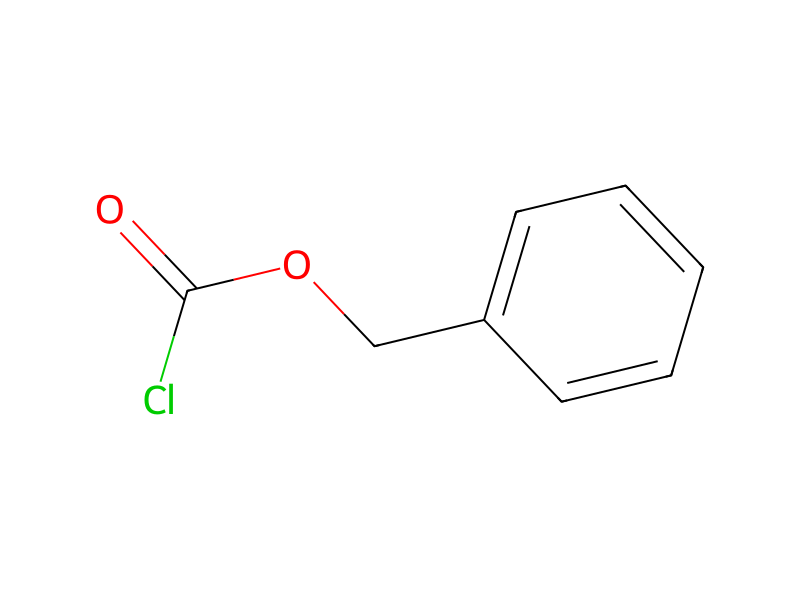
N[C:2]1[CH:6]=[C:5]([C:7]([CH3:10])([CH3:9])[CH3:8])[NH:4][C:3]=1[C:11]([O:13][CH3:14])=[O:12].[H-].[Na+].[C:17](Cl)(=[O:26])[O:18][CH2:19][C:20]1[CH:25]=[CH:24][CH:23]=[CH:22][CH:21]=1>C1COCC1.C(OCC)(=O)C>[CH2:19]([O:18][C:17]([C:2]1[CH:6]=[C:5]([C:7]([CH3:10])([CH3:9])[CH3:8])[NH:4][C:3]=1[C:11]([O:13][CH3:14])=[O:12])=[O:26])[C:20]1[CH:25]=[CH:24][CH:23]=[CH:22][CH:21]=1Participants
6
Reactant 3


Product 1

Reagents, catalysts & solvents 2


Procedure
A mixture of the previously prepared methyl 3-amino-5-tert-butyl-1H-pyrrole-2-carboxylate (0.400 g, 2.0 mmol) and NaH (60% w/w, 0.760 g, 4.5 mmol) in THF (4 mL) was stirred at room temperature for 30 min. To the resulting mixture was added benzyl carbonochloridate drop wise and stirred at room temperature overnight. The reaction mixture was diluted with ethyl acetate and washed with saturated sodium bicarbonate solution. The crude product was recrystallized from dichloromethane:hexane to afford the desired methyl 3-(benzyloxycarbonyl)-5-tert-butyl-1H-pyrrole-2-carboxylate (0.560 g) as a white solid.
Workup
- stirringstirred at room temperature overnight
- washwashed with saturated sodium bicarbonate solution
- customThe crude product was recrystallized from dichloromethane
Sources & evidence
- ORD record
- ord-15201a1c4ea34fa8bc1c4db79bf5c082
- Source dataset
- uspto-grants-2010_06
- Patent number
- US07741479B2
Linked notes
Loading…