HomeMCPWorkbenchSkills
HomeWorkbenchNotificationsMe
llms.txt · MCP GuidePrivacy Policy · Terms of Service · Supportv1.8.3
  1. Home
  2. /Reaction

Sodium hydride → (R)-5-Bromo-2-chloro-4-(tetrahydrofuran-3-yloxy)pyrimidine

HRID 1893390
Print

Reaction equation

HRID 1893390 reaction equation
[OH:1][C@@H:2]1[CH2:6][CH2:5][O:4][CH2:3]1.[H-].[Na+].[H][H].[Br:11][C:12]1[C:13](Cl)=[N:14][C:15]([Cl:18])=[N:16][CH:17]=1>C1COCC1>[Br:11][C:12]1[C:13]([O:1][C@@H:2]2[CH2:6][CH2:5][O:4][CH2:3]2)=[N:14][C:15]([Cl:18])=[N:16][CH:17]=1
ParticipantsConditionsProcedureWorkupSources & evidenceReaction notes

Participants

6

Reactant 4

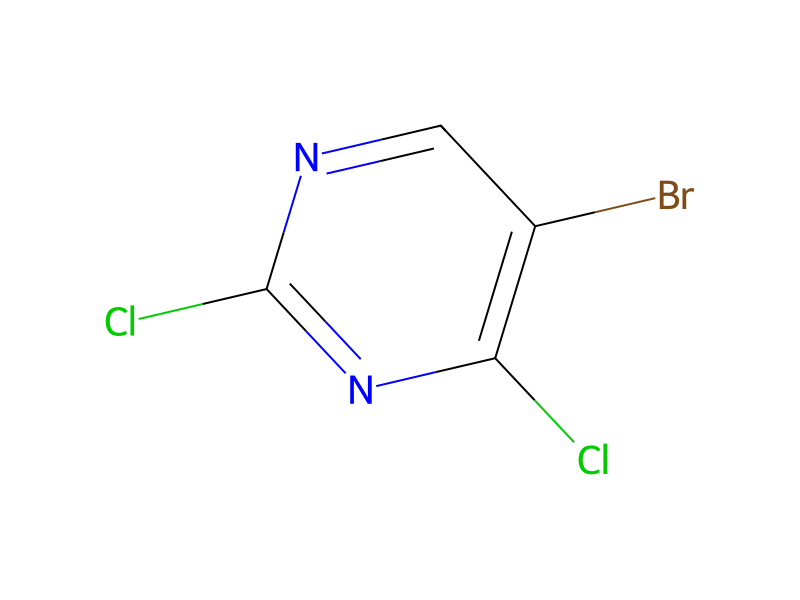
HCID 24758Sodium hydrideHCID 2899735-Bromo-2,4-dichloropyrimidineHCID 641512(-)-3-Hydroxytetrahydrofuran2×HCID 178418361HCID 178418361, compound

Product 1

HCID 58515275(R)-5-Bromo-2-chloro-4-(tetrahydrofuran-3-yloxy)pyrimidineYield 41%

Reagents, catalysts & solvents 1

HCID 8028
Tetrahydrofuran
Solvent
2×

Conditions

Temperature
0 °C

Procedure

To a solution of (R)-(−)-3-hydroxytetrahydrofuran (0.9 g, 10.2 mmol) in 1.2 mL anhydrous THF at 0° C. was added NaH (60% in mineral oil, 100 mg, 2.5 mmol). The mixture was stirred at 0° C. for 5 min and then r.t. for 2 h until there was no hydrogen bubbles generated. This mixture was added slowly to a solution of 5-bromo-2,4-dichloropyrimidine (570 mg, 2.5 mmol) and (R)-(−)-3-hydroxytetrahydrofuran (0.1 g, 1.1 mmol) in 0.8 mL THF at −10° C., and then the reaction mixture was stirred at the same temperature for 30 min. The reaction was quenched with water and extracted with EtOAc. The organic layer was separated, dried (Na2SO4) and concentrated in vacuo. The residue was purified using ISCO chromatography (40 g silica gel, 1-20% EtOAc in hexanes in 40 min) to give the title compound (285 mg, 41%) as a white solid. 1H NMR (CDCl3, 400 MHz) δ 8.45 (s, 1H), 5.69-5.66 (m, 1H), 4.11-3.91 (m, 4H), 2.36-2.21 (m, 2H).


Workup

  1. waitr.t. for 2 h until there was
  2. stirringthe reaction mixture was stirred at the same temperature for 30 min
  3. customThe reaction was quenched with water
  4. extractionextracted with EtOAc
  5. customThe organic layer was separated
  6. dry with materialdried (Na2SO4)
  7. concentrationconcentrated in vacuo
  8. customThe residue was purified
  9. customISCO chromatography (40 g silica gel, 1-20% EtOAc in hexanes in 40 min)

Sources & evidence

ORD record
ord-231ee2dc6c6f4fc784cc7a809fb52103
Source dataset
uspto-grants-2013_08
DOI
10.6084/m9.figshare.5104873.v1
Patent number
US08513242B2

Reaction notes

On this pageParticipantsConditionsProcedureWorkupSources & evidenceReaction notes