HomeMCPSkillsWorkbenchOpenChem
HomeWorkbenchNotificationsMe
llms.txt · skill.md · MCP GuidePrivacy Policy · Terms of Service · Supportv1.8.5
  1. Home
  2. /Reaction

Hydrazine hydrate (1:1) → 4-Chloro-5-n-propyloxyindole

HRID 1898988
Print

Reaction equation

[Cl:1][C:2]1[C:7]([O:8][CH2:9][CH2:10][CH3:11])=[CH:6][CH:5]=[C:4]([N+:12]([O-])=O)[C:3]=1[CH3:15].[CH2:16](OC(OCC)N(C)C)C.N1CCCC1.O.NN>CN(C=O)C.[Ni].C1COCC1.CO>[Cl:1][C:2]1[C:7]([O:8][CH2:9][CH2:10][CH3:11])=[CH:6][CH:5]=[C:4]2[C:3]=1[CH:15]=[CH:16][NH:12]2
ParticipantsProcedureSources & evidenceReaction notes

Participants

9

Reactant 4

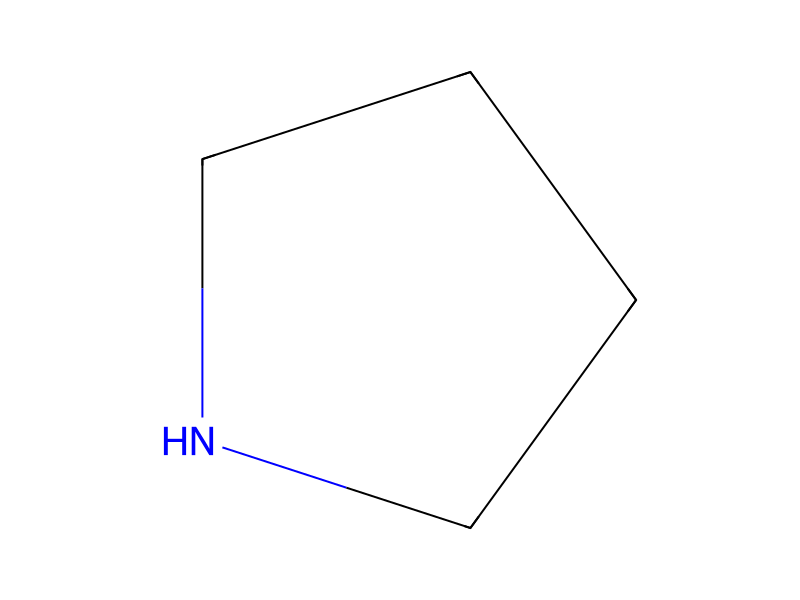
HCID 24654Hydrazine hydrate (1:1)HCID 31268PyrrolidineHCID 70913Dimethylformamide diethylacetalHCID 233731112-Chloro-3-n-propyloxy-6-nitrotoluene

Product 1

HCID 233730884-Chloro-5-n-propyloxyindoleYield 17.7%

Reagents, catalysts & solvents 4

HCID 935
Nickel
Catalyst
HCID 887MethanolSolvent
HCID 6228DimethylformamideSolvent
HCID 8028TetrahydrofuranSolvent

Procedure

Reaction of 2-chloro-3-n-propyloxy-6-nitrotoluene (8.50 g, 37.0 mmol) with dimethylformamide diethyl acetal (6.43 g, 43.7 mmol) and pyrrolidine (3.11 g, 43.7 mmol) in DMF and subsequent workup, as described in 1 (b), followed by treatment with hydrazine hydrate (2×2.7 ml) and Raney nickel (3.9 ml) in THF (70 ml) and methanol (70 ml), gave 4- chloro-5-n-propyloxyindole as an oil (1.37 g).

Sources & evidence

ORD record
ord-df112691a5a748d396ebaacbe3a24564
Source dataset
uspto-grants-1996_11
DOI
10.6084/m9.figshare.5104873.v1
Patent number
US05571833

Reaction notes

On this pageParticipantsProcedureSources & evidenceReaction notes