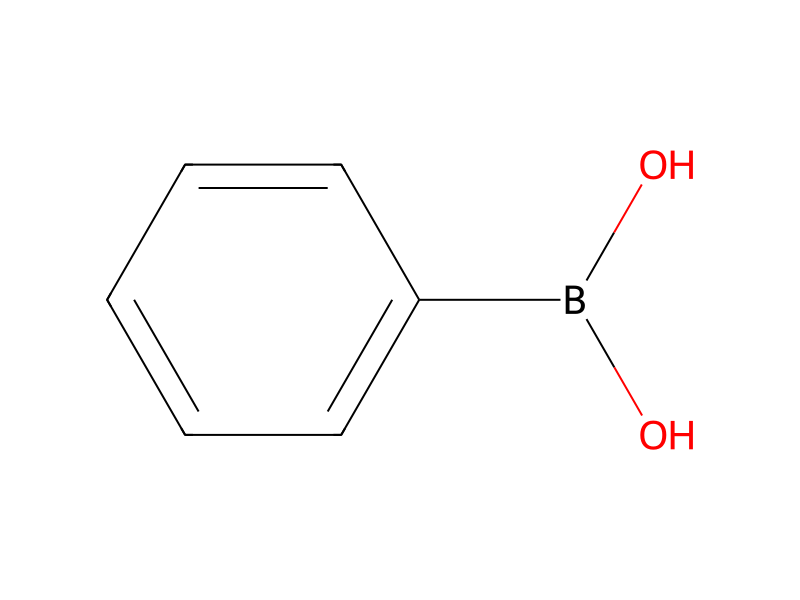
Br[C:2]1[CH:12]=[N:11][C:5]2[O:6][CH2:7][C:8](=[O:10])[NH:9][C:4]=2[CH:3]=1.[C:13]1(B(O)O)[CH:18]=[CH:17][CH:16]=[CH:15][CH:14]=1.C1(P(C2C=CC=CC=2)C2C=CC=CC=2)C=CC=CC=1.C(=O)([O-])[O-].[K+].[K+]>C(#N)C.O.C([O-])(=O)C.[Pd+2].C([O-])(=O)C>[C:13]1([C:2]2[CH:12]=[N:11][C:5]3[O:6][CH2:7][C:8](=[O:10])[NH:9][C:4]=3[CH:3]=2)[CH:18]=[CH:17][CH:16]=[CH:15][CH:14]=1To a 10 ml flask equipped with refluxing apparatus, 7-bromo-1H-pyrido[2,3-b][1,4]oxazin-2-one (48 mg, 0.21 mmol), phenyl boronic acid (PhB(OH)2, 28 mg, 0.23 mmol), triphenylphosphine (PPh3, 11 mg, 0.04 mmol), palladium acetate (Pd(OAc)2, 5 mg, 0.02 mmol), potassium carbonate (44 mg, 0.31 mmol) were dissolved in acetonitrile (1.6 ml) and water (0.4 ml). The mixture was heated to 90□ and then refluxed for 15 hours. The mixture was evaporated and water was added, and then the mixture was extracted with ethyl acetate. The combined organic layer was dried over anhydrous sodium sulfate (Na2SO4), filtered and evaporated under reduced pressure. The resulting residue was purified by column chromatography on silica eluting with a solvent of dichloromethane:methanol=30:1. The fractions containing the product were collected and evaporated to obtain pale-brown solid (21 mg, 44%).