HomeMCPWorkbenchSkills
HomeWorkbenchNotificationsMe
llms.txt · MCP GuidePrivacy Policy · Terms of Service · Supportv1.8.3
  1. Home
  2. /Reaction

Hydrochloric Acid → 4-Cyano-2-ethylbenzaldehyde oxime

HRID 1956708
Print

Reaction equation

HRID 1956708 reaction equation
C=O.Cl.NO.O.O.O.C([O-])(=O)C.[Na+].S([O-])([O-])=O.[Na+].[Na+].N[C:21]1[CH:28]=[CH:27][C:24]([C:25]#[N:26])=[CH:23][C:22]=1[CH2:29][CH3:30].Cl.N([O-])=O.[Na+].[CH2:36]=[N:37][OH:38]>O.[Cl-].[Na+].O.S([O-])([O-])(=O)=O.[Cu+2]>[C:25]([C:24]1[CH:27]=[CH:28][C:21]([CH:36]=[N:37][OH:38])=[C:22]([CH2:29][CH3:30])[CH:23]=1)#[N:26]
ParticipantsProcedureWorkupSources & evidenceReaction notes

Participants

12

Reactant 8

HCID 313Hydrochloric AcidHCID 712FormaldehydeHCID 6350NitroneHCID 24437Sodium SulfiteHCID 443297Hydroxyamine hydrochlorideHCID 27353304-Amino-3-ethylbenzonitrile2×HCID 23665404Sodium Acetate Trihydrate
3×
HCID 23668193Sodium Nitrite

Product 1

HCID 734109644-Cyano-2-ethylbenzaldehyde oxime

Reagents, catalysts & solvents 3

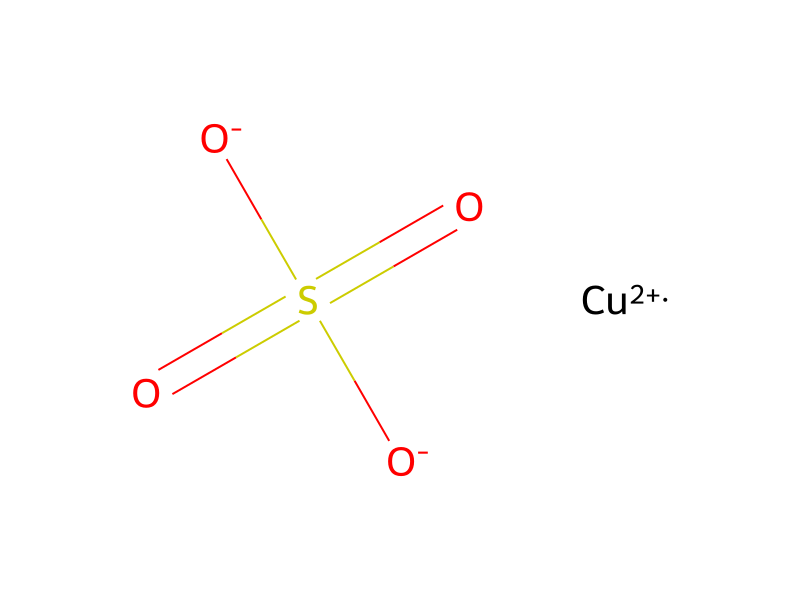
HCID 24462Copper SulfateCatalystHCID 962WaterSolvent5×HCID 57417360Sodium chloride; waterSolvent

Procedure

4-Cyano-2-ethylbenzaldehyde oxime was prepared by the procedure of Jolad et al., Org. Syntheses, Coll. Vol. V, 139 (1973). A mixture of paraformaldehyde (2.8 g, 93 mmol) and hydroxylamine hydrochloride (6 g, 86 mmol) in water (39 mL) was heated in a 500 mL 3-necked flask. When a clear, colorless solution was obtained, sodium acetate trihydrate (11.8 g, 87 mmol) was added. The solution was heated for 15 minutes, then cooled in an ice-salt bath to approximately 5°-10° C. To this solution was added copper sulfate (0.97 g, 6.08 mmol), sodium sulfite (0.23 g, 1.82 mmol) and sodium acetate trihydrate (37 g, 272 mmol) in water (42 mL). The resulting green solution was cooled to an internal temperature of approximately 5°-10° C. A diazonium salt solution of 4-amino-3-ethylbenzonitrile was previously prepared as follows: A mixture of 4-amino-3-ethylbenzonitrile (8.32 g, 57 mmol), concentrated hydrochloric acid (13.2 mL), ice (23 g), and water (11.6 mL) was cooled in an ice-salt bath. While maintaining the internal temperature below 10° C., a solution of sodium nitrite (4.2 g, 61 mmol) in water (5.8 mL) was added dropwise. The resulting slurry was stirred at 5°-10° C. for an additional 15 minutes. Then a solution of sodium acetate trihydrate (5.1 g, 37 mmol) in water (8.1 mL) was added. This solution of the diazonium salt was siphoned under the surface of the 10% formaldoxime solution. The reaction mixture was stirred vigorously and allowed to slowly warm to room temperature as the ice-salt bath melted. After 2 hours the reaction mixture was diluted with brine (100 mL), extracted with dichloromethane (2×400 mL), and dried (Na2 SO4). Purification by chromatography (silica gel, hexane:ethyl acetate (7:1)) gave 2.97 g (30%) of a solid: 1H NMR (DMSO-d6) δ11.80 (s, 1H), 8.45 (s, 1H), 8.00-7.60 (m, 3H), 2.90 (m, 2H), 1.20 (m, 3H).


Workup

  1. temperaturewas heated in a 500 mL 3-necked flask
  2. customWhen a clear, colorless solution was obtained
  3. temperatureThe solution was heated for 15 minutes
  4. temperaturecooled in an ice-salt bath to approximately 5°-10° C
  5. temperatureThe resulting green solution was cooled to an internal temperature of approximately 5°-10° C
  6. temperaturewas cooled in an ice-salt bath
  7. temperatureWhile maintaining the internal temperature below 10° C.
  8. stirringThe reaction mixture was stirred vigorously
  9. extractionextracted with dichloromethane (2×400 mL)
  10. customdried (Na2 SO4)
  11. customPurification by chromatography (silica gel, hexane:ethyl acetate (7:1))

Sources & evidence

ORD record
ord-a4045eb778634cbbae4daa378fad2e32
Source dataset
uspto-grants-1998_07
DOI
10.6084/m9.figshare.5104873.v1
Patent number
US05780505

Reaction notes

On this pageParticipantsProcedureWorkupSources & evidenceReaction notes