HomeMCPWorkbenchSkills
HomeWorkbenchNotificationsMe
llms.txt · MCP GuidePrivacy Policy · Terms of Service · Supportv1.8.3
  1. Home
  2. /Reaction

Piperidine → 5-Chloroimidazo[1,2-a]pyrimidine

HRID 1971256
Print

Reaction equation

HRID 1971256 reaction equation
S(O)(O)(=O)=O.[NH2:6][C:7]1[NH:8][CH:9]=[CH:10][N:11]=1.CO[CH:14](OC)[CH2:15][C:16](OCC)=O.N1CCCCC1.O.C1(C)C=CC(S(O)(=O)=O)=CC=1.C([O-])([O-])=O.[K+].[K+].O=P(Cl)(Cl)[Cl:49]>CCO>[Cl:49][C:14]1[N:8]2[CH:9]=[CH:10][N:11]=[C:7]2[N:6]=[CH:16][CH:15]=1
ParticipantsConditionsProcedureWorkupSources & evidenceReaction notes

Participants

8

Reactant 6

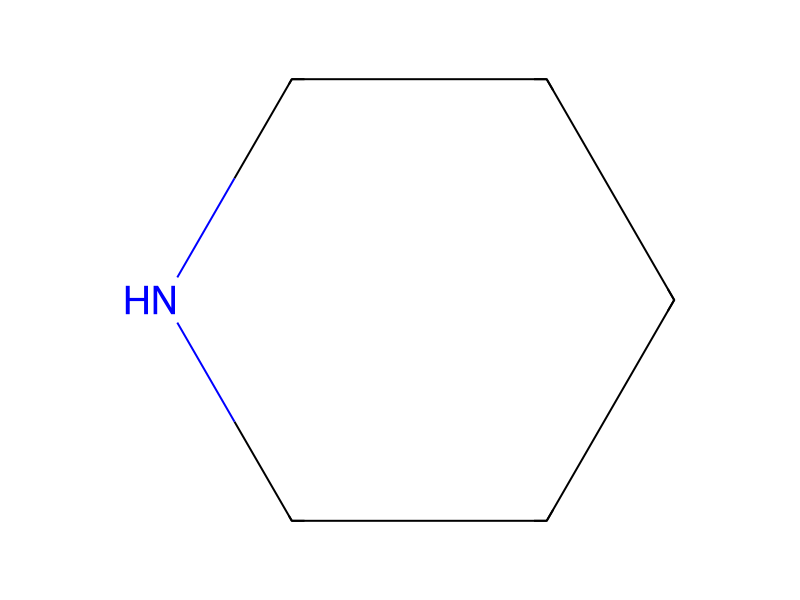
HCID 8082PiperidineHCID 11430Potassium CarbonateHCID 24813Phosphorus oxychlorideHCID 135136Bis(2-amino-1H-imidazole) sulphateHCID 521998p-Toluenesulfonic acid monohydrateHCID 21800401Ethyl 3,3-dimethoxypropanoate

Product 1

HCID 46912080
5-Chloroimidazo[1,2-a]pyrimidine

Reagents, catalysts & solvents 1

HCID 702EthanolSolvent

Conditions

Temperature
90 °C

Procedure

In a round bottom flask, 2-aminoimidazole sulfate (0.264 g, 1.0 mmol) is added to ethyl 3,3-dimethoxypropionate (0.296 g, 2.0 mmol). Piperidine (5 μL) and EtOH (5 mL) are then added and the flask is heated to reflux overnight. At RT, p-toluenesulfonic acid monohydrate (15 mg) is added and the reaction is returned to reflux for 6 h. At RT, freshly powdered K2CO3 (0.415 g, 3.0 mmol) is added and the reaction is heated to reflux overnight. The reaction is then concentrated to dryness and the residue is triturated with CHCl3 (10 mL) and again concentrated to dryness. The residue is treated with POCl3 (2.0 mL, 21.5 mmol) and heated to 90° C. for 1.5 h, and then to 115° C. for 1 h. At RT, the reaction is concentrated to dryness, and then dissolved in CH2Cl2 and washed with NaHCO3 (sat.) followed by brine. The organic solution is dried over Na2SO4, filtered and concentrated to dryness. The residue is purified via silica gel chromatography using EtOAc to afford the title compound. 1H NMR (400 MHz, CDCl3 with 5% CD3OD (v/v)) δ 8.44 (dd, J=6.8, 0.8, 1H), 7.70 (d, J=0.8, 1H), 7.57 (bs, 1H), 6.92 (dd, J=6.8, 0.8, 1H).

Workup

  1. temperaturethe flask is heated
  2. temperatureto reflux overnight
  3. temperatureto reflux for 6 h
  4. temperaturethe reaction is heated
  5. temperatureto reflux overnight
  6. concentrationThe reaction is then concentrated to dryness
  7. customthe residue is triturated with CHCl3 (10 mL)
  8. concentrationagain concentrated to dryness
  9. concentrationAt RT, the reaction is concentrated to dryness
  10. dissolutiondissolved in CH2Cl2
  11. washwashed with NaHCO3 (sat.)
  12. dry with materialThe organic solution is dried over Na2SO4
  13. filtrationfiltered
  14. concentrationconcentrated to dryness
  15. customThe residue is purified via silica gel chromatography

Sources & evidence

ORD record
ord-c7165eb682244310b759a888f508f1c4
Source dataset
uspto-grants-2013_04
DOI
10.6084/m9.figshare.5104873.v1
Patent number
US08431593B2

Reaction notes

On this pageParticipantsConditionsProcedureWorkupSources & evidenceReaction notes


