HomeMCPWorkbenchSkills
HomeWorkbenchNotificationsMe
llms.txt · MCP GuidePrivacy Policy · Terms of Service · Supportv1.8.3
  1. Home
  2. /Reaction

Sodium Carbonate → 2-(2-Chloro-5-methylpyrimidin-4-yl)benzo[b]thiophen-4-ol

HRID 1986245
Print

Reaction equation

HRID 1986245 reaction equation
[S:1]1[CH:5]=[CH:4][C:3]2[C:6]([O:10][Si](C(C)(C)C)(C)C)=[CH:7][CH:8]=[CH:9][C:2]1=2.C(OB(OC(C)C)OC(C)C)(C)C.C([N-]C(C)C)(C)C.[Li+].[Cl:39][C:40]1[N:45]=[C:44](Cl)[C:43]([CH3:47])=[CH:42][N:41]=1.C([O-])([O-])=O.[Na+].[Na+]>C1COCC1.CCCCCCC.C1COCC1.C(C1C=CC=CC=1)C.ClCCl.C1(P(C2C=CC=CC=2)[C-]2C=CC=C2)C=CC=CC=1.[C-]1(P(C2C=CC=CC=2)C2C=CC=CC=2)C=CC=C1.[Fe+2].C([O-])(=O)C.[Pd+2].C([O-])(=O)C>[Cl:39][C:40]1[N:45]=[C:44]([C:5]2[S:1][C:2]3[CH:9]=[CH:8][CH:7]=[C:6]([OH:10])[C:3]=3[CH:4]=2)[C:43]([CH3:47])=[CH:42][N:41]=1
ParticipantsConditionsProcedureWorkupSources & evidenceReaction notes

Participants

11

Reactant 5

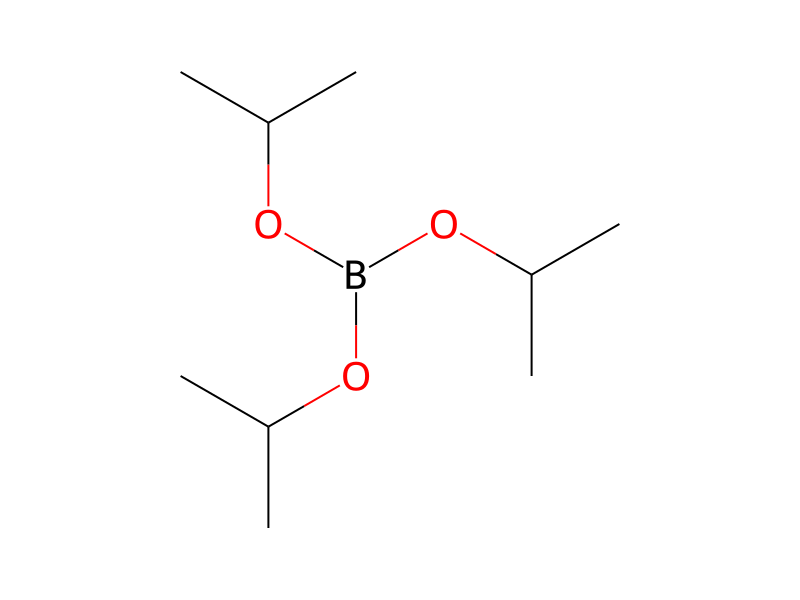
HCID 10340Sodium CarbonateHCID 21531Triisopropyl borateHCID 74508Pyrimidine, 2,4-dichloro-5-methyl-HCID 2724682Lithium diisopropylamideHCID 68856170(Benzo[b]thiophen-4-yloxy)(tert-butyl)dimethylsilane

Product 1

HCID 136343969
2-(2-Chloro-5-methylpyrimidin-4-yl)benzo[b]thiophen-4-ol
Yield 16.8%

Reagents, catalysts & solvents 5

HCID 167845palladium(II) acetateCatalystHCID 635956Ferrocene-1,1'-bis-(diphenylphosphine)CatalystHCID 6344DichloromethaneSolventHCID 8028TetrahydrofuranSolventHCID 22742125Tetrahydrofuran heptane ethylbenzolSolvent

Conditions

Temperature
-70 °C

Procedure

To a −65° C. solution of (benzo[b]thiophen-4-yloxy)(tert-butyl)dimethylsilane (6.25 g, 23.6 mmol) and triisopropylborate (4.89 g, 26.0 mmol) in THF (60 mL) is added lithium diisopropylamide (13.0 mL of a 2 M solution in heptane/THF/ethylbenzene, 26.0 mmol) dropwise over 5 minutes. The mixture is stirred for 2 hours at −70° C., whereupon the cold bath is removed and the mixture is allowed to warm to room temperature. After 2 hours, to the mixture is then added 2,4-dichloro-5-methylpyrimidine (3.85 g, 23.6 mmol), 2M Na2CO3 (23.6 mL, 47.2 mmol), 1,1′-bis(diphenylphosphino) ferrocene (655 mg, 1.18 mmol) and palladium(II) acetate (265 mg, 1.18 mmol) and the mixture is heated to reflux for 18 hours. Upon cooling to room temperature, the mixture is concentrated under reduced pressure, extracted from water (100 mL) with dichloromethane (3×150 mL) and the organic extracts are concentrated under reduced pressure. The crude material is subjected to chromatography on silica gel, eluting with dichloromethane in hexanes 50-100%, followed by CHCl3 in MeOH 0-100%, to obtain a dark solid. The crude material is extracted from 1 N NaOH (125 mL) with dichloromethane (3×100 mL). The aqueous layer is acidified with 5 N HCl, exhaustively extracted with 10% CHCl3/MeOH followed by 1:1 THF/dichloromethane and concentrated to yield a dark solid. Sonication of the solid in dichloromethane and filtration yielded the title compound as a brown solid (1.10 g, 12% yield).


Workup

  1. customis removed
  2. temperatureto warm to room temperature
  3. waitAfter 2 hours
  4. temperatureto reflux for 18 hours
  5. temperatureUpon cooling to room temperature
  6. concentrationthe mixture is concentrated under reduced pressure
  7. extractionextracted from water (100 mL) with dichloromethane (3×150 mL)
  8. concentrationthe organic extracts are concentrated under reduced pressure
  9. washeluting with dichloromethane in hexanes 50-100%
  10. customto obtain a dark solid
  11. extractionThe crude material is extracted from 1 N NaOH (125 mL) with dichloromethane (3×100 mL)
  12. extractionexhaustively extracted with 10% CHCl3/MeOH
  13. concentrationconcentrated
  14. customto yield a dark solid
  15. filtrationfiltration

Sources & evidence

ORD record
ord-7f6f18166168476f992db4e5ed633239
Source dataset
uspto-grants-2009_06
DOI
10.6084/m9.figshare.5104873.v1
Patent number
US07547691B2

Reaction notes

On this pageParticipantsConditionsProcedureWorkupSources & evidenceReaction notes