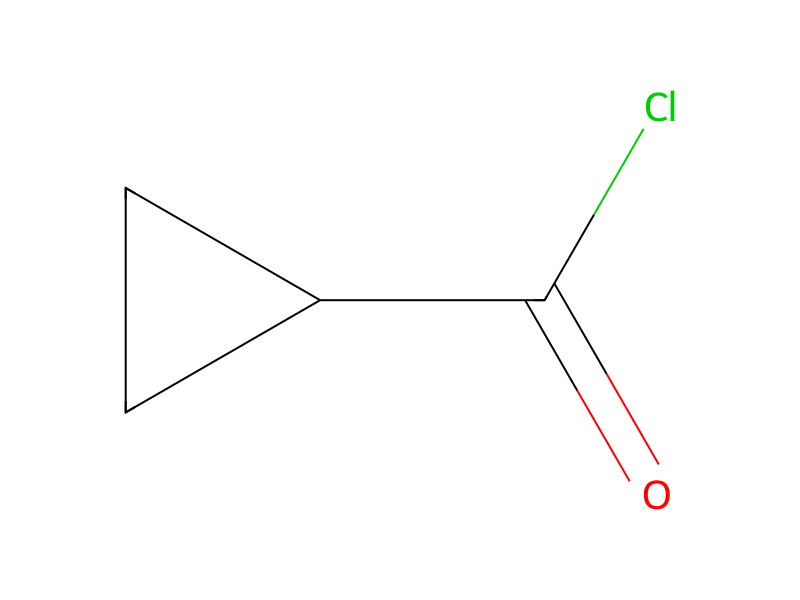
[CH2:1]([O:3][C:4]1[C:24]([CH2:25][CH3:26])=[CH:23][C:7]2[NH:8][C:9]([C:11]3[C:15]([NH2:16])=[CH:14][N:13]([CH:17]4[CH2:22][CH2:21][CH2:20][CH2:19][O:18]4)[N:12]=3)=[N:10][C:6]=2[CH:5]=1)[CH3:2].C(N(CC)CC)C.[CH:34]1([C:37](Cl)=[O:38])[CH2:36][CH2:35]1>O1CCCC1.C(=O)(O)[O-].[Na+]>[CH2:1]([O:3][C:4]1[C:24]([CH2:25][CH3:26])=[CH:23][C:7]2[NH:8][C:9]([C:11]3[C:15]([NH:16][C:37]([CH:34]4[CH2:36][CH2:35]4)=[O:38])=[CH:14][N:13]([CH:17]4[CH2:22][CH2:21][CH2:20][CH2:19][O:18]4)[N:12]=3)=[N:10][C:6]=2[CH:5]=1)[CH3:2]A solution of 3-(5-ethoxy-6-ethyl-1H-benzoimidazol-2-yl)-1-(tetrahydropyran-2-yl)-1H-pyrazol-4-ylamine [0.3 g, Reference Example 49(a)] and triethylamine (0.8 mL, excess) in tetrahydrofuran (20 mL) was treated dropwise with cyclopropanecarbonyl chloride (0.3 g, 2.4 mmol). This mixture was stirred for 48 hours then diluted with aqueous sodium bicarbonate solution (100 mL) and then extracted twice with ethyl acetate (100 mL). The combined extracts were evaporated and the residue was dissolved in tetrahydrofuran (50 mL). This solution was treated with a solution of potassium hydroxide (1.1 g) in ethanol (10 mL) and the mixture was stirred for 2 hours, then poured into water (100 mL) and then extracted twice with ethyl acetate (100 mL). The combined extracts were evaporated and the residue was chromatographed on silica gel eluting with a mixture of heptane and ethyl acetate (1/1, v/v) to give cyclopropanecarboxylic acid [3-(5-ethoxy-6-ethyl-1H-benzoimidazol-2-yl)-1-(tetrahydropyran-2-yl)-1H-pyrazol-4-yl]amide (0.3 g) as an off-white solid. LC-MS (Method E): RT 2.99 minutes, 424 (M+H)+.