HomeMCPWorkbenchSkills
HomeWorkbenchNotificationsMe
llms.txt · MCP GuidePrivacy Policy · Terms of Service · Supportv1.8.3
  1. Home
  2. /Reaction

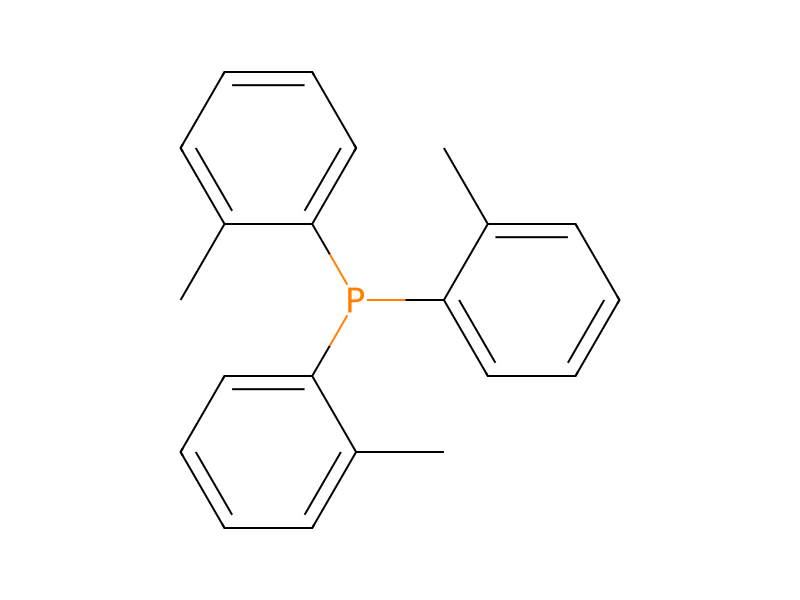
Tri-o-tolylphosphine → (E)-N-(3-Chloro-2-propoxybenzyl)-3-(3,3-dimethyl-2-oxo-2,3,4,5-tetrahydro-1H-pyrido[2,3-e][1,4]diazepin-7-yl)-N-methylacrylamide

HRID 2097022
Print

Reaction equation

HRID 2097022 reaction equation
[Cl:1][C:2]1[C:3]([O:15][CH2:16][CH2:17][CH3:18])=[C:4]([CH:12]=[CH:13][CH:14]=1)[CH2:5][N:6]([CH3:11])[C:7](=[O:10])[CH:8]=[CH2:9].C(N(C(C)C)CC)(C)C.Br[C:29]1[CH:42]=[N:41][C:32]2[NH:33][C:34](=[O:40])[C:35]([CH3:39])([CH3:38])[NH:36][CH2:37][C:31]=2[CH:30]=1.CC1C=CC=CC=1P(C1C=CC=CC=1C)C1C=CC=CC=1C>C(#N)CC.CN(C=O)C.CC([O-])=O.CC([O-])=O.[Pd+2]>[Cl:1][C:2]1[C:3]([O:15][CH2:16][CH2:17][CH3:18])=[C:4]([CH:12]=[CH:13][CH:14]=1)[CH2:5][N:6]([CH3:11])[C:7](=[O:10])/[CH:8]=[CH:9]/[C:29]1[CH:42]=[N:41][C:32]2[NH:33][C:34](=[O:40])[C:35]([CH3:39])([CH3:38])[NH:36][CH2:37][C:31]=2[CH:30]=1
ParticipantsProcedureWorkupSources & evidenceReaction notes

Participants

8

Reactant 4

HCID 80271Tri-o-tolylphosphineHCID 81531DiisopropylethylamineHCID 59277565N-(3-Chloro-2-propoxybenzyl)-N-methylacrylamideHCID 594569147-Bromo-3,3-dimethyl-1,3,4,5-tetrahydropyrido[2,3-e][1,4]diazepin-2-one

Product 1

HCID 16662049(E)-N-(3-Chloro-2-propoxybenzyl)-3-(3,3-dimethyl-2-oxo-2,3,4,5-tetrahydro-1H-pyrido[2,3-e][1,4]diazepin-7-yl)-N-methylacrylamide
Yield 59.1%

Reagents, catalysts & solvents 3

HCID 167845palladium(II) acetateCatalystHCID 6228DimethylformamideSolventHCID 7854PropionitrileSolvent

Procedure

A solution of N-(3-chloro-2-propoxybenzyl)-N-methylacrylamide (0.392 g, 1.47 mmol) in propionitrile (5 mL) and DMF (1 mL) was deoxygenated with Ar for 20 min. The solution was treated with diisopropylethylamine (0.40 mL, 2.33 mmol) and 7-bromo-3,3-dimethyl-1,3,4,5-tetrahydro-pyrido[2,3-e][1,4]diazepin-2-one (0.300 g, 1.11 mmol). The solution was deoxygenated with Ar for 20 min. Pd(OAc)2 (0.024 g, 0.111 mmol) and P(o-tol)3 (0.067 g, 0.222 mmol) were then added and the solution was deoxygenated again with Ar for 20 min. The mixture was heated to reflux for 18 h, then allowed to cool. The mixture was diluted with EtOAc (30 mL) and was washed with H2O (3×50 mL). The organic layer was washed with brine (1×100 mL), dried (Na2SO4) and concentrated to an orange oil. Purification by column chromatography (silica gel, CH2Cl2/MeOH, 100 to 98:2) gave the title compound (0.30 g, 59%) as a light yellow solid and as a mixture of amide rotamers: 1H NMR (300 MHz, DMSO-d6) δ 9.80-9.78 (m, 1H), 8.40-8.37 (m, 1H), 8.01-7.92 (m, 1H), 7.54-7.49 (m, 1H), 7.41-7.25 (m, 2H), 7.15-7.05 (m, 2H), 4.86-4.68 (m, 2H), 3.91-3.84 (m, 4H), 3.14-2.95 (m, 4H), 1.83-1.76 (m, 2H), 1.31-1.29 (m, 6H), 1.05-0.99 (m, 3H).

Workup

  1. customThe solution was deoxygenated with Ar for 20 min
  2. customthe solution was deoxygenated again with Ar for 20 min
  3. temperatureThe mixture was heated
  4. temperatureto reflux for 18 h
  5. temperatureto cool
  6. additionThe mixture was diluted with EtOAc (30 mL)
  7. washwas washed with H2O (3×50 mL)
  8. washThe organic layer was washed with brine (1×100 mL)
  9. dry with materialdried (Na2SO4)
  10. concentrationconcentrated to an orange oil
  11. customPurification by column chromatography (silica gel, CH2Cl2/MeOH, 100 to 98:2)

Sources & evidence

ORD record
ord-d7a91475440d4429bb832d18d354aa7d
Source dataset
uspto-grants-2013_05
DOI
10.6084/m9.figshare.5104873.v1
Patent number
US08450307B2

Reaction notes

On this pageParticipantsProcedureWorkupSources & evidenceReaction notes