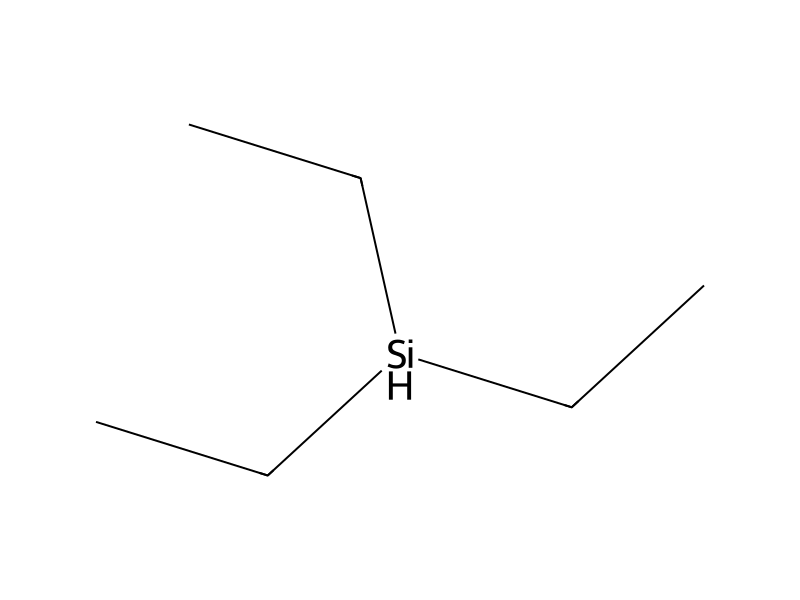
[Cl:1][C:2]1[CH:10]=[C:9]2[C:5]([C:6]([CH:13]3[CH2:17][CH2:16][CH2:15][CH2:14]3)(O)[C:7](=[O:11])[NH:8]2)=[CH:4][CH:3]=1.C([SiH](CC)CC)C.FC(F)(F)C(O)=O.C(=O)([O-])[O-].[K+].[K+]>C(OCC)(=O)C>[Cl:1][C:2]1[CH:10]=[C:9]2[C:5]([CH:6]([CH:13]3[CH2:17][CH2:16][CH2:15][CH2:14]3)[C:7](=[O:11])[NH:8]2)=[CH:4][CH:3]=1A suspension of rac-6-chloro-3-cyclopentyl-3-hydroxy-1,3-dihydro-indol-2-one (1.0 g, 4 mmol) (from Example 3a, supra) in a mixture of triethylsilane (2 mL, 12.5 mmol) (Aldrich) and trifluoroacetic acid (5 mL, 65 mmol) was heated in a 100° C. bath for 48 hours. After cooling to room temperature, mixture was diluted with ethyl acetate (50 mL). Solid potassium carbonate was added and mixture stirred at room temperature for 1 hour. Mixture was filtered and concentrated. Residue was redissolved in ethyl acetate and adsorbed onto silica gel (10 g). Solvent was evaporated off. Material was purified by flash chromatography (Biotage 40 M, 5% then 10% ethyl acetate in dichloromethane as solvent). Main product fractions were collected and concentrated to give rac-6-chloro-3-cyclopentyl-1,3-dihydro-indol-2-one as a dark purple solid. (Yield 0.24 g, 25.6%).