HomeMCPWorkbenchSkills
HomeWorkbenchNotificationsMe
llms.txt · MCP GuidePrivacy Policy · Terms of Service · Supportv1.8.3
  1. Home
  2. /Reaction

Sodium Iodide → Ethyl N-(cyanomethyl)-N-(3,4-dichlorophenyl)glycinate

HRID 2114320
Print

Reaction equation

HRID 2114320 reaction equation
[Cl:1][C:2]1[CH:3]=[C:4]([NH:9][CH2:10][C:11]([O:13][CH2:14][CH3:15])=[O:12])[CH:5]=[CH:6][C:7]=1[Cl:8].[CH:16]([N:19](C(C)C)CC)(C)[CH3:17].BrCC#N.[I-].[Na+].FC(F)(F)C(O)=O.[Cl-].[NH4+]>CN1C(=O)CCC1.CC#N.O>[C:16]([CH2:17][N:9]([C:4]1[CH:5]=[CH:6][C:7]([Cl:8])=[C:2]([Cl:1])[CH:3]=1)[CH2:10][C:11]([O:13][CH2:14][CH3:15])=[O:12])#[N:19]
ParticipantsConditionsProcedureWorkupSources & evidenceReaction notes

Participants

9

Reactant 6

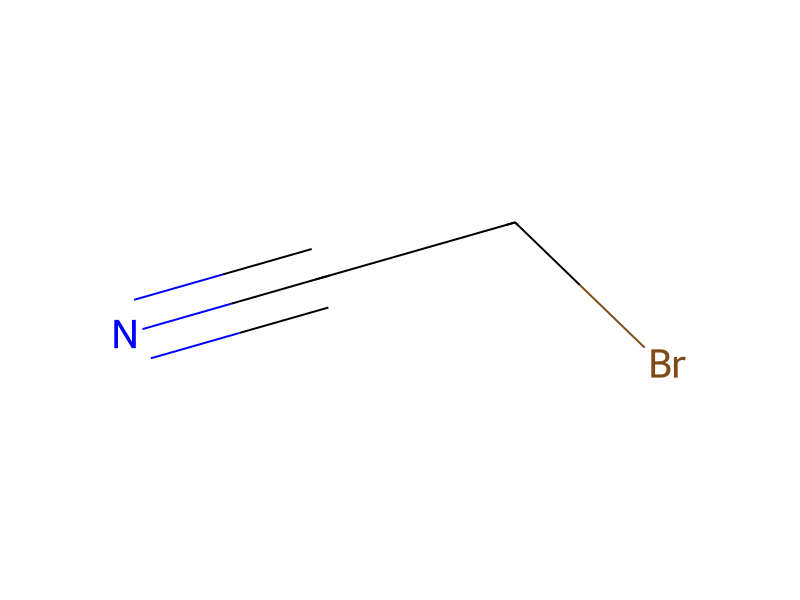
HCID 5238Sodium IodideHCID 6422Trifluoroacetic acidHCID 11534Bromoacetonitrile3×HCID 25517Ammonium ChlorideHCID 81531DiisopropylethylamineHCID 2727804Ethyl 2-(3,4-dichloroanilino)acetate

Product 1

HCID 57488845
Ethyl N-(cyanomethyl)-N-(3,4-dichlorophenyl)glycinate
Yield 56%

Reagents, catalysts & solvents 2

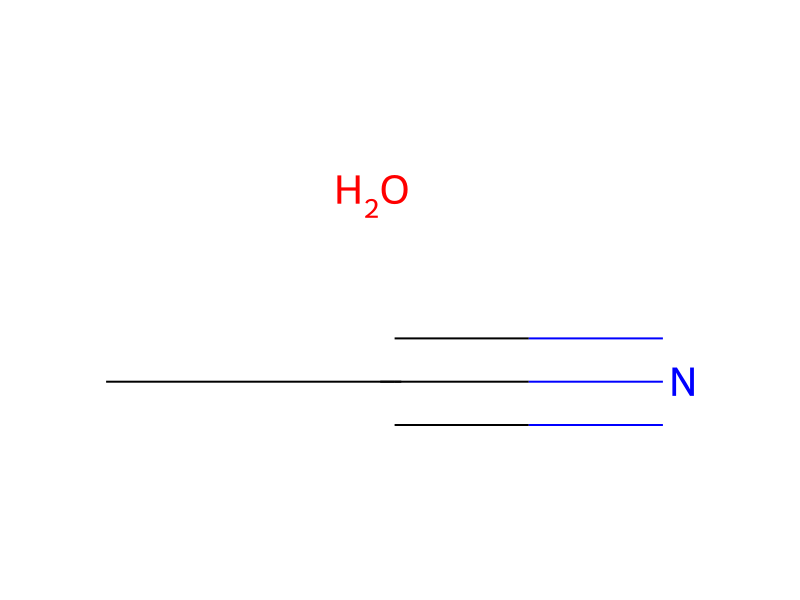
HCID 13387N-methyl-2-pyrrolidoneSolventHCID 18373917Acetonitrile--water (1/1)Solvent

Conditions

Temperature
120 °C

Procedure

Ethyl N-(3,4-dichlorophenyl)glycinate (4.0 g, 16.1 mmol), diisopropylethylamine (3.37 mL, 19.3 mmol), bromoacetonitrile (1.23 mL, 17.7 mmol) and sodium iodide (2.41 g, 16.1 mmol) were dissolved in 25 mL of dry NMP and heated to 120° C. After 20 h, HPLC (Eclipse XDB-C18, 4.6×250 mm, 5 micron, 1-99% CH3CN/H2O with 0.1% trifluoroacetic acid) showed that approximately half of the starting material (Rt=7.8 min) was consumed and that a new peak had formed (Rt=7.6 min). The reaction was monitored periodically by HPLC and additional bromoacetonitrile was added as needed to achieve complete conversion. In this case, an additional 1.5 equivalents (1.68 mL, 24.1 mmol) of bromoacetonitrile was added and the reaction was heated for an additional 28 h, after which time the HPLC indicated that the reaction was complete. The reaction mixture was poured into 400 mL of 50% saturated ammonium chloride and extracted with 500 mL of ethyl acetate. The layers were separated and the organic layer was washed with 50% saturated sodium bicarbonate (400 mL), water (400 mL), and saturated NaCl (400 mL). The organic extracts were dried over magnesium sulfate, filtered, and concentrated to a black oil which was adsorbed onto approximately 15 g of silica gel. The crude residue was purified by column chromatography (300 g silica gel 40 um, gradient elution from 30-70-100% EtOAc/hexanes over 40 minutes) to give the title compound as a yellow solid (2.59 g, 9.02 mmol, 56%). LC/MS (APCI) m/e 260 [M−CN]+.


Workup

  1. customwas consumed and that a new peak
  2. customhad formed (Rt=7.6 min)
  3. additionwas added
  4. temperaturethe reaction was heated for an additional 28 h
  5. extractionextracted with 500 mL of ethyl acetate
  6. customThe layers were separated
  7. washthe organic layer was washed with 50% saturated sodium bicarbonate (400 mL), water (400 mL), and saturated NaCl (400 mL)
  8. dry with materialThe organic extracts were dried over magnesium sulfate
  9. filtrationfiltered
  10. concentrationconcentrated to a black oil which
  11. customThe crude residue was purified by column chromatography (300 g silica gel 40 um, gradient elution from 30-70-100% EtOAc/hexanes over 40 minutes)

Sources & evidence

ORD record
ord-36ff601ffb5e4d7da1ae7b5a665c86b8
Source dataset
uspto-grants-2008_10
DOI
10.6084/m9.figshare.5104873.v1
Patent number
US07432258B2

Reaction notes

On this pageParticipantsConditionsProcedureWorkupSources & evidenceReaction notes