HomeMCPWorkbenchSkills
HomeWorkbenchNotificationsMe
llms.txt · MCP GuidePrivacy Policy · Terms of Service · Supportv1.8.3
  1. Home
  2. /Reaction

Hydrochloric Acid → HCID 66549041, compound

HRID 2174374
Print

Reaction equation

HRID 2174374 reaction equation
[F:1][C:2]1([C:9]2[CH:14]=[CH:13][C:12]([C:15]3[CH2:19][C:18]([C:24]4[CH:29]=[C:28]([Cl:30])[C:27]([Cl:31])=[C:26]([Cl:32])[CH:25]=4)([C:20]([F:23])([F:22])[F:21])[O:17][N:16]=3)=[CH:11][CH:10]=2)[CH2:5][CH:4]([C:6]([OH:8])=O)[CH2:3]1.C1C=CC2N(O)N=NC=2C=1.CCN(C(C)C)C(C)C.CCN=C=NCCCN(C)C.Cl.Cl.Cl.[F:66][C:67]([F:71])([F:70])[CH2:68][NH2:69]>CN(C=O)C>[F:66][C:67]([F:71])([F:70])[CH2:68][NH:69][C:6]([CH:4]1[CH2:5][C:2]([F:1])([C:9]2[CH:14]=[CH:13][C:12]([C:15]3[CH2:19][C:18]([C:24]4[CH:29]=[C:28]([Cl:30])[C:27]([Cl:31])=[C:26]([Cl:32])[CH:25]=4)([C:20]([F:22])([F:23])[F:21])[O:17][N:16]=3)=[CH:11][CH:10]=2)[CH2:3]1)=[O:8]

ParticipantsProcedureWorkupSources & evidenceReaction notes

Participants

8

Reactant 6

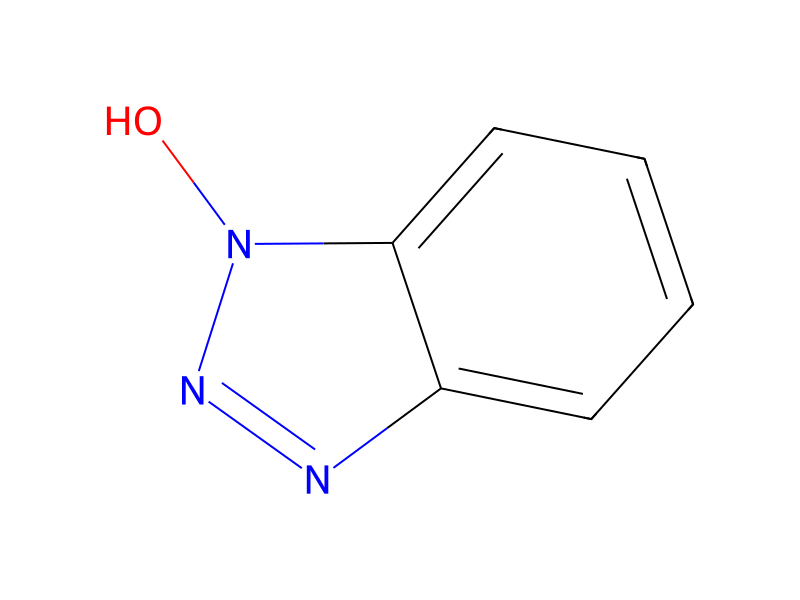
HCID 313Hydrochloric AcidHCID 97722,2,2-Trifluoroethylamine hydrochlorideHCID 757711-HydroxybenzotriazoleHCID 81531DiisopropylethylamineHCID 27239391,3-Propanediamine, N'-(ethylcarbonimidoyl)-N,N-dimethyl-, monohydrochloride
HCID 86707793
3-Fluoro-3-(4-(5-(3,4,5-trichlorophenyl)-5-(trifluoromethyl)-4,5-dihydroisoxazol-3-yl)phenyl)cyclobutanecarboxylic acid

Product 1

HCID 66549041HCID 66549041, compoundYield 56%

Reagents, catalysts & solvents 1

HCID 6228DimethylformamideSolvent

Procedure

To a stirred solution of 3-fluoro-3-{4-[5-(3,4,5-trichloro-phenyl)-5-trifluoromethyl-4,5-dihydro-isoxazol-3-yl]-phenyl}-cyclobutanecarboxylic acid (Preparation 7, 0.1 g, 0.200 mmol) in DMF (3 mL) was added HOBt (0.026 g, 0.200 mmol), DIPEA (0.050 g, 0.392 mmol) followed by addition of EDCl.HCl (0.056 g, 0.294 mmol, 1.5 eq.) and 2,2,2-trifluoro-ethylamine hydrochloride (0.026 g, 0.200 mmol) at room temperature. Resulting reaction mixture was stirred at room temperature for 18 hours under nitrogen atmosphere. After complete consumption of starting material, reaction mixture was quenched with water (50 mL) and extracted with EtOAc (3×20 mL). Combined organic layer was washed with water (5×30 mL), brine (50 mL), saturated NaHCO3 (50 mL), dried over sodium sulphate and evaporated in vacuo to get crude. Crude was purified by column chromatography on silica gel (100-200 mesh size). Compound was eluted using 1% methanol in DCM to afford sticky mass, which was crystallized with pentane to afford white solid (0.065 g, 56%). 1H-NMR (400 MHz, CDCl3) δ: 2.77-2.83 (m, 3H), 2.96-3.08 (m, 2H), 3.68 (d, 1H, J=17.2 Hz), 3.92-4.00 (m, 2H), 4.08 (d, 1H, J=17.2 Hz), 5.70 (t, 1H, J=6.3 Hz), 7.52 (d, 2H, J=8.2 Hz), 7.64 (s, 2H), 7.70 (d, 2H, J=8.12 Hz); LC-MS (m/z): [M−H] 588.60.

Workup

  1. customat room temperature
  2. customResulting
  3. customreaction mixture
  4. customAfter complete consumption of starting material, reaction mixture
  5. customwas quenched with water (50 mL)
  6. extractionextracted with EtOAc (3×20 mL)
  7. washCombined organic layer was washed with water (5×30 mL), brine (50 mL), saturated NaHCO3 (50 mL)
  8. dry with materialdried over sodium sulphate
  9. customevaporated in vacuo
  10. customto get crude
  11. customCrude was purified by column chromatography on silica gel (100-200 mesh size)
  12. washCompound was eluted
  13. customto afford sticky mass, which
  14. customwas crystallized with pentane

Sources & evidence

ORD record
ord-d4bae4fdcff74dd99aff6d28e1bd25da
Source dataset
uspto-grants-2015_06
DOI
10.6084/m9.figshare.5104873.v1
Patent number
US09061013B2

Reaction notes

On this pageParticipantsProcedureWorkupSources & evidenceReaction notes