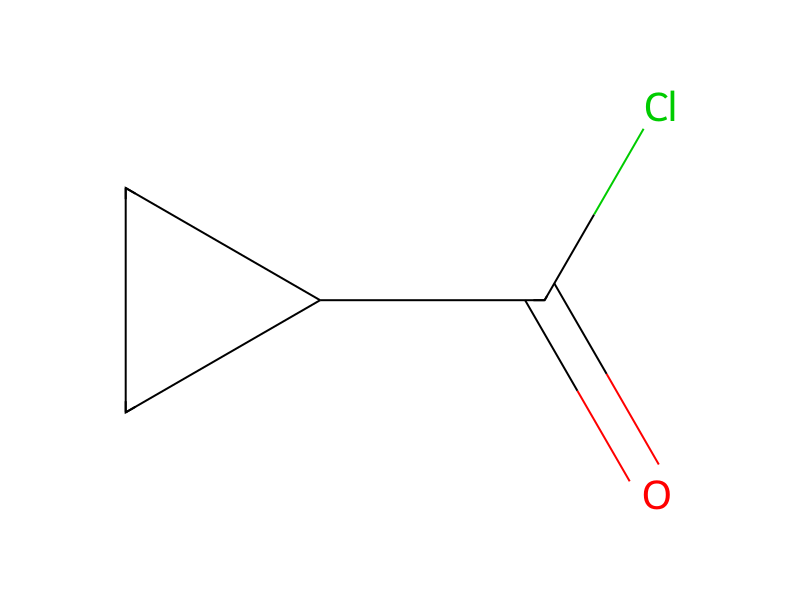
To a stirred solution of benzyl 4-amino-1H-pyrrolo[3,2-c]pyridine-1-carboxylate (1 g, 3.5 mmol) in tetrahydrofuran was added triethylamine (1 mL, 7 mmol). The mixture was cooled to −10° C. and cyclopropanecarbonyl chloride (0.53 mL, 5.3 mmol) was added drop wise. The reaction mixture was stirred at room temperature for 1 hour, followed by concentration under vacuum to remove tetrahydrofuran. The residue was dissolved in ethyl acetate and organic layer was washed with water, dried over anhydrous sodium sulfate and concentrated to give the crude mixture of benzyl 4-[bis(cyclopropylcarbonyl)amino]-1H-pyrrolo[3,2-c]pyridine-1-carboxylate and benzyl 4-[(cyclopropylcarbonyl)amino]-1H-pyrrolo[3,2-c]pyridine-1-carboxylate. The mixture was treated with a saturated potassium carbonate solution in methanol and stirred at room temperature followed by removal of methanol under vacuum at the same temperature. The residue was treated drop wise with saturated aqueous sodium bicarbonate solution and the precipitated solid was filtered, washed with water and dried to yield N-(1H-pyrrolo[3,2-c]pyridin-4-yl)cyclopropanecarboxamide (0.5 g, 69%) as a pale yellow solid.