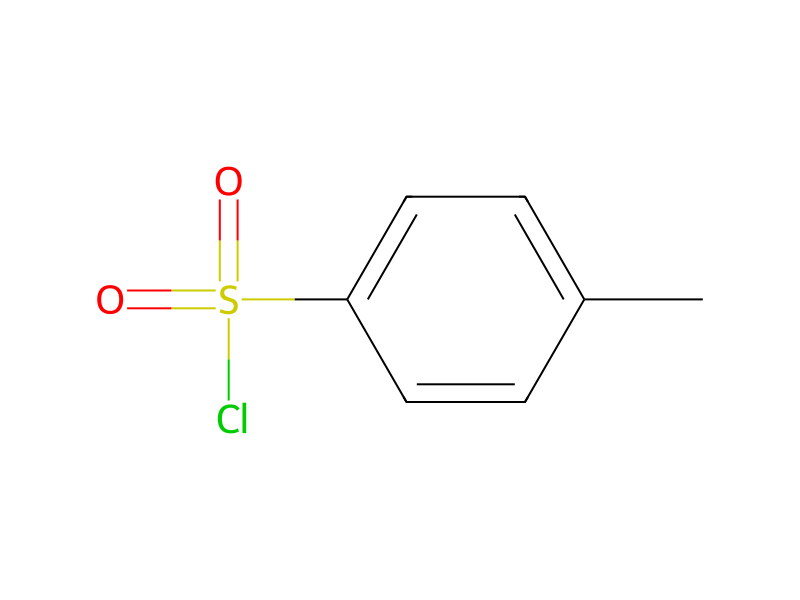
[Br:1][C:2]1[CH:3]=[C:4]([CH:7]=[O:8])[NH:5][CH:6]=1.[Li+].CC([N-]C(C)C)C.[S:17](Cl)([C:20]1[CH:26]=[CH:25][C:23]([CH3:24])=[CH:22][CH:21]=1)(=[O:19])=[O:18]>C1COCC1.C(OCC)(=O)C>[Br:1][C:2]1[CH:3]=[C:4]([CH:7]=[O:8])[NH:5][CH:6]=1.[S:17]([N:5]1[CH:6]=[C:2]([Br:1])[CH:3]=[C:4]1[CH:7]=[O:8])([C:20]1[CH:26]=[CH:25][C:23]([CH3:24])=[CH:22][CH:21]=1)(=[O:19])=[O:18]4-Bromopyrrole-2-carboxaldehyde was prepared by the method of Sonnet, P. E., J. Org. Chem. (1971), Vol. 36, p. 1005. A solution of 4-bromopyrrole-2-carboxaldehyde (2.61 g) and tetrahydrofuran (100 mL) was cooled to 0° C. LDA (7.5 mL of a 2 N solution in THF) was added dropwise and the mixture was stirred at 0° C. for 1 hour. Tosyl chloride (2.88 g) was then added. The resulting reaction mixture was allowed to warm to ambient temperature overnight. The reaction mixture was diluted with ethyl acetate (100 mL), washed with water (100 mL) and brine (100 mL), dried (Na2SO4) and concentrated. The dark colored solid was chromatographed on SiO2 with 4:1 hexane/ethyl acetate to afford N-tosyl-4-bromo-2-pyrrolecarboxaldehyde (3.8 g).