HomeMCPSkillsWorkbenchOpenChem
HomeWorkbenchNotificationsMe
llms.txt · skill.md · MCP GuidePrivacy Policy · Terms of Service · Supportv1.8.5
  1. Home
  2. /Reaction

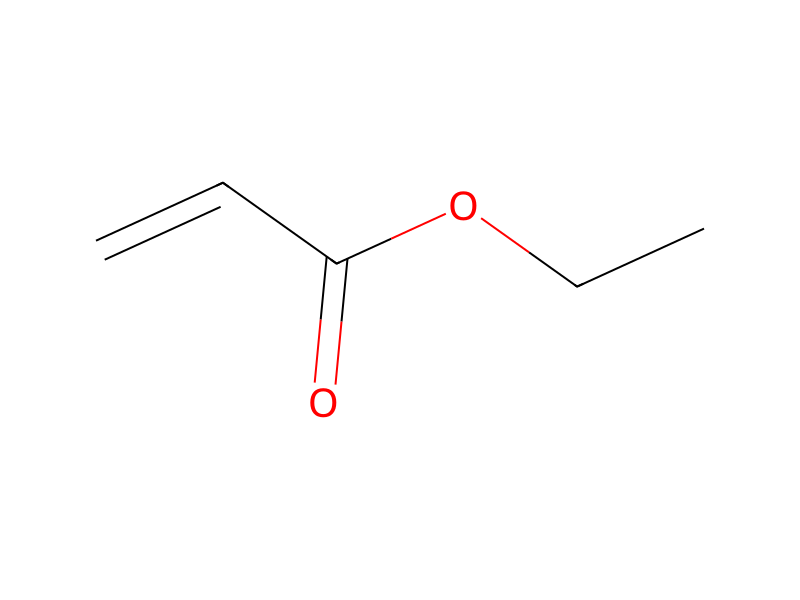
Ethyl Acrylate → (E)-3-(5-methoxy-6-nitropyridin-3-yl)acrylic acid ethyl ester

HRID 2247474
Print

Reaction equation

Br[C:2]1[CH:3]=[C:4]([O:11][CH3:12])[C:5]([N+:8]([O-:10])=[O:9])=[N:6][CH:7]=1.[C:13]([O:17][CH2:18][CH3:19])(=[O:16])[CH:14]=[CH2:15].C(P(C(C)(C)C)C1C=CC=CC=1C1C=CC=CC=1)(C)(C)C.[Cl-].[NH4+]>C([O-])(=O)C.[Pd+2].C([O-])(=O)C.C(OCC)(=O)C.CN(C=O)C>[CH2:18]([O:17][C:13](=[O:16])/[CH:14]=[CH:15]/[C:2]1[CH:7]=[N:6][C:5]([N+:8]([O-:10])=[O:9])=[C:4]([O:11][CH3:12])[CH:3]=1)[CH3:19]
ParticipantsConditionsProcedureWorkupSources & evidenceReaction notes

Participants

8

Reactant 4

HCID 8821Ethyl AcrylateHCID 25517Ammonium ChlorideHCID 8177745-Bromo-3-methoxy-2-nitropyridineHCID 27342152-(Di-tert-butylphosphino)biphenyl

Product 1

HCID 66960160(E)-3-(5-methoxy-6-nitropyridin-3-yl)acrylic acid ethyl esterYield 69%

Reagents, catalysts & solvents 3

HCID 167845
palladium(II) acetate
Catalyst
HCID 6228DimethylformamideSolvent
HCID 8857Ethyl AcetateSolvent

Conditions

Temperature
80 °C

Procedure

To a DMF (20 mL) solution of 5-bromo-3-methoxy-2-nitropyridine (726 mg) synthesized according to the method described in Acta Chemica Scandinavica vol. 47, p. 805, 1993, ethyl acrylate (0.44 mL), palladium acetate (35 mg), 2-(di-tert-butylphosphino) biphenyl (93 mg) and TEA (0.87 mL) were added, and the reaction solution was agitated at 80° C. for 3 hours. After the reaction solution was allowed to be cooled to room temperature, ethyl acetate and a saturated ammonium chloride solution were added to the reaction solution to separate an organic layer. After the obtained organic layer was dried over anhydrous magnesium sulfate, solvent was evaporated under reduced pressure. The residue was purified by silica gel column chromatography (elution solvent: heptane-ethyl acetate 2:1), and 787 mg (69%) of (E)-3-(5-methoxy-6-nitropyridin-3-yl)acrylic acid ethyl ester was obtained. The physical properties of the compound are as follows.

Workup

  1. temperatureto be cooled to room temperature
  2. customto separate an organic layer
  3. dry with materialAfter the obtained organic layer was dried over anhydrous magnesium sulfate, solvent
  4. customwas evaporated under reduced pressure
  5. customThe residue was purified by silica gel column chromatography (elution solvent: heptane-ethyl acetate 2:1)

Sources & evidence

ORD record
ord-582af2d39f5a462cbe4c887d97658d2e
Source dataset
uspto-grants-2010_03
DOI
10.6084/m9.figshare.5104873.v1
Patent number
US07687640B2

Reaction notes

On this pageParticipantsConditionsProcedureWorkupSources & evidenceReaction notes