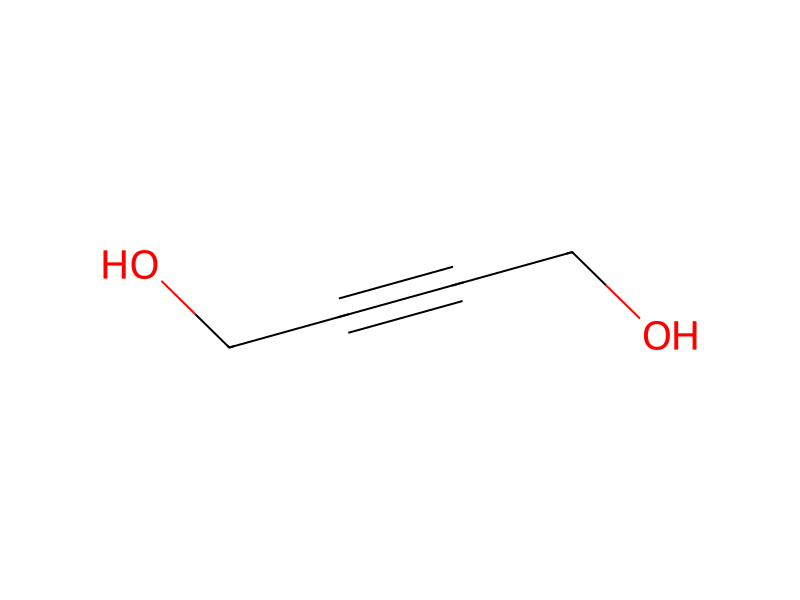
N-Bromosuccinimide (1.78 g, 10 mmol) was added in portions to a stirred suspension of 2-butyne-1,4-diol (2.50 g, 30 mmol) and triphenylphosphine (2.62 g, 10 mmol) in 20 ml of dichloromethane at room temperature. After 1 h, the unreacted butynediol was removed by filtration. The solution was evaporated in vacuum to small volume, dissolved in 20 ml of dry dimethylformamide (DMF) and added to a suspension of 2-amino-6-chloropurine (1.70 g, 10 mmol) and finely ground anhydrous K2CO3 (2.07 g, 15 mmol) in 75 ml of dry DMF, stirred at 0° C. The stirring was continued at room temperature for 3 days. Then the mixture was evaporated in vacuum to dryness. Chromatography (silica gel, CHCl3 +MeOH 7+1) afforded 467 mg (20%; after recrystallization from water to remove 2-butyne-1,4-diol) of 4-(2-amino-6-chloropurin-9-yl)-2-butyn-1-ol (TLC on silica gel, CHCl3 +MeOH 5+1; Rf 0.57).