HomeMCPWorkbenchSkills
HomeWorkbenchNotificationsMe
llms.txt · MCP GuidePrivacy Policy · Terms of Service · Supportv1.8.3
  1. Home
  2. /Reaction

Sodium Bicarbonate → N-(3,4-Dichlorophenyl)-4-{[(2R)-4-tert-butoxycarbonylpiperazin-2-yl]carbonyl}piperazine-1-carboxamide

HRID 2371204
Print

Reaction equation

HRID 2371204 reaction equation
[Cl:1][C:2]1[CH:3]=[C:4]([NH:9][C:10]([N:12]2[CH2:17][CH2:16][NH:15][CH2:14][CH2:13]2)=[O:11])[CH:5]=[CH:6][C:7]=1[Cl:8].[C:18]([N:25]1[CH2:30][CH2:29][NH:28][CH2:27][C@@H:26]1C(O)=O)([O:20][C:21]([CH3:24])([CH3:23])[CH3:22])=[O:19].C1CN([P+](ON2N=NC3C=CC=CC2=3)(N2CCCC2)N2CCCC2)CC1.F[P-](F)(F)(F)(F)F.[C:67](=O)(O)[O-:68].[Na+]>CN(C)C=O.C(N(CC)CC)C>[Cl:1][C:2]1[CH:3]=[C:4]([NH:9][C:10]([N:12]2[CH2:17][CH2:16][N:15]([C:67]([C@H:27]3[CH2:26][N:25]([C:18]([O:20][C:21]([CH3:22])([CH3:23])[CH3:24])=[O:19])[CH2:30][CH2:29][NH:28]3)=[O:68])[CH2:14][CH2:13]2)=[O:11])[CH:5]=[CH:6][C:7]=1[Cl:8]
ParticipantsConditionsProcedureWorkupSources & evidenceReaction notes

Participants

7

Reactant 4

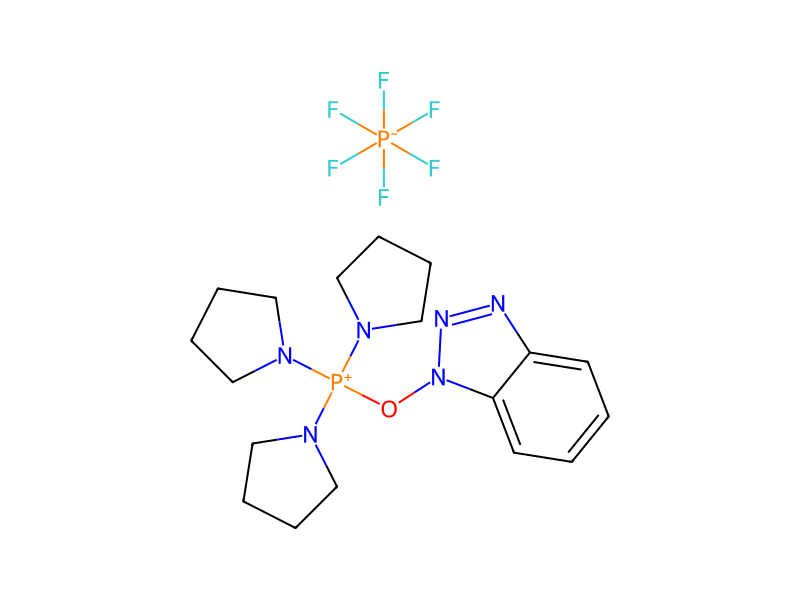
HCID 516892Sodium BicarbonateHCID 2724699PyBOPHCID 16775732N-(3,4-Dichlorophenyl)piperazine-1-carboxamideHCID 24820285(2R)-1-(tert-Butoxycarbonyl)piperazine-2-carboxylic acid

Product 1

HCID 67220684N-(3,4-Dichlorophenyl)-4-{[(2R)-4-tert-butoxycarbonylpiperazin-2-yl]carbonyl}piperazine-1-carboxamide

Reagents, catalysts & solvents 2

HCID 6228DimethylformamideSolventHCID 8471TriethylamineSolvent

Conditions

Temperature
0 °C

Procedure

N-(3,4-Dichlorophenyl)piperazine-1-carboxamide (596 mg) and (2R)-1-BOC-piperazine-2-carboxylic acid (500 mg) were dissolved in N,N-dimethylformamide (30 ml) and stirred at 0° C. Triethylamine (0.61 ml) was added followed by PYBOP reagent (1.13 g). The mixture was allowed to warm to room temperature overnight, poured into saturated aqueous sodium bicarbonate (60 ml) and extracted with ethyl acetate (2×100 ml), adding a little water during the process to dissolve precipitated sodium bicarbonate. The combined organic extracts were treated with brine (100 ml), dried (sodium sulphate), concentrated in vacuo and adsorbed onto silica for purification by chromatography eluting with 0-15% methanol/dichloromethane. This gave the product as a white glass (710 mg).

Workup

  1. temperatureto warm to room temperature overnight
  2. extractionextracted with ethyl acetate (2×100 ml)
  3. additionadding a little water during the process
  4. dissolutionto dissolve
  5. customprecipitated sodium bicarbonate
  6. additionThe combined organic extracts were treated with brine (100 ml)
  7. dry with materialdried (sodium sulphate)
  8. concentrationconcentrated in vacuo
  9. customadsorbed onto silica for purification by chromatography
  10. washeluting with 0-15% methanol/dichloromethane

Sources & evidence

ORD record
ord-11f7bf7c32e440058b5e82921d18cfea
Source dataset
uspto-grants-2014_04
DOI
10.6084/m9.figshare.5104873.v1
Patent number
US08710224B2

Reaction notes

On this pageParticipantsConditionsProcedureWorkupSources & evidenceReaction notes