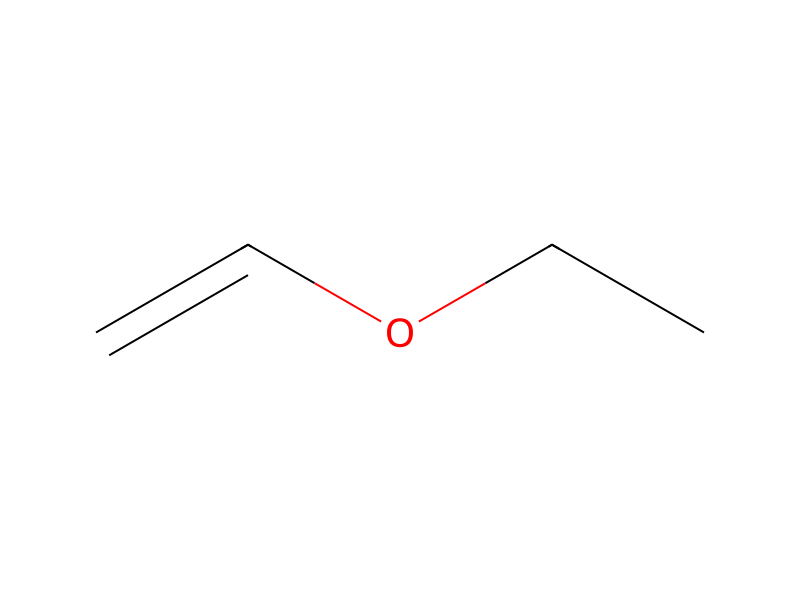
Ethyl 4-benzyloxyacetoacetate (42.1 g) synthesized according to the method describe in U.S. Pat. No. 5,399,722 was dissolved in methanol (300 mL) and sodium borohydride (3.03 g) was added at a temperature of from 5° C. to 10° C. The mixture was stirred for 1 hr and water (300 mL) was added. The solvent was mostly evaporated, and the organic layer extracted twice with MTBE (300 mL) was washed twice with 2% sodium hydrogen carbonate (100 mL) and washed twice with saturated brine (150 mL), dried over anhydrous magnesium sulfate and filtrated. MTBE was evaporated to give ethyl (±)-4-benzyloxy-3-hydroxybutanoate (38.8 g). To a solution of lithium diisopropylamide 1.5 M cyclohexane solution (190 mL) in THF (200 mL) was added a solution of ethyl (±)-4-benzyloxy-3-hydroxybutanoate (29.4 g) in THF (50 mL) at a temperature of from −78° C. to −60° C. and the temperature was raised to −20° C. Separately, 2-iodoethanol (34.4 g) and ethyl vinyl ether (23.1 g) were mixed in the presence of p-toluenesulfonic acid monohydrate (20 mg) to give 2-(1-ethoxyethoxy)ethyl iodide (47.9 g) and 39.3 g thereof was added dropwise at a temperature near −20° C. to 0° C. The mixture was stirred overnight at room temperature. The reaction mixture was poured into a 1N aqueous hydrochloric acid (450 mL), and the mixture was extracted twice with MTBE (200 mL) and washed with saturated aqueous sodium hydrogen carbonate solution. The solvent was evaporated and methanol (300 mL) and p-toluenesulfonic acid monohydrate (5.3 g) were added to the residue. The mixture was stirred at room temperature for 6 hr. Triethylamine (2.0 g) was added to the reaction mixture and the solvent was mostly evaporated. The residue was extracted with ethyl acetate (300 mL). The organic layer was washed with water (150 mL) and saturated aqueous sodium hydrogen carbonate solution (150 mL) and dried over anhydrous magnesium sulfate. The solvent was evaporated. Diisopropyl ether (120 mL) was added to the residue and the mixture was recrystallized to give the title compound (5.65 g) (yellow fine crystals). The peak of syn-form (1′R*,2R*-body) was not detected in NMR and HPLC under the following conditions.