HomeMCPWorkbenchSkills
HomeWorkbenchNotificationsMe
llms.txt · MCP GuidePrivacy Policy · Terms of Service · Supportv1.8.3
  1. Home
  2. /Reaction

4-Bromotoluene → Ethyl 4,4,4-trifluoro-3-methyl-2-(4-methylphenyl)butanoate

HRID 238173
Print

Reaction equation

HRID 238173 reaction equation
C1(P(C2CCCCC2)[C:8]2[CH:13]=[CH:12][CH:11]=[CH:10][C:9]=2[C:14]2C=CC=CC=2N(C)C)CCCCC1.C[Si](C)(C)[N-][Si](C)(C)C.[Li+].[F:39][C:40]([F:50])([F:49])[CH:41]([CH3:48])[CH2:42][C:43]([O:45][CH2:46][CH3:47])=[O:44].BrC1C=CC(C)=CC=1>C1(C)C=CC=CC=1.C1COCC1.C([O-])(=O)C.[Pd+2].C([O-])(=O)C.C1CCCCC1.ClCCl>[F:39][C:40]([F:49])([F:50])[CH:41]([CH3:48])[CH:42]([C:12]1[CH:11]=[CH:10][C:9]([CH3:14])=[CH:8][CH:13]=1)[C:43]([O:45][CH2:46][CH3:47])=[O:44]
ParticipantsProcedureWorkupSources & evidenceReaction notes

Participants

9

Reactant 4

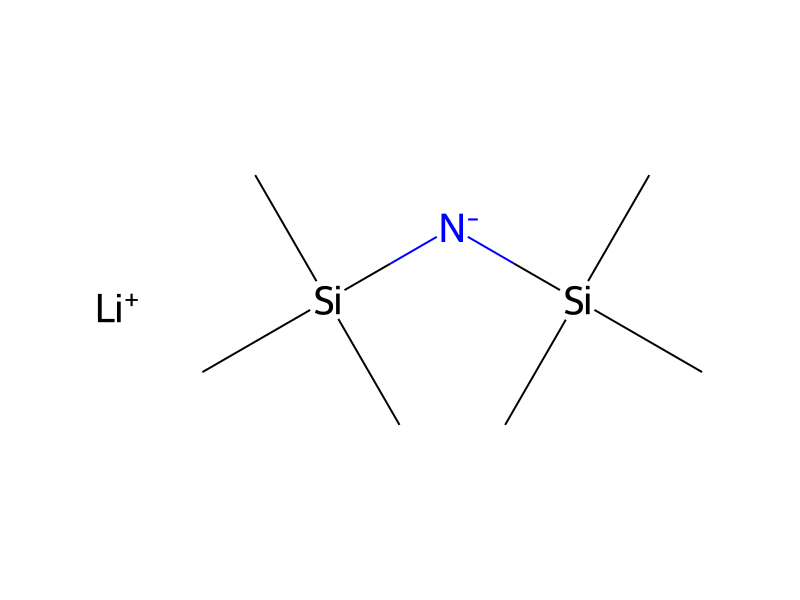
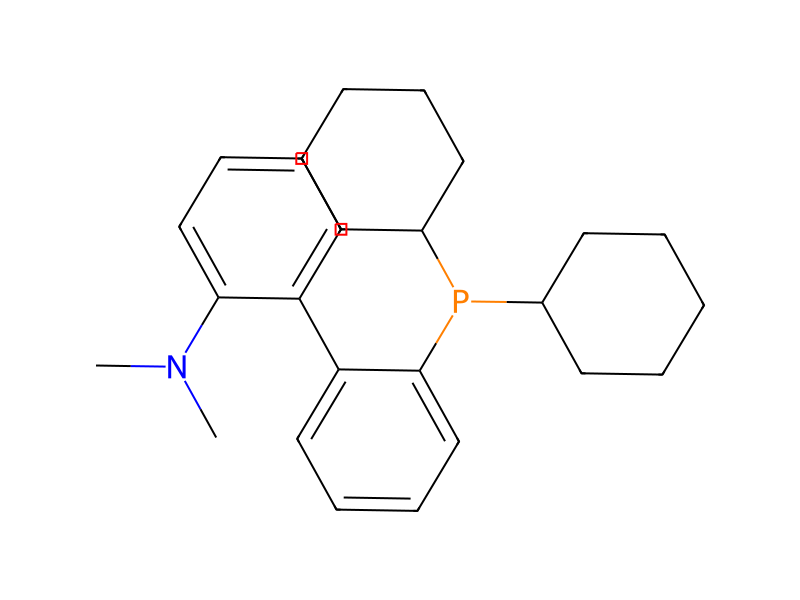
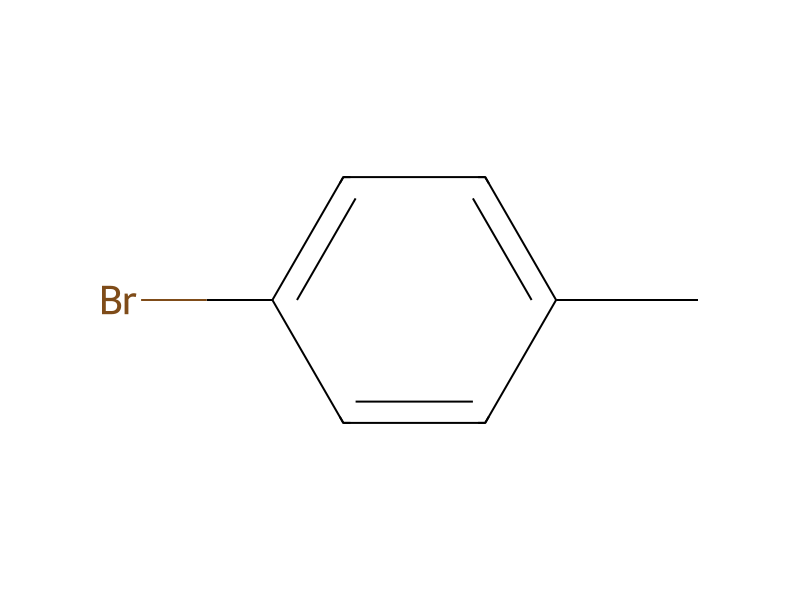
HCID 78054-BromotolueneHCID 228896Ethyl 3-methyl-4,4,4-trifluorobutanoateHCID 2733832Lithium hexamethyldisilazaneHCID 27342172-(Dicyclohexylphosphino)-2'-(dimethylamino)biphenyl

Product 1

HCID 58136599Ethyl 4,4,4-trifluoro-3-methyl-2-(4-methylphenyl)butanoate

Reagents, catalysts & solvents 4

HCID 167845palladium(II) acetateCatalyst
HCID 1140TolueneSolvent2×
HCID 8028TetrahydrofuranSolvent
HCID 21916607Dichloromethane cyclohexaneSolvent

Procedure

Under argon, 196.9 mg (0.88 mmol) of palladium(II) acetate and 724.8 mg (1.84 mmol) of 2-di-cyclohexylphosphino-2′-(N,N-dimethylamino)biphenyl were initially charged in 50 ml of anhydrous toluene. 43.8 ml (43.8 mmol) of a 1 M solution of lithium hexamethyldisilazide in THF were then added slowly, and the reaction solution was stirred at room temperature for 10 min. The reaction solution was then cooled to −10° C., 7 g (38.0 mmol) of ethyl 4,4,4-trifluoro-3-methyl-butanoate were added slowly and the mixture was stirred at −10° C. for 10 min. 5 g (29.2 mmol) of 4-bromotoluene, dissolved in 50 ml of toluene, were then added dropwise, and the reaction solution was warmed first to room temperature and then to 80° C. The mixture was stirred at this temperature for 2 h and then cooled to room temperature and stirred overnight. After the reaction had ended (monitored by TLC, mobile phase cyclohexane/dichloromethane 2:1), the reaction mixture was filtered through kieselguhr, the residue was washed repeatedly with ethyl acetate and dichloromethane and the combined filtrates were concentrated under reduced pressure. The crude product obtained was purified chromatographically on silica gel (mobile phase petroleum ether/dichloromethane 4:1→3:1). This gave 3.91 g (14.3 mmol, 48.8% of theory) of the title compound as colorless liquid.

Workup

  1. temperatureThe reaction solution was then cooled to −10° C.
  2. stirringthe mixture was stirred at −10° C. for 10 min
  3. additionwere then added dropwise
  4. temperaturethe reaction solution was warmed first to room temperature
  5. customto 80° C
  6. stirringThe mixture was stirred at this temperature for 2 h
  7. temperaturecooled to room temperature
  8. stirringstirred overnight
  9. filtrationthe reaction mixture was filtered through kieselguhr
  10. washthe residue was washed repeatedly with ethyl acetate and dichloromethane
  11. concentrationthe combined filtrates were concentrated under reduced pressure

Sources & evidence

ORD record
ord-0a084132d96542c8a42c11866deffbbd
Source dataset
uspto-grants-2014_02
DOI
10.6084/m9.figshare.5104873.v1
Patent number
US08642592B2

Reaction notes

On this pageParticipantsProcedureWorkupSources & evidenceReaction notes