HomeMCPWorkbenchSkills
HomeWorkbenchNotificationsMe
llms.txt · MCP GuidePrivacy Policy · Terms of Service · Supportv1.8.0
  1. Home
  2. /Reaction

Methanol → HCID 19765019, compound

HRID 248119
Notes
Print preview

Reaction equation

HRID 248119 reaction equation
[Na].CN(C)[CH:4]=[O:5].Br[C:8]1[CH:23]=[CH:22][C:11]2[NH:12][C:13]3[CH:20]=[CH:19][C:18](Br)=[CH:17][C:14]=3[CH2:15][CH2:16][C:10]=2[CH:9]=1.[K+].[Br-].[CH3:26][OH:27]>[Cu]I.[Cu]>[CH3:26][O:27][C:8]1[CH:23]=[CH:22][C:11]2[NH:12][C:13]3[CH:20]=[CH:19][C:18]([O:5][CH3:4])=[CH:17][C:14]=3[CH2:15][CH2:16][C:10]=2[CH:9]=1
ParticipantsConditionsProcedureWorkupSources & evidenceReaction notes

Participants

8

Reactant 5

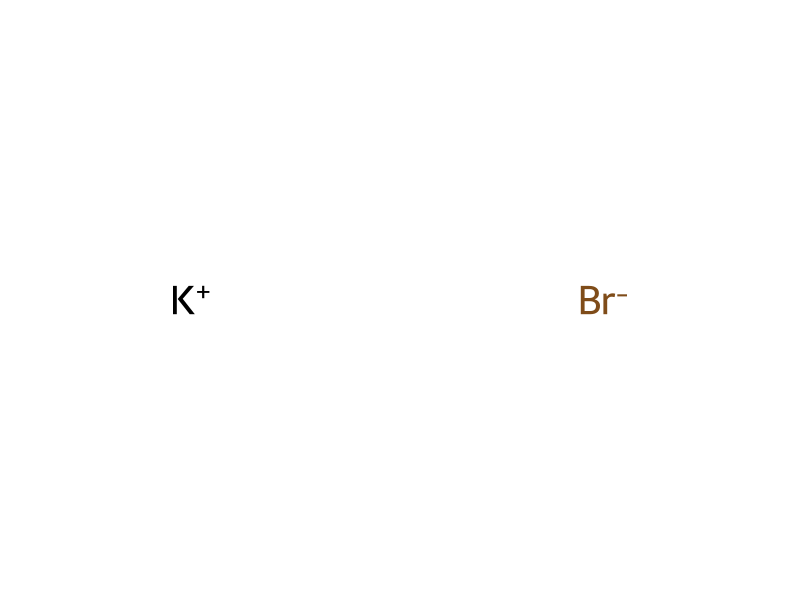
HCID 887MethanolHCID 6228Dimethylformamide2×HCID 253877Potassium BromideHCID 640268HCID 640268, compoundHCID 5360545Sodium

Product 1

HCID 19765019HCID 19765019, compoundYield 67.6%

Reagents, catalysts & solvents 2

HCID 23978CopperCatalystHCID 24350Copper(1+) iodide; Copper(I) iodide; Cuprous iodide; Cuprous iodide (CuI)Catalyst

Conditions

Temperature
92 °C

Procedure

A solution of sodium metal (23 g; 1 mol) in anhydrous methanol (250 mL) was treated with dimethylformamide (DMF) (125 mL; dried over molecular sieve 4A), copper(I) iodide (38 g; 199.5 mmol), 2,8-dibromo-10,11-dihydro-5H-dibenz[b,f]azepine (6) (17.9 g; 50.7 mmol) [L. Kricka and A. Ledwitn, J. Chem. Soc. Perkin I, 859 (1973)]and additional DMF (125 mL). The mixture was mechanically stirred and heated (mantle) at reflux (internal temperature was 92° C.) for four hours. After cooling to ca. 35° C. the copper-colored mixture was filtered through Celite (Johns-Manville Corp., Denver, CO, USA) and the cake was washed with ethyl acetate (EtOAc; 500 mL). The combined filtrate and wash were blended into H2O (2 L) and the phases separated. The aqueous layer was extracted twice with EtOAc (500 mL each) then the combined EtOAc layers were washed once with H2O (500 mL), once with brine (saturated aqueous NaCl; 500 mL) and dried over a mixture of MgSO4 (50 g) and Darco G-60 (ICI Americas, Inc., Wilmington, DE, USA; 20 g). The solution was filtered through Celite and concentrated in vacuo to a total volume of 40-50 mL. The concentrate was heated to boiling, diluted with hexane (ca. 60 mL) and allowed to cool to ambient temperature overnight whereupon the title compound (7) (7.04 g) separated as beige plates; the mother liquor was worked for a second crop (1.68 g; total yield 67.6%). A portion of the first crop was sublimed (0.1 torr; 122-4° C. bath) to afford the analytical sample as white plates with mp=123-4° C.: IR (KBr) cm-1 3390, 2946, 1510, 1262, 1221, 1039, 1031, 911, 852, 810; 1H NMR (300.12 MHz) (DMSO-d6) δ2.90 (s, 4H), 3.64 (s, 6H), 6.55-6.65 (m, 4H), 6.83 (d, J=8.5 Hz, 2H), 7.64 (s, lH); 13C NMR (75.47 MHz) (DMSO-d6) ppm 151.9, 137.6, 128.7, 118.7, 115.2, 112.5, 55.2, 34.3; mass spectrum m/e 255, 240 (base), 225, 209, 197, 180, 168.


Workup

  1. temperatureheated (mantle)
  2. filtrationwas filtered through Celite (Johns-Manville Corp., Denver, CO, USA)
  3. washthe cake was washed with ethyl acetate (EtOAc; 500 mL)
  4. washThe combined filtrate and wash
  5. customthe phases separated
  6. extractionThe aqueous layer was extracted twice with EtOAc (500 mL each)
  7. washthe combined EtOAc layers were washed once with H2O (500 mL), once with brine (saturated aqueous NaCl; 500 mL)
  8. dry with materialdried over a mixture of MgSO4 (50 g) and Darco
  9. filtrationThe solution was filtered through Celite
  10. concentrationconcentrated in vacuo to a total volume of 40-50 mL
  11. temperatureThe concentrate was heated
  12. additiondiluted with hexane (ca. 60 mL)
  13. temperatureto cool to ambient temperature overnight whereupon the title compound (7) (7.04 g)
  14. customseparated as beige plates
  15. custom(0.1 torr; 122-4° C. bath)
  16. customto afford the analytical sample as white plates with mp=123-4° C.

Sources & evidence

ORD record
ord-e46220f9e6344bd3a0e1c581ccbd6f41
Source dataset
uspto-grants-1993_05
DOI
10.6084/m9.figshare.5104873.v1
Patent number
US05208326

Reaction notes

Loading…

On this pageParticipantsConditionsProcedureWorkupSources & evidenceReaction notes