Reaction equation
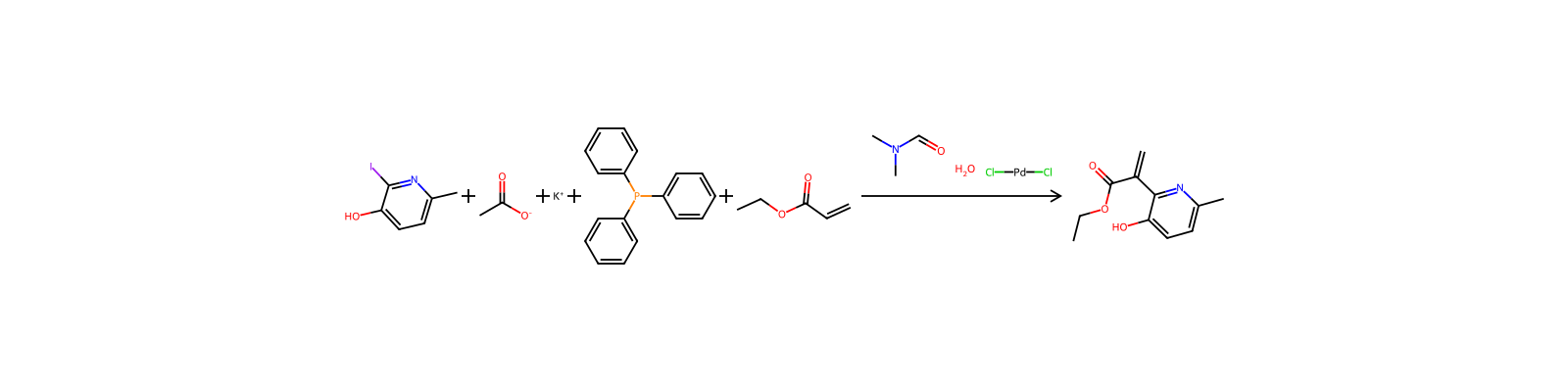
[OH:1][C:2]1[C:3](I)=[N:4][C:5]([CH3:8])=[CH:6][CH:7]=1.C([O-])(=O)C.[K+].C1(P(C2C=CC=CC=2)C2C=CC=CC=2)C=CC=CC=1.[C:34]([O:38][CH2:39][CH3:40])(=[O:37])[CH:35]=[CH2:36]>CN(C=O)C.O.[Pd](Cl)Cl>[OH:1][C:2]1[C:3]([C:35](=[CH2:36])[C:34]([O:38][CH2:39][CH3:40])=[O:37])=[N:4][C:5]([CH3:8])=[CH:6][CH:7]=1Participants
8
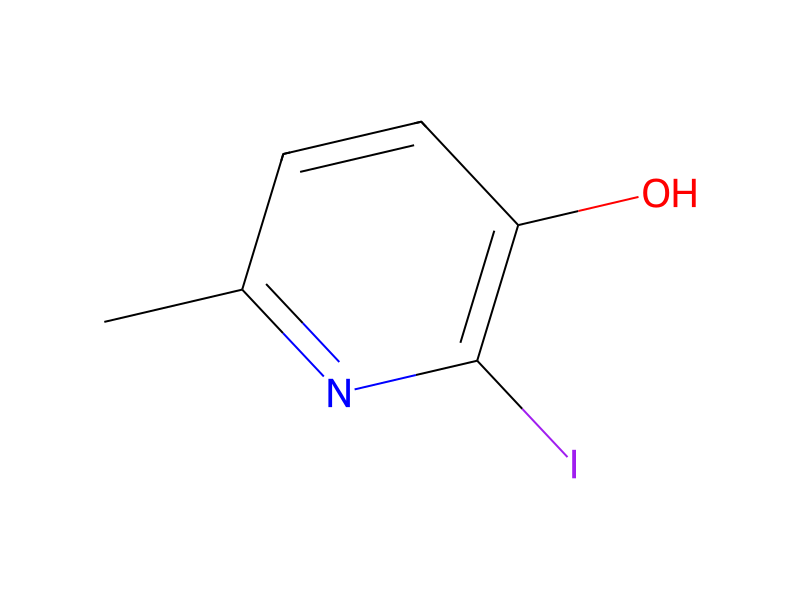
Reactant 4



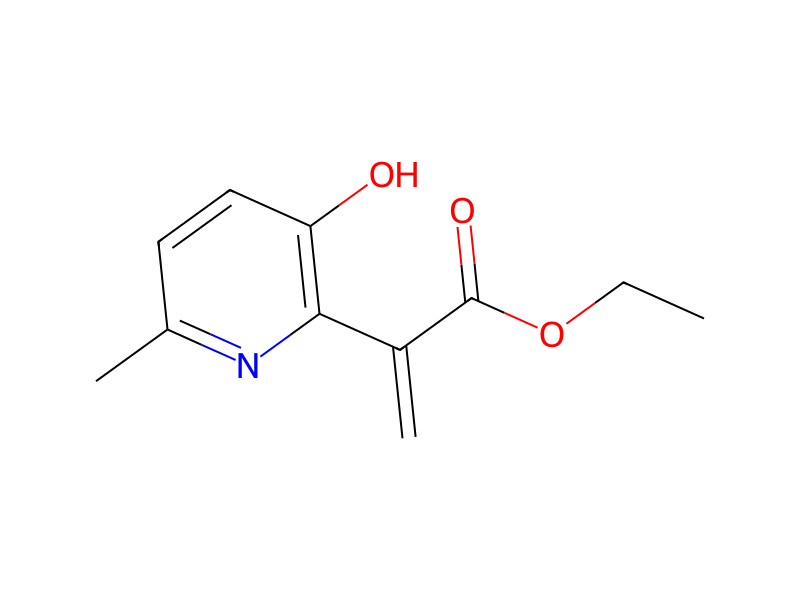
Product 1
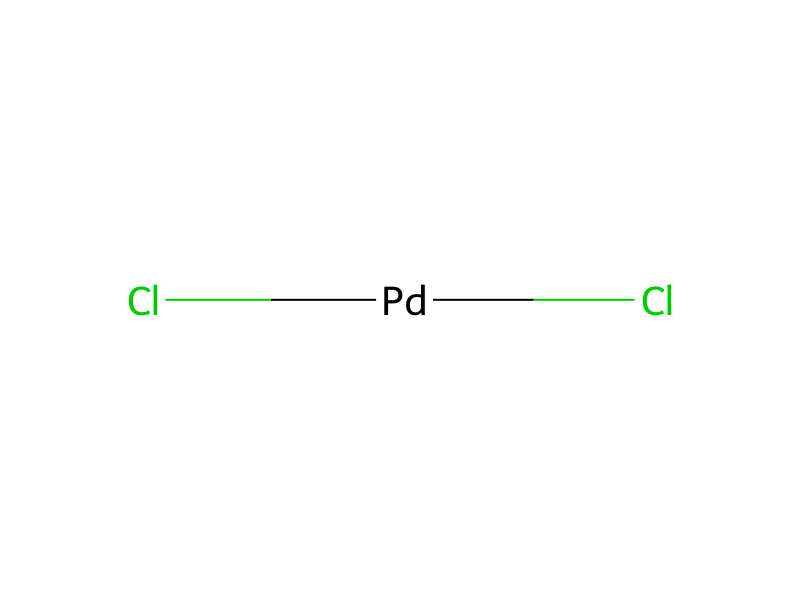
Reagents, catalysts & solvents 3


Conditions
- Temperature
- 120 °C
Procedure
To a solution of 3-hydroxy-2-iodo-6-methylpyridine (1.175 g, 5.0 mmol) in DMF (9.5 ml) and water (0.5 ml) were added potassium acetate (1.23 g, 12.5 mmol), triphenylphosphine (105 mg, 0.40 mmol), palladium chloride (36 mg, 0.20 mmol) and ethyl acrylate (1.63 ml, 1.50 g, 15.0 mmol). The mixture was placed under nitrogen and heated at 120° C. for 1.5 h. The mixture was cooled, filtered from deposited palladium black, and added to water (100 ml). The product was extracted into ethyl acetate (3×30 ml). The combined extracts were washed with water (2×25 ml) and with brine (25 ml), then dried over sodium sulphate and evaporated. This left a tan solid, the product (951 mg, 91%). mp 192°-195° C. (dec)
Workup
- temperatureThe mixture was cooled
- filtrationfiltered
- additionadded to water (100 ml)
- extractionThe product was extracted into ethyl acetate (3×30 ml)
- washThe combined extracts were washed with water (2×25 ml) and with brine (25 ml)
- dry with materialdried over sodium sulphate
- customevaporated
- waitThis left a tan solid
Sources & evidence
- ORD record
- ord-50a5a9278ade4cedb4d1758badb8b7db
- Source dataset
- uspto-grants-1997_07
- Patent number
- US05646286
Linked notes
Loading…