Reaction equation
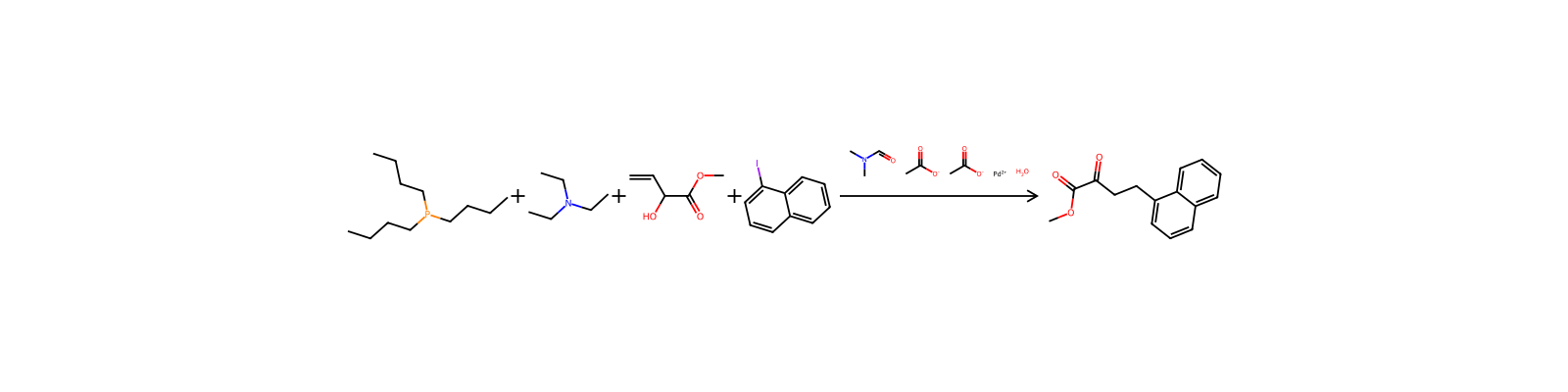
P(CCCC)(CCCC)CCCC.CCN(CC)CC.[OH:21][CH:22]([CH:27]=[CH2:28])[C:23]([O:25][CH3:26])=[O:24].I[C:30]1[C:39]2[C:34](=[CH:35][CH:36]=[CH:37][CH:38]=2)[CH:33]=[CH:32][CH:31]=1>CN(C=O)C.CC([O-])=O.CC([O-])=O.[Pd+2].O>[C:38]1([CH2:28][CH2:27][C:22](=[O:21])[C:23]([O:25][CH3:26])=[O:24])[C:39]2[C:34](=[CH:33][CH:32]=[CH:31][CH:30]=2)[CH:35]=[CH:36][CH:37]=1Participants
8
Reactant 4


Product 1

Reagents, catalysts & solvents 3



Conditions
- Temperature
- 100 °C
Procedure
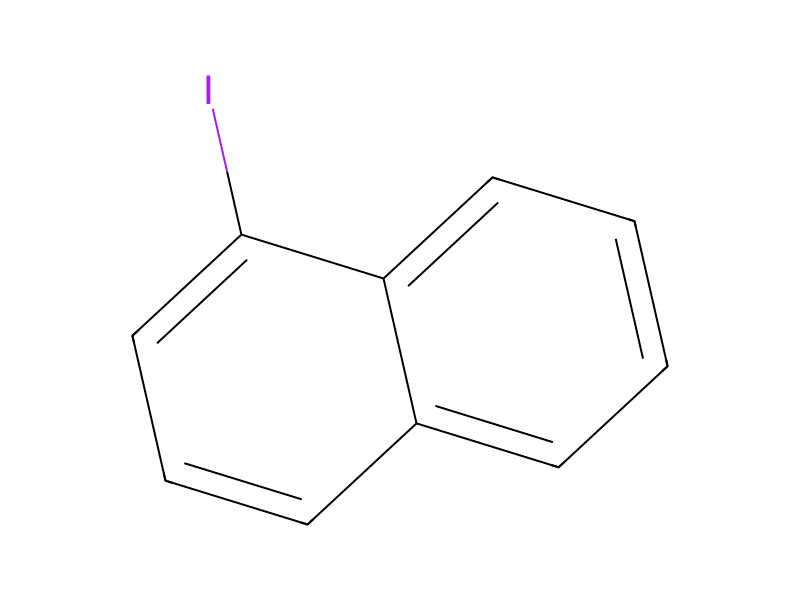
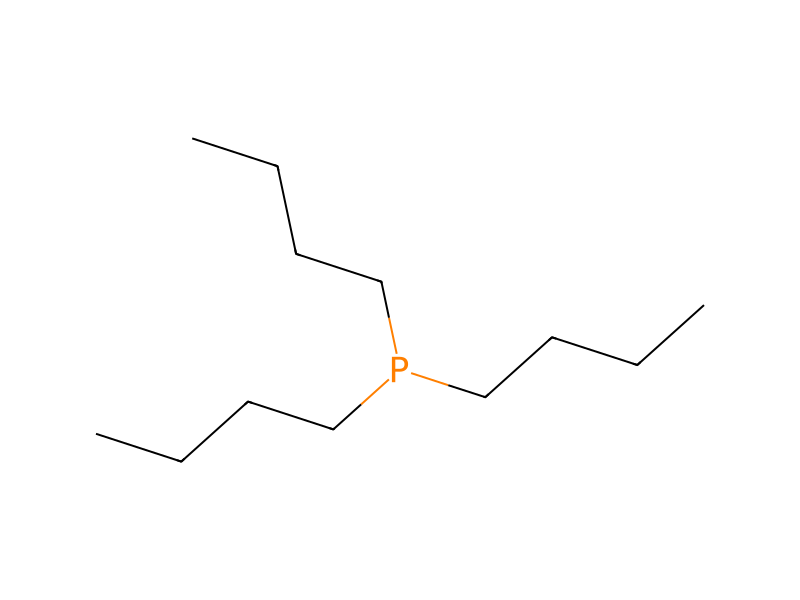
To a stirred solution of Pd(OAc)2 (340 mg), nBu3P (613 mg), and Et3N (1.99 g) in DMF (30 ml) was added methyl 2-hydroxy-3-butenoate (1.76 g) followed by 1-iodonaphthalene (5.0 g), and the reaction mixture was stirred at 100° C. for 2.5 hours. The reaction mixture was poured into water (300 ml) and extracted with ethyl acetate. The organic layer was washed with brine, dried over magnesium sulfate, and evaporated in vacuo. The residue was purified by silica gel (130 g) column chromatography eluting with hexane/ethyl acetate (50:1) to give methyl 4-(1-naphthyl)-2-oxobutyrate (254 mg) as a red oil.
Workup
- extractionextracted with ethyl acetate
- washThe organic layer was washed with brine
- dry with materialdried over magnesium sulfate
- customevaporated in vacuo
- customThe residue was purified by silica gel (130 g) column chromatography
- washeluting with hexane/ethyl acetate (50:1)
Sources & evidence
- ORD record
- ord-9e3c425c714a4a85a45538e47de2e0fe
- Source dataset
- uspto-grants-2002_03
- Patent number
- US06359145B1
Linked notes
Loading…