Reaction equation

C1(NN)C=CC=CC=1.[F:9][C:10]1[CH:15]=[CH:14][CH:13]=[CH:12][C:11]=1[NH:16][NH2:17].N1C=CC=CC=1NN.C(N(CC)C(C)C)(C)C.[C:35]12[C:41](=[CH:42][CH:43]=[CH:44][CH:45]=1)[NH:40]C(=O)O[C:36]2=[O:37]>O1CCCC1.C(O)C.C(N(CC)CC)C>[F:9][C:10]1[CH:15]=[CH:14][CH:13]=[CH:12][C:11]=1[NH:16][NH:17][C:36](=[O:37])[C:35]1[CH:45]=[CH:44][CH:43]=[CH:42][C:41]=1[NH2:40]Participants
9
Reactant 5
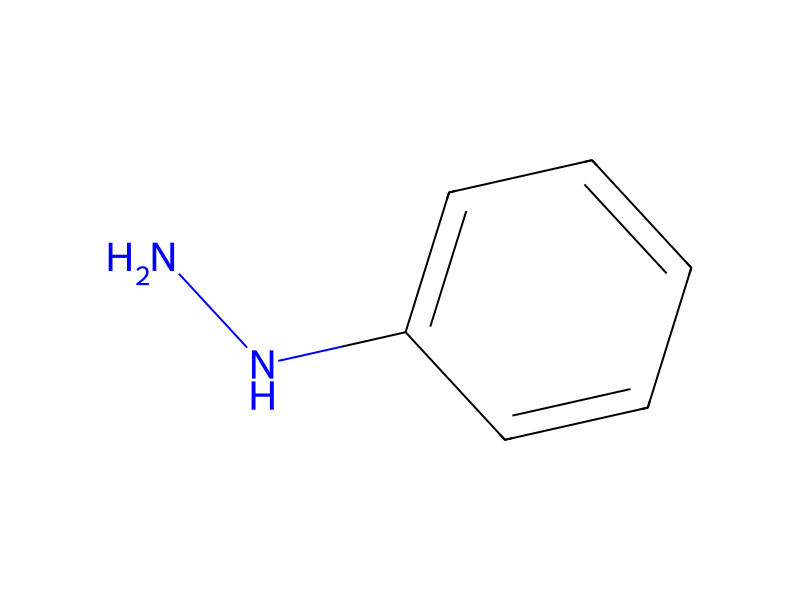




Product 1

Reagents, catalysts & solvents 3



Procedure
A phenylhydrazine b (e.g., 2-fluorophenylhydrazine) or pyridinylhydrazine (e.g., 2-hydrazinopyridine) that has been treated with or without a base such as N,N-diisopropylethylamine or triethylamine in a suitable solvent (e.g., ethanol or tetrahydrofuran (THF)) is reacted with the anhydride a (e.g., isatoic anhydride) to give the hydrazide c (e.g., 2-amino-benzoic acid N′-(2-fluoro-phenyl)-hydrazide). c is then acidified and reacted with sodium nitrite, followed by ethanol to generate the indazole d (e.g., 1-(2-fluoro-phenyl)-1H-indazol-3-ol).
Sources & evidence
- ORD record
- ord-0906ba17b99a4bdba381cccc93999baa
- Source dataset
- uspto-grants-2008_09
- Patent number
- US07423054B2
Linked notes
Loading…