HomeMCPWorkbenchSkills
HomeWorkbenchNotificationsMe
llms.txt · MCP GuidePrivacy Policy · Terms of Service · Supportv1.8.0
  1. Home
  2. /Reaction

Potassium Carbonate → methyl 6-chloro-5-(2'-hydroxybiphenyl-4-yl)-1H-indole-3-carboxylate

HRID 338383
Notes
Print preview

Reaction equation

HRID 338383 reaction equation
CC1(C)C(C)(C)OB([C:9]2[CH:14]=[CH:13][C:12]([C:15]3[C:16]([OH:21])=[CH:17][CH:18]=[CH:19][CH:20]=3)=[CH:11][CH:10]=2)O1.Br[C:24]1[CH:25]=[C:26]2[C:30](=[CH:31][C:32]=1[Cl:33])[NH:29][CH:28]=[C:27]2[C:34]([O:36][CH3:37])=[O:35].C(=O)([O-])[O-].[K+].[K+].S([O-])(O)(=O)=O.[Na+]>C(OCC)(=O)C.C1C=CC(P(C2C=CC=CC=2)[C-]2C=CC=C2)=CC=1.C1C=CC(P(C2C=CC=CC=2)[C-]2C=CC=C2)=CC=1.Cl[Pd]Cl.[Fe+2].CCO.C1COCC1.C1(C)C=CC=CC=1>[Cl:33][C:32]1[CH:31]=[C:30]2[C:26]([C:27]([C:34]([O:36][CH3:37])=[O:35])=[CH:28][NH:29]2)=[CH:25][C:24]=1[C:9]1[CH:10]=[CH:11][C:12]([C:15]2[CH:20]=[CH:19][CH:18]=[CH:17][C:16]=2[OH:21])=[CH:13][CH:14]=1
ParticipantsConditionsProcedureWorkupSources & evidenceReaction notes

Participants

10

Reactant 4

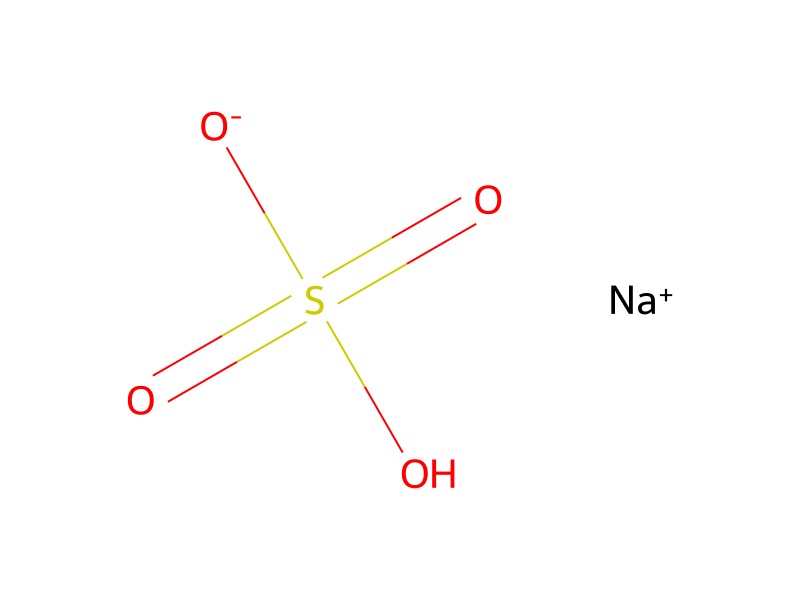
HCID 11430Potassium CarbonateHCID 516919Sodium BisulfateHCID 592678134'-(4,4,5,5-Tetramethyl-1,3,2-dioxaborolan-2-yl)-[1,1'-biphenyl]-2-olHCID 86698569methyl 5-bromo-6-chloro-1H-indole-3-carboxylate

Product 1

HCID 86698725methyl 6-chloro-5-(2'-hydroxybiphenyl-4-yl)-1H-indole-3-carboxylateYield 73%

Reagents, catalysts & solvents 5

HCID 44119782Bis(cyclopenta-1,4-dien-1-yl(diphenyl)phosphane);dichloropalladium;iron(2+)CatalystHCID 702EthanolSolventHCID 1140TolueneSolventHCID 8028TetrahydrofuranSolventHCID 8857Ethyl AcetateSolvent

Conditions

Temperature
115 °C

Procedure

A glass tube was charged with 4′-(4,4,5,5-tetramethyl-1,3,2-dioxaborolan-2-yl)-[1,1′-biphenyl]-2-ol (86.2 mg, 0.29 mmol), methyl 5-bromo-6-chloro-1H-indole-3-carboxylate (84 mg, 0.29 mmol), toluene (1.2 mL), THF (0.6 mL), EtOH (0.6 mL), and 2.0M potassium carbonate solution (0.6 mL, 1.2 mmol). Nitrogen was then bubbled through the mixture for 5 minutes then [1,1′-bis(diphenylphosphino)ferrocene]dichloropalladium(II) (28 mg, 0.032 mmol) was added. The tube was sealed and heated to 115° C. for 2 hours. The reaction was cooled to room temperature, opened, and neutralized with 1.0M sodium hydrogensulfate then diluted with ethyl acetate. The layers were separated and the aqueous extracted with ethyl acetate (x2). The combined organic layers were dried over sodium sulfate, filtered, and concentrated in vacuo. Flash column chromatography (20% to 100% ethyl acetate/heptane) was then used to to provide the title compound as a white solid (80 mg, 73% yield). MS (ES−) 376.1 (M−H). 1H NMR (500 MHz, DMSO-d6) δ 12.09 (br. s., 1H), 9.60 (s, 1H), 8.19 (s, 1H), 7.98 (s, 1H), 7.68 (s, 1H), 7.65 (d, 2H), 7.47 (d, 2H), 7.34 (dd, 1H), 7.19 (dt, 1H), 6.98 (d, 1H), 6.91 (dt, 1H), 3.81 (s, 3H).

Workup

  1. customNitrogen was then bubbled through the mixture for 5 minutes
  2. customThe tube was sealed
  3. temperatureThe reaction was cooled to room temperature
  4. customThe layers were separated
  5. extractionthe aqueous extracted with ethyl acetate (x2)
  6. dry with materialThe combined organic layers were dried over sodium sulfate
  7. filtrationfiltered
  8. concentrationconcentrated in vacuo

Sources & evidence

ORD record
ord-b45b15f4493344d0beb30ec96120fefd
Source dataset
uspto-grants-2014_11
DOI
10.6084/m9.figshare.5104873.v1
Patent number
US08889730B2

Reaction notes

Loading…

On this pageParticipantsConditionsProcedureWorkupSources & evidenceReaction notes